When everyone in town falls under the spell of charismatic cosmetic surgeon Doctor Coppelius, feisty Swan must act to save her sweetheart Franz, before his heart is used to spark life into Coppelia – the ‘perfect’ robot-woman the Doctor has created.
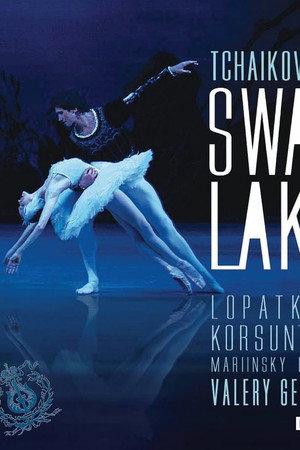
Swan Lake, a screen adaptation of the ballet of the same name by Pyotr Tchaikovsky. Performed by Kirov Ballet, starring Yelena Yevteyeva as Odette and directed for film by Appolinariy Dudko and Konstantin Sergeyev. Produced by Lenfilm studios in 1968. Orchestra of the S.M. Kirov Leningrad Academic Opera and Ballet Theater, conductor Victor Fedotov. Ballet dancers of the Leningrad State Academic Theater of Opera and Ballet named after S.M. Kirov and students of the Leningrad Choreographic School M. Agrippina Vaganova took part in the film. Golden Orchid Prize - Grand Prix at the VIFF of ballet films in Genoa, Italy (1969).
The Royal Ballet Company brings Squirrel Nutkin, Tom Thumb, Hunca Munca, Jemima Puddle-Duck, Jeremy Fisher, Pigling Bland, and Pigwig to the screen doing pirouettes and pas de deux in this filmed ballet production directed by Reginald Mills. The film more properly belongs, however, to choreographer Frederick Ashmore, composer John Lanchbery, and costume designer Rostislav Douboujinsky. This literal adaptation concerns the shy Beatrix Potter and how, when all of the toy animals in her room come to life, she emerges from her shell and begins to enjoy life. Sequences include a rowdy dance with Tom Thumb and Hunca Munca destroying a collection of plaster food, a midnight pas de deux between Pigling Bland and Pigwig, and a corps de ballet of dancing mice.
In 1920s Vienna, a young girl receives a magical doll on Christmas Eve.
Inspired by heroic stories of brave knights, Don Quixote of La Mancha and his faithful servant Sancho Panza set out on an adventure to meet his ideal woman, Dulcinea. Cervantes’ hero comes to life in the Bolshoi's critically acclaimed staging of this exalting performance. With panache and sparkling technique, principal dancers Ekaterina Krysanova and Semyon Chudin lead the spectacular cast of toreadors, flamenco dancers, gypsies, and dryads in virtuosic dancing that is quintessential Bolshoi. Captured live on April 10, 2016
In County Durham, England, 1984, a talented young dancer, Billy Elliot, stumbles out of the boxing ring and onto the ballet floor. He faces many trials and triumphs as he strives to conquer his family’s set ways, inner conflict, and standing on his toes in a musical that questions masculinity, gender norms and conformity.
A one-hour version of Tchaikovsky's classic ballet, with a somewhat revised storyline reminiscent of "The Wizard of Oz".
The Merry Widow, a beguiling, romantic ballet starring Patricia McBride and Peter Martins.
Bolshoi Ballet stars Vladimir Vasiliev and Ekaterina Maximova dance this 1982 performance of "Anyuta," the story of a small-town woman who purposely marries above her social status only to learn that popularity comes with a price. Maximova performs the role of Anyuta; Vasiliev plays Anyuta's drunk father.
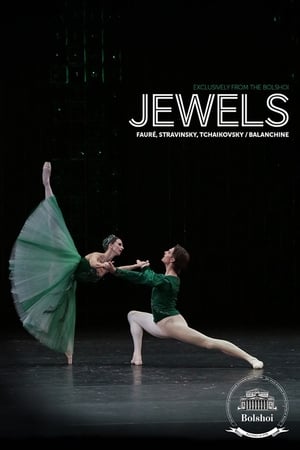
George Balanchine's jewel-themed triptych, strikingly choreographed to the music of Faure, Stravinsky and Tchaikovsky. This three act masterpiece is renowned as the world's first full-length abstract ballet. The Russian-born co-founder of the New York City Ballet, Balanchine was inspired by the artistry of jewellery designer Claude Arpels to create a trio of distinct movements revealing the essence of each precious stone. Each part also evokes three different cities: Paris, New York and St. Petersburg. 'Emeralds' was conceived as a tribute to the French romantic school, with music by Gabriel Faure. The fiery and energetic 'Rubies' taps into the rich tradition of Broadway musicals, with music by Stravinsky. 'Diamonds' honours the grandeur of Imperial Russia and the Maryinsky Theater, choreographed to the music of Tchaikovsky. With its jewel-like costumes, this is a celebration of the influences on the choreographer who was described as the father of American ballet.
The young soldier Don José intends to marry Micaëla, a girl from his home village. But when he meets the sensual and high-spirited Carmen, he sacrifices everything to be with her. Carmen grows tired of Don José and falls in love with the toreador Escamillo. Unable to bear her leaving him, Don José tracks Carmen down to a bullring where Escamillo is fighting and murders her.
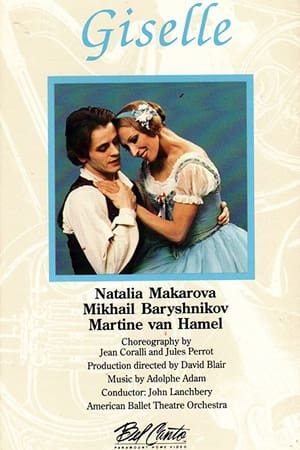
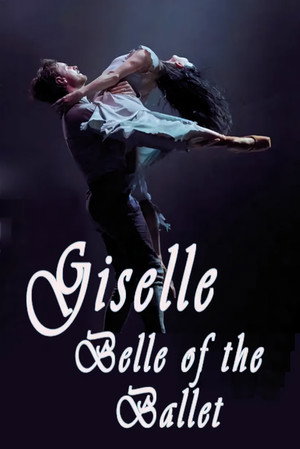
The peasant girl Giselle discovers the true identity of her lover Albrecht – and that he is promised to another. Giselle kills herself. Her soul enters the ranks of the Wilis – shades of young women who died before their wedding day. All men that come across their path are compelled to dance themselves to death, and Albrecht falls into their trap. Giselle’s intercession saves Albrecht and releases her soul from the Wilis’ power.
Lucia’s brother Enrico is horrified to learn she has fallen in love with his sworn enemy Edgardo. He hastily arranges her marriage to his associate Arturo. Edgardo and Lucia privately exchange rings before he leaves to fight in France. Enrico tricks Lucia into believing that Edgardo has been unfaithful. Longing for death, she signs the contract with Arturo – moments before Edgardo returns. Lucia murders Arturo in their wedding bed. His death is followed first by Lucia’s, and then by Edgardo’s.
The priestess Norma loves Pollione, leader of the occupying force suppressing her people, and has borne two children by him. But Pollione’s love has withered, and he now loves Norma’s fellow priestess Adalgisa. Meanwhile, the people urgently look to Norma to lead their rebellion. Norma discovers the love between Pollione and Adalgisa. Furiously she gives the signal for war. Pollione is captured, attempting to steal away with Adalgisa. Norma, called upon to announce a sacrificial victim to consecrate the uprising, declares it shall be a guilty priestess: herself.
Nabucco, King of Babylon, takes Jerusalem in his war with the Israelites – but his daughter Fenena loves the Israelite Ismaele. She releases their prisoners, leading her vengeful half-sister Abigaille to plot to take power. Nabucco declares himself a god and is struck by a bolt of lightning. Abigaille tricks the now feeble king into signing a death warrant for the Israelites, including Fenena and Ismaele. Nabucco prays to the God of Israel for forgiveness; his sanity is restored and he saves the prisoners from death. He converts himself and his people, while Abigaille commits suicide.
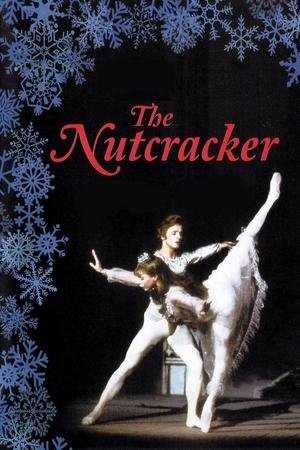
The young Clara creeps downstairs on Christmas Eve to play with her favourite present – a Nutcracker. But the mysterious magician Drosselmeyer is waiting to sweep her off on a magical adventure. After defeating the Mouse King, the Nutcracker and Clara travel through the Land of Snow to the Kingdom of Sweets, where the Sugar Plum Fairy treats them to a wonderful display of dances. Back home, Clara thinks she must have been dreaming – but doesn’t she recognize Drosselmeyer’s nephew?
Cio-Cio-San, the young Japanese bride of dashing American officer Lieutenant Pinkerton, finds her romantic idyll shattered when he deserts her shortly after their marriage. She lives in hope that one day he will return. Three years later, Cio-Cio-San and her little son see Pinkerton’s ship in the harbour. She excitedly expects his visit – but Pinkerton and his American wife Kate have come only to take the boy away, to raise him in America. Cio-Cio-San bids her son farewell and then takes her own life.
The Dream: Frederick Ashton’s delightful interpretation of Shakespeare’s A Midsummer Night’s Dream is a classic of The Royal Ballet’s repertory. Symphonic Variations: Ashton was inspired to create a ballet on the four seasons – but as he began to choreograph he refined and purified until the ballet shook off its original meaning, emerging as an abstract celebration of movement and physicality. Marguerite and Armand: Marguerite, a Parisian courtesan, lies on her deathbed. She recalls her tragic love affair with Armand in a series of feverish flashbacks.
As members of the feuding Capulet and Montague families, Romeo and Juliet should be sworn enemies, but they fall deeply in love and marry in secret. That very day, disastrous circumstances lead Romeo to fight and kill Juliet’s cousin Tybalt, setting off a chain of events that culminate in tragedy.
Prince Siegfried is celebrating his coming of age. The Queen Mother informs him that, the following day, during the grand ball held to mark his birthday, he must choose a future wife. Displeased at not being able to choose her out of love, he goes into the forest during the night. It is then that he spots a flock of swans. He raises his crossbow, prepares to shoot, but stops immediately: before him stands a beautiful woman dressed in white swan feathers, followed by twelve other women dressed in the same way, four of whom are known as the ‘little swans’. ‘Swan Lake’ is a ballet by Pyotr Ilyich Tchaikovsky, comprising 4 acts and 4 scenes, or 3 acts and 4 scenes. The staging is based on a libretto by Vladimir Begichev and Vasili Geltser. The story is an ancient German legend recounting the tale of the beautiful Princess Odette, transformed into a swan by the curse of the evil sorcerer Rothbart. Recorded live at the Royal Opera House, Covent Garden, on 17 March 2015.