Begotten is the creation myth brought to life, the story of no less than the violent death of God and the (re)birth of nature on a barren earth.
A dying man in his forties recalls his childhood, his mother, the war and personal moments that tell of and juxtapose pivotal moments in Soviet history with daily life.
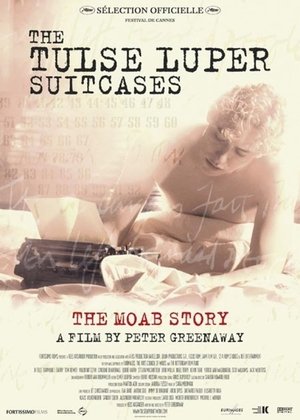
A comic study of 20th-century history, reconstructing the life of writer, creator and professional prisoner Tulse Luper. Born in 1911 Newport and last heard of in 1989, Luper’s life is pieced together from the evidence found in 92 suitcases scattered across the globe. In the first of three parts, we follow Luper through three distinct episodes: as a child during the First World War; as an explorer in Mormon Utah; and as a writer in Belgium during the rise of fascism.
Black-and-white UCLA Student Film Preserved by the UCLA Film and Television Archive. An impressionistic portrait of a man haunted by his past, which comes careening into his present when he goes for a motorcycle ride with his girlfriend. Starring Dennis Hopper.
An exiled magician finds an opportunity for revenge against his enemies muted when his daughter and the son of his chief enemy fall in love in this uniquely structured retelling of the 'The Tempest'.
A woman on the run from the mob is reluctantly accepted in a small Colorado community in exchange for labor, but when a search visits the town, she learns that their support has a price.
"Port Meadow" is an experimental landscape film. It was shot in the eponymous location––an ancient grazing land located in Oxford, England––during the nationwide lockdown of November 2020. Consisting of various long takes, the film examines the relationship between human life and the natural environment, and meditates on the ability of filmic technology to simultaneously articulate and contribute to the (illusory) stratification that underscores this association.
The tranquility of Uncle No Rules's home is disturbed when a mysterious variety-show equipped with a studio audience and charismatic host (Marky Ramone) descends upon the household.
A man named Shiki has been sent to a company in Matsuyama. Since Shiki was famous as a baseball club member at a previous company, there is a story about baseball clubs in the company. Ken, who was a player in high school, participated without being reluctant, supported by his lover Michiko.
In the final days of the American Civil War, an emigre Hungarian military officer attempts to map the situation of the enemy. Many veterans of the 1848 War of Independence in Hungary fought on the northern side. Experienced Fiala, Boldogh who struggles with homesickness and the reckless Vereczky all experience their enforced emigration in different ways and news of impending peace elicits different reactions from them all.
Writes Ando, "Oh! My Mother was the first work I made using a newly bought 16mm camera I had purchased with the writer Shuji Terayama in Paris. This piece was selected for the Oberhausen International Film Festival. In 1969, there were, of course, no video cameras like ones we see now, and color TVs were only found at broadcast television studios. I had just been employed at the TBS (Tokyo Broadcasting System), and I often snuck into the studios after hours to experiment with the equipment. Oh! My Mother was made using the feedback effect, which is produced by infinitely expanding the image by looping the video."
Summertime. In a camping, three little girls listen to an old mysterious story about a missing kid. They start to investigate.
From afar, the suburban lifestyle may appear as a sort of utopia; but be sure to gaze beyond the veil, for dire horrors and troubled intimacies will arise in the most unpleasant of forms.
Set over three generations and beginning with a sexually frustrated orderly during WWII who relieves his tensions in the most outlandish, gross ways. The result of his liaison is a glutton who grows up to be a champion speed eater. He produces a child who becomes obsessed with taxidermy.
Impressions about fighting the passing of time, living in a constant hurry and the uphill battle of finding the natural tempo to life itself.
Mockumentary experimental film, which shows one day in the life of a young man. The action takes place on the Day of Soviet Cosmonautics, April 12, one of the last years of the USSR. Outside the window, it is gradually getting warmer, the onset of spring is felt, promising hope for the possibility of changes in the country. The hero of the film is fond of space. The young man, who idolizes Gagarin, is engaged in reconstruction, making the uniform in which the cosmonaut walked in the prime of his glory. Our hero is also a film enthusiast. He makes films with stories of space flights and shows them to his friends. The film is stylized as amateur films of the 1980s and was shot on a 16-mm color film made by the company" Svema", made in the Soviet Union. The quality of this film allows the viewer to fully immerse themselves in the atmosphere of the time of the film, which is dedicated to Soviet cosmonautics and Edward D. Wood Jr.
An unknown girl breaks out of her daily grind by undergoing an intense audio-visual trip.
In SUNSPOTS, several 16mm shots of the sun are layered and superimposed, paired with a soundscape consisting of volcanos, fire, plastic and the audible solar sounds recorded by the Solar and Heliospheric Observatory (SOHO).
A ritual of grids, reflections and chasms; a complete state of entropy; a space that devours itself; a vertigo that destroys the gravity of the Earth; a trap that captures us inside the voids of the screen of light: «That blank arena wherein converge at once the hundred spaces» (Hollis Frampton).
Told in the form of a mock documentary in 92 short parts, nineteen million people are left obsessed with birds and flight following a strange occurrence. A documentarian analyses the lives of all the survivors whose surnames begin with FALL to uncover the truth behind the event.