As Black and LGBTQ+ History Month begin this February, material science clothing brand PANGAIA leads celebrations with a poetic film that honors these two communities. Following a year of isolation, and with it a deeper understanding of the importance of outdoor spaces and the environment, Wè is a portrait of the self-love and acceptance we have learned to show others and gift to ourselves.
Works with sound recordings of Dion McGregor, who became famous for talking in his sleep.
Study of the relationship between observer and landscape in the contemplative experience. The view building the landscape from the necessary distance. The delimitation of its borders against the total continuum of nature. The observer immersed in the path of his gaze across the landscape. Resting the gaze in the details that make the globallity. The view selecting the space included as a landscape.
Mostly dark, rejecting images which are repeated. A stone wall, the chamber of a revolver which is, at first not recognizable, a close-up of a cactus. The duration of the takes emphasises the photographic character of the pictures, simultaneously with a crackling, brutal sound. (Hans Scheugl)
This is a 1991 documentary film about the legendary artist and filmmaker, Joseph Cornell, who made those magnificent and strange collage boxes. He was also one of our great experimental filmmakers and once apparently made Salvador Dali extremely jealous at a screening of his masterpiece, Rose Hobart. In this film we get to hear people like Susan Sontag, Stan Brakhage, and Tony Curtis talk about their friendships with the artist. It turns out that Curtis was quite a collector and he seemed to have a very deep understanding of what Cornell was doing in his work.
The rare short film presents a curious dialogue between filmmaker Julio Bressane and actor Grande Otelo, where, in a mixture of decorated and improvised text, we discover a little manifesto to the Brazilian experimental cinema. Also called "Belair's last film," Chinese Viola reveals the first partnership between photographer Walter Carvalho and Bressane.
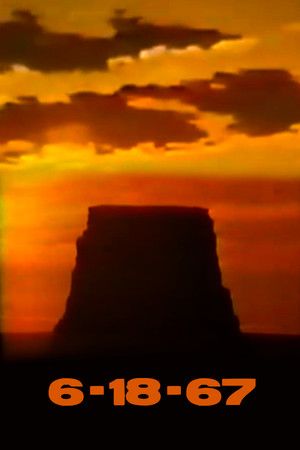
Filmed during the production of the Columbia Pictures western "Mackenna’s Gold," this short work presents a non-narrative visual study of the Arizona desert. Rather than documenting the film set itself, "6-18-67" assembles landscape images, time-lapse photography, and ambient sound into an abstract record of place and duration.
One of the major works by South Korean feminist film collective Kaidu Club, this short is a dynamic, idiosyncratic, and mosaic-like portrait of Korean life, culture, and people who dream of a unified North and South.
In 1967, experimental filmmaker Jorgen Leth created a striking short film, The Perfect Human, starring a man and women sitting in a box while a narrator poses questions about their relationship and humanity. Years later, Danish director Lars von Trier made a deal with Leth to remake his film five times, each under a different set of circumstances and with von Trier's strictly prescribed rules. As Leth completes each challenge, von Trier creates increasingly further elaborate stipulations.
A 6-year-old Tibetan boy leaves his family and flees to a refugee camp in northern India.
The film is a study of nature and significance of the hands in cinema. Besides review of movements and actions, which creates an independent story, it reveals interactions and interdependence of cinematic traditions of various authors, countries and periods
A silent film portraying winter across three continents.
Originally produced anonymously and distributed by RTMark, Untitled #29.95 tells the story of the commercial art establishment's attempt to turn video art into a precious commodified object through the release of limited editions during the nineties.
A video reconstruction of the 1977 Wooster Group production Rumstick Road, an experimental theater performance created by Spalding Gray and Elizabeth LeCompte after the suicide of Gray's mother. Archival recordings are combined with photographs, slides, and other materials to recreate the original production.
A vehicle of consciousness navigates the vertiginous labyrinths of San Francisco. ROMAN CHARIOT was filmed over several months with a spy camera mounted on filmmaker David Sherman's son's baby carriage.
This film describes a psychological state "kin to moonstruck, its images emblems (not quite symbols) of suspension-of-self within consciousness and then that feeling of falling away from conscious thought. The film can only be said to describe or be emblematic of this state because I cannot imagine symbolizing or otherwise representing an equivalent of thoughtlessness itself. Thus the actors in the film, Jane Brakhage, Tom and Gloria Bartek, Williams Burroughs, Allen Ginsberg, Peter Olovsky and Phillip Whalen are figments of this 'Thought-Fallen Process', as are their images in the film to find themselves being photographed."
Filmmakers use archival footage and animation to explore the culture surrounding nuclear weapons, the fascination they inspire and the perverse appeal they still exert.
A first feature based on sexual events. An actress undertakes her desire of directing her first movie, without a budget or any production company funding her project. She gathers a group of professional actors and actresses, and proposes a project based on a very particular experience: stepping on their fears through a metaphorical 'leap of faith'. As the project advances, individual conflicts will arise affecting the shoot, making the movie crew wonder whether or not they should go on. Will they take the leap of faith with all its consequences?
Cinema and painting establish a fluid dialogue and begins with introspection in the themes and forms of the plastic work of a woman tormented by the elongated specters, originating from her obsessions and nightmares.
A cameraman wanders around with a camera slung over his shoulder, documenting urban life with dazzling inventiveness.