Immediately after the Boston Marathon bombing in April 2013, amateur detectives took the Internet chat rooms to try to find the culprits, looking for details in photographs uploaded to the sites that could point to the guilt of potential suspects.
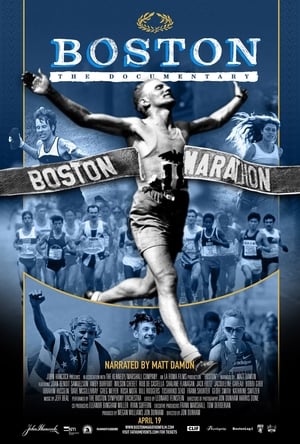
The history of the Boston Marathon from its humble origins starting with only 15 runners, to the first female runners, through the tragedy in 2013, and ultimately the triumph of 2014.
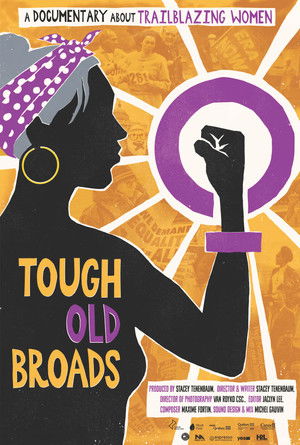
Kathrine Switzer, Siila Watt-Cloutier, and Sharon Farmer. They are the first woman to run the Boston Marathon officially, the first woman to connect climate change to human rights, and the first woman to serve as Chief White House Photographer. These trailblazing women broke barriers in their time and continue to pursue their passions to this day. They’re living proof that you can follow your dreams and maybe change the world in the process.
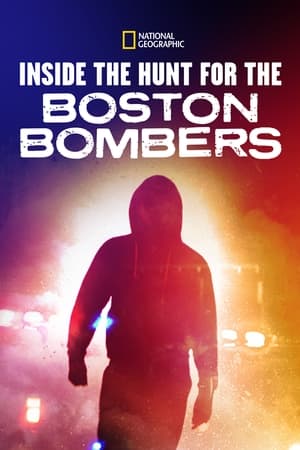
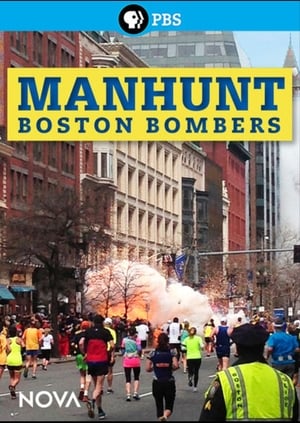
In April 2013, chaos erupted in Boston near the finish line of one of the world's oldest and most prestigious marathons. It was the worst terrorist attack on the United States since 9/11 and led to one of the most extensive and public manhunts in American history. Now, as the one-year anniversary approaches, National Geographic Channel presents a special two-hour event, Inside the Hunt for the Boston Bombers.
A documentary about Boston and the technology involved to catch bombers
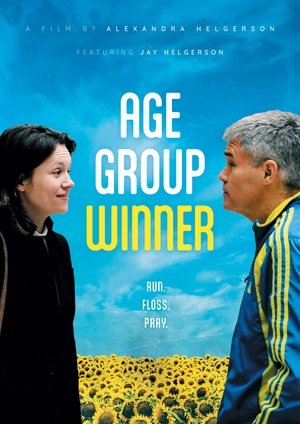
In 1980 Jay Helgerson shocked the world, becoming the first person to run a marathon a week for a year – each race completed in under three hours. For the last ten years, his daughter, filmmaker Alexandra Helgerson, followed him with a camera in order to understand the eccentric man who raised her. What she gets are his projected anxieties, his struggles with physical age and emotional distress, all while he endlessly trains for the Boston Marathon. But as Jay trains, the film is nearly derailed by Alexandra’s encounter with a life threatening illness. Ultimately, AGE GROUP WINNER is an affirmation of the will to live.
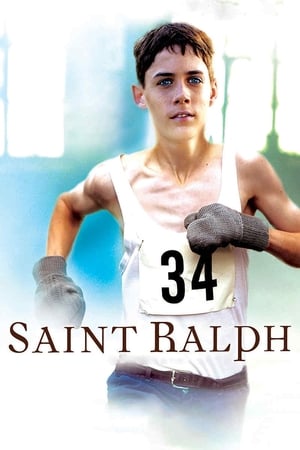
This Canadian made comedy/drama, set in Hamilton, Ontario in 1954, is a sweet and - at times - goofy story that becomes increasingly poignant as the minutes tick by. It's the fictional tale of a wayward 9th grader, Ralph (Adam Butcher), who is secretly living on his own while his widowed, hospitalized mother remains immersed in a coma. Frequently in trouble with Father Fitzpatrick (Gordon Pinsent), the principal of his all-boys, Catholic school, Ralph is considered something of a joke among peers until he decides to pull off a miracle that could save his mother, i.e., winning the Boston Marathon. Coached by a younger priest and former runner, Father Hibbert (Campbell Scott), whose cynicism has been lifted by the boy's pure hope, Ralph applies himself to his unlikely mission, fending off naysayers and getting help along a very challenging path from sundry allies and friends.
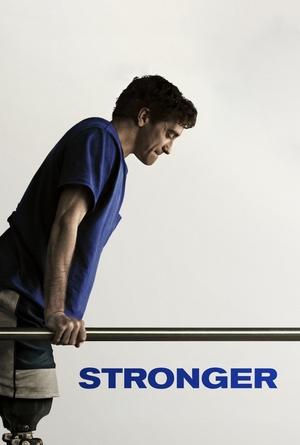
A victim of the Boston Marathon bombing in 2013 helps the police track down the killers while struggling to recover from devastating trauma.
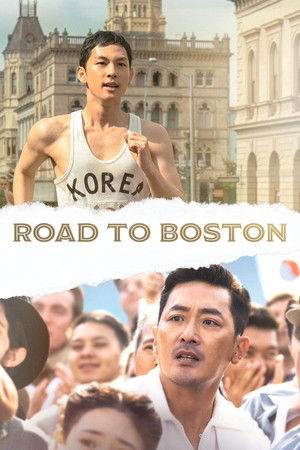
A rousing tale of the Korean athletes who ran the 1947 Boston International Marathon, the first international marathon held since World War II.
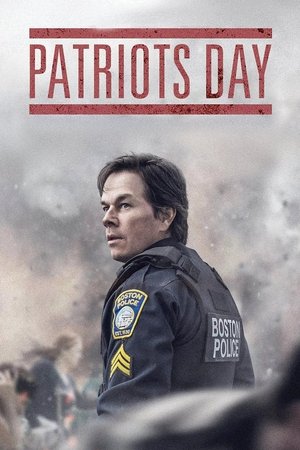
In the aftermath of an unspeakable act of terror, Police Sergeant Tommy Saunders joins courageous survivors, first responders and investigators in a race against the clock to hunt down the Boston Marathon bombers before they strike again.
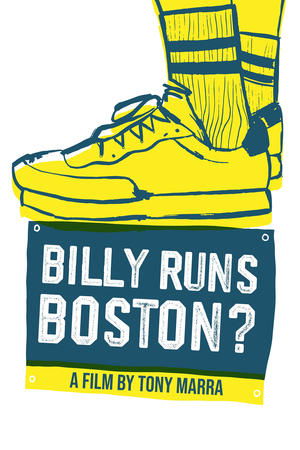
A fictional film about a runner's relationship with his sister and brother as he tries to qualify for Boston. Available to stream for free on Vimeo
Pas assez de volume
The last film in Vidokle's trilogy on Cosmism is a meditation on the museum as the site of resurrection-a central idea for many Cosmist thinkers, scientists and avant-garde artists. Filmed at the State Tretyakov Gallery, the Moscow Zoological Museum, The Lenin Library, and the Museum of Revolution, the film looks at museological and archival techniques of collection, restoration and conservation as a means of the material restoration of life, following an essay penned by Nikolai Federov on this subject in the 1880s. The film follows a cast comprised of present-day followers of Federov, several actors, artists and a Pharaoh Hound that playfully enact a resurrection of a mummy, a close examination of Malevich's Black Square, Rodchenko's spatial constructions, taxidermied animals, artifacts of the Russian Revolution, skeletons, and mannequins in tableau vivant-like scenes, in order to create a contemporary visualization of the poetry implicit in Federov's writings.
The last words of the gangster Dutch Schultz form the starting point for this animated documentary. The FBI noted these words down on Schultz’ deathbed, in the hope he would betray his colleagues. Here, spoken in the english version by Rutger Hauer, they accompany the sober, pencil drawn animation based on traced (film) images from Schultz’ time: the late 1920s, early 1930s.
The 94 minute documentary film “From the 50 Yard Line” presents the football field not only as a sports venue but also as a stage for the marching band. The viewer goes on an exciting adventure through band camp, auditions, the marching season, and the regional and national competitions in 2006. You see the great rewards of disciplined practice, the overlooked technical artistry of the group endeavor, and the important life changing effects of instrumental music education. Another layer delves into the misconceptions about marching band, showing "band nerds" in a whole new light.
An interview with actor Dan Zukovic about Hanging Heart (1989)
Aristocratic Italian roots, a close family connection to James Bond novelist Ian Fleming, wartime experiences in the British and Finnish military, post-war Nazi-hunting adventures and a side career as a heavy metal rock singer. And one of the most iconic actors of all time.
A young pair from Stuttgart fly to Shanghai to hop aboard the textile business of his father while she prepares for the birth of their son. A story about the ever more common movement of Germans into the East for professional gain.
Starting with a long and lyrical overture, evoking the origins of the Olympic Games in ancient Greece, Riefenstahl covers twenty-one athletic events in the first half of this two-part love letter to the human body and spirit, culminating with the marathon, where Jesse Owens became the first track and field athlete to win four gold medals in a single Olympics.
Working men and women leave through the main gate of the Lumière factory in Lyon, France. Filmed on 22 March 1895, it is often referred to as the first real motion picture ever made, although Louis Le Prince's 1888 Roundhay Garden Scene pre-dated it by seven years. Three separate versions of this film exist, which differ from one another in numerous ways. The first version features a carriage drawn by one horse, while in the second version the carriage is drawn by two horses, and there is no carriage at all in the third version. The clothing style is also different between the three versions, demonstrating the different seasons in which each was filmed. This film was made in the 35 mm format with an aspect ratio of 1.33:1, and at a speed of 16 frames per second. At that rate, the 17 meters of film length provided a duration of 46 seconds, holding a total of 800 frames.