A group of delinquent high school girls form a band when they accidentally poison their school's brass band and have to replace them.
The two musical masters swing out.
Oscar Peterson is accompanied by the stellar duo of bassist Ray Brown and drummer Ed Thigpen for each concert performance. This is the classic Oscar Peterson Trio, considered by many to be the best Oscar Peterson Band ever. Oscar and the trio collaborate with trumpeters Clark Terry (Finland'65) and Roy Eldridge (Sweden'63) and re-create some of the excitement and fun of the Jazz at the Philharmonic (JATP) tours. Among the many highlights in this collection are the Oscar and vocalist-trumpeter Clark Terry collaboration on the ever-popular Mumbles ,and for the first time on commercial video, an Oscar Peterson Trio rendition of Tonight from his award-winning West Side Story album.
Over the course of one eventful evening, the anniversary celebration of the musical and romantic partners Aurelius Rex and Delia Lane, a jealous, ambitious drummer, Johnny Cousin, attempts to tear the interracial couple apart.
Everyone mentions her when asked who the 1st generation of jazz musicians is in Korea, adding that jazz wouldn't have been continued in Korea if not for her. It's Park Seong-yeon, the musician who ran Korea's first jazz club - Club Janus - and she provided it for other musicians to perform. Diva Janus follows the late Park's footsteps through her past and interviews by her peer musicians.
The history of American popular music runs parallel with the history of a Russian Jewish immigrant family, with each male descendant possessing different musical abilities.
Imagine an AM Radio Station with a dawn to dusk license that played nothing but jazz and comedy records. Did I mention it FLOATED in the Ohio River and changed the culture of a Community? The history of Cincinnati Jazz is long, wide, diverse and in the case of WNOP sometimes beyond belief. Saxophonist turned filmmaker Christopher Braig's second Film will focus on the people, music, and cities that kept "The Jazz Ark" sailing for 42 years from 1968 to 2000.
Tenor saxophone master Sonny Rollins has long been hailed as one of the most important artists in jazz history, and still, today, he is viewed as the greatest living jazz improviser. In 1986, filmmaker Robert Mugge produced Saxophone Colossus, a feature-length portrait of Rollins, named after one of his most celebrated albums.
Documentary about jazz great Chet Baker that intercuts footage from the 1950s, when he was part of West Coast Cool, and from his last years. We see the young Baker, he of the beautiful face, in California and in Italy, where he appeared in at least one movie and at least one jail cell (for drug possession). And, we see the aged Baker, detached, indifferent, his face a ruin. Includes interviews with his children and ex-wife, women companions, and musicians.
Going To California is a concert performance video by the British pop group Tears For Fears. Released in 1990, it is a recording of the band's show at the Santa Barbara County Bowl in May 1990 during their "Seeds Of Love" World Tour.
Boundary-pushing Russian dancer and actress Ida Rubinstein selects renowned French composer Maurice Ravel to compose the music for her next ballet. Ravel ends up creating his greatest success ever: Boléro.
The musical short features a romantic story that ties in with the music of Stan Kenton and his Orchestra with June Christy and the Pastels.
An egotistical saxophone player and a young singer meet on V-J Day and embark upon a strained and rocky romance, even as their careers begin a long uphill climb.
Immersed in music from an early age, Judith Hill's work blends soul, R&B and funk. Her sincere and fragile creations prove just how much courage and strength it takes for women to make their mark in the male-dominated music industry.
During the 1960s, two American jazz musicians living in Paris meet and fall in love with two American tourist girls and must decide between music and love.
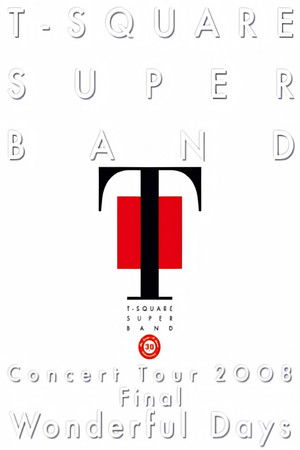
T-Square's 30th anniversary concert.
Taken in by the musical world as a young orphan, Rick Martin grows up with a desire to play pure jazz instead of the commercial gigs he lands, whilst also coping with the problems caused by his tempestuous marriage to an aloof heiress.
Saxophone player Charlie ‘Bird’ Parker comes to New York in 1940 and is quickly noticed for his remarkable way of playing. He becomes a drug addict but his loving wife Chan tries to help him.
Stop for Bud is Jørgen Leth's first film and the first in his long collaboration with Ole John. […] they wanted to "blow up cinematic conventions and invent cinematic language from scratch". The jazz pianist Bud Powell moves around Copenhagen -- through King's Garden, along the quay at Kalkbrænderihavnen, across a waste dump. […] Bud is alone, accompanied only by his music. […] Image and sound are two different things -- that's Leth's and John's principle. Dexter Gordon, the narrator, tells stories about Powell's famous left hand. In an obituary for Powell, dated 3 August 1966, Leth wrote: "He quite willingly, or better still, unresistingly, mechanically, let himself be directed. The film attempts to depict his strange duality about his surroundings. His touch on the keys was like he was burning his fingers -- that's what it looked like, and that's how it sounded. But outside his playing, and often right in the middle of it, too, he was simply gone, not there."
On the occasion of his 80th birthday, an intimate documentary follows the illustrious pianist and great French jazz musician, Alain Jean-Marie from Guadeloupe, on a recent trip to Cuba. He talks about his career, his adolescence, and his youth in Guadeloupe, where he was rocked and deeply influenced by Cuban music. Director Bertrand Fèvre followed this now essential artist in Havana, to be discovered or rediscovered through a film set to jazz.