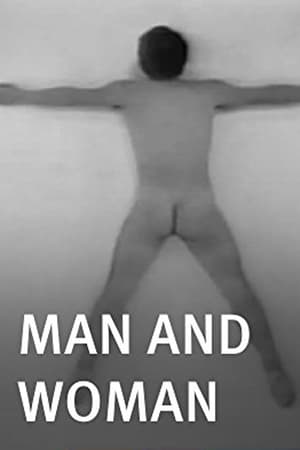
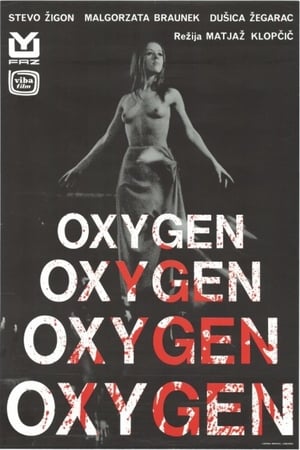
MAN AND WOMAN shows full body shots of a naked man and woman shot from above without movement. They are shown alone as well as together, one over (or under) the other symbolizing in words at the same time, their positions
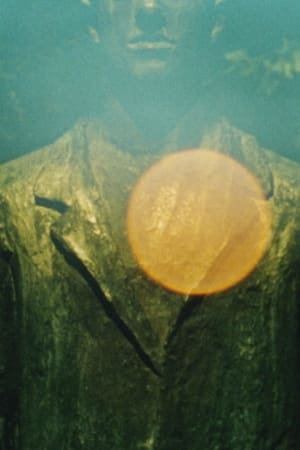
A triple exposure on EXR 50D 16mm film: two layers shot in summer, and the third captured on the cusp of winter. A collection of statues fading in and out of consciousness, around the Weissensee lake in northeast Berlin, where the filmmaker lives.
A day in the city of Berlin, which experienced an industrial boom in the 1920s, and still provides an insight into the living and working conditions at that time. Germany had just recovered a little from the worst consequences of the First World War, the great economic crisis was still a few years away and Hitler was not yet an issue at the time.
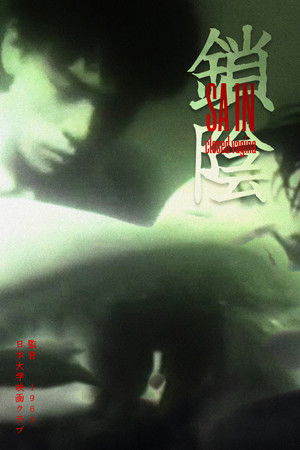
"In medical terminology, absence of genitalia in females is referred to as "gynatresia". In other words, an extreme defect that goes beyond a mere illness" Adachi's follow-up to Bowl using the figure of a woman suffering from an unusual sexual aliment has often been taken as a controversial allegory for the political stalemate of the Leftist student movement after their impressive wave of massive fiery protests failed to defeat the neo-imperialist Japan-US Security Treaty. The ritualistic solemnity of the charged sexual scenes contribute to the oneiric qualities of Closed Vagina which Adachi would later insist was an open work, not meant to deliver any kind of deliberate political message. - Harvard Film Archive
Television was invented as a result of scientific and technical research. Its power as a medium of news and entertainment altered all preceding media of news and entertainment
In this story set in near future, a group of young rebels, hippies and 1968 protesters want to cede and make an independent Island from the Mainland. A journalist who came to the Island to make a report about political summit that takes place there gets involved in the clash between young rebels and establishment.
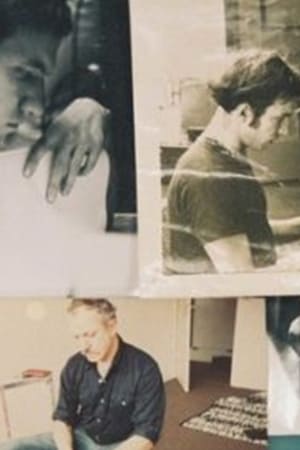
Electro-Pythagorus is an intimate and subjective portrait of the late Martin Bartlett, the Canadian electronic music pioneer who studied with Pauline Oliveros, David Tudor, John Cage, and Pandit Pran Nath. His contribution as an interdisciplinary composer, educator, and founding member of Western Front, though undoubtedly extensive, is in danger of being erased from cultural memory since his death from AIDS in 1993. Navigating an array of archival materials including letters, correspondences, notebooks, personal photos, and a huge body of unreleased music and field recordings held at the archives of Simon Fraser University, Electro-Pythagoras is a journey through the evolution of Bartlett’s musical time and space, softly guided by Luke Fowler’s insightful camera and montage—creating an experimental portrait that defies one-dimensionality.
Avant-garde, black & white realization of the synth driven score.
Features four distinct, bizarre, existential tales about people whose lives are in transition, who are each asking questions about themselves, their environments, and about God(s).
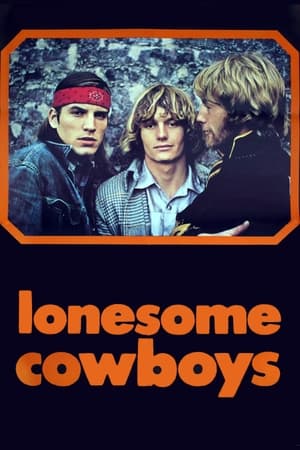
Five lonesome cowboys get all hot and bothered at home on the range after confronting Ramona Alvarez and her nurse.
An experimental film shot on distressed 16mm celluloid that reveals various men on the beach or in swimming pools, in various states of lounging in the lazy California sun.
The Alchemist assembles together a group of people from all walks of life to represent the planets in the solar system. The occult adept's intention is to put his recruits through strange mystical rites and divest them of their worldly baggage before embarking on a trip to Lotus Island. There they ascend the Holy Mountain to displace the immortal gods who secretly rule the universe.
Village Diary
Neutral Ancapistan Hotel
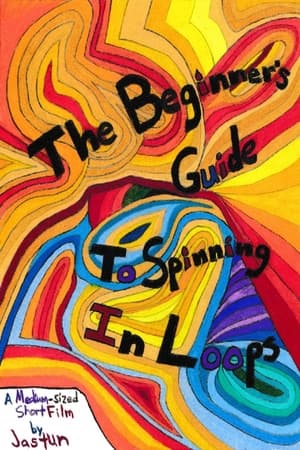
From June 2021 to June 2022, Justin "Jastun" Bland records whatever that is in front of him. He presents an abstract montage of collected videos varying from onscreen recordings to filming special, intimate & mundane in-real-life moments. This short captures our daily routines in life and how we choose to spontaneously record them.
Han closes a trilogy that began with Ere erera baleibu... (1968) and continued with Impressions en haute atmosphère (1991), which goes from the microcosm of atoms (Ere Erera) to the macrocosm of cosmic galaxies. After an "informal" abstraction obtained through the projection of fine particles on a transparent film tape from which all notion of form is shunned, the artist reintroduced in his following movies simple shapes, circles and spirals, coils, reproduced according to the most traditional technique of movement decomposition (animation cinema), which "channels" Brownian motion of matter.
This is the fourth film in my Zoujiacun series within the Folk Memory Project. In 2013, I came back to my village and faced the trash all over the village. The children and I tried to improve the environment of our village. This was a tough fight against the trash and ideas of villagers. I felt like that the trash was in my heart. The 95-year-old grandma Sha and her 49-year-old son Xizhu, their lonely solitary life is also in this film. This film is about the progress that I fight with myself.
This is my fifth time coming back to my own village, where I was born and brought up. After I graduated from college, when I was staying in my village, I was always suspected and judged by the village people. Xizhu grandpa was called ‘fool’ by other villagers, and Zengxiang aunty was looked down by others. They come into my life, and I stayed with them. Their naïve and strange thought made think about my village in a new way. In this quite ‘normal’ village, who are normal people? In those normal people’s eyes, am I another fool of this village?
A journey through the painful and warm memories of the past.
An old man cooked his dinner in the kitchen. Looking at the fish he has bought, a sudden sympathy arose.