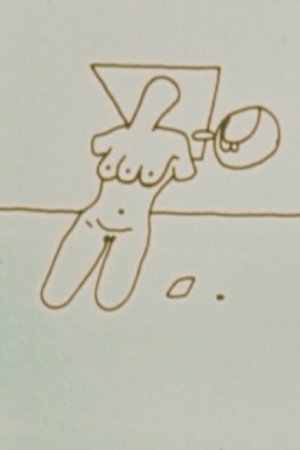
In Flesh Flows we see a balance of Beckett’s keen drawing ability, in the probing erotic forms, and his technical acuity, which transforms the carnal images into a compelling, transcendent experience. Preserved by the Academy Film Archive in partnership with iotaCenter and National Film Preservation Foundation in 2007.
The screen is divided again and again until the picture arranged in ever changing strips bursts into whirring dynamic.
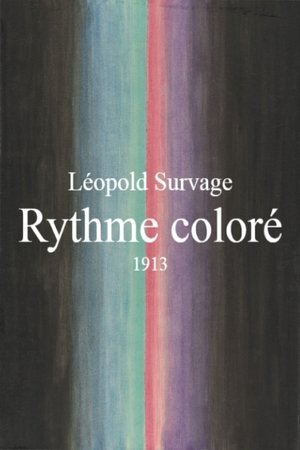
A film unmade-- That is, Survage's film was never realized in the traditional sense-- At the time, such a project was beyond technological possibility. His pioneering efforts to combine luminous, expressive painting and the moving picture were further curtailed by the outbreak of WWI. Some have taken it upon themselves to 'animate' his watercolor plates in attempts to set his dream into motion.
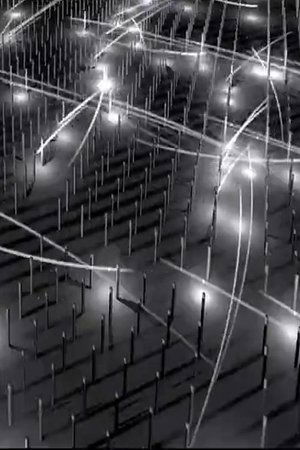
A unique journey across a topography created entirely from a form of digital light and shadow—a bristling terrain of poles bending the light in every direction. This film is the remake of Barcode, an abstract road-movie about light and shadows.
In the darkness of a cave, one man who had never seen even his own figure found a hollow flooded with light. An expression of a chaotic world. This experimental graduation film is a mixture of different animation techniques
Two Space systematically explores symmetries used by Islamic artists to create abstract temple decorations. The two dimensional patterns, like the tile patterns of Islamic temples, are generated by performing a set of symmetry operations (translations, rotations, and reflections) upon a basic figure or tile. Two Space consists of twelve such patterns produced using each of nine different animating figures (12 x 9 = 108 total). Rendered in stark black and white, the patterns produce optical illusions of figure-ground reversal and afterimages of color. Gamelan music from the classical tradition of Java adds to the mesmerizing effect.
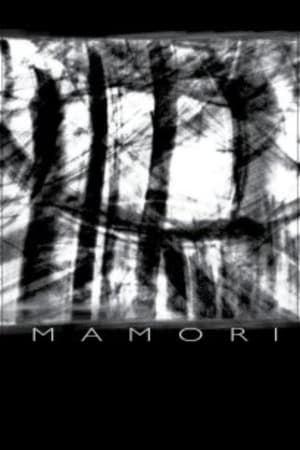
Mamori transports us into a black-and-white universe of fluid shapes, dappled and striated with shadows and light, where the texture of the visuals and of the celluloid itself have been transformed through the filmmaker’s artistry. The raw material of images and sounds was captured in the Amazon rainforest by filmmaker Karl Lemieux and avant-garde composer Francisco López, a specialist in field recordings. Re-filming the photographs on 16 mm stock, then developing the film stock itself and digitally editing the whole, Lemieux transmutes the raw images and accompanying sounds into an intense sensory experience at the outer limits of representation and abstraction. Fragmented musical phrases filter through the soundtrack, evoking in our imagination the clamour of the tropical rainforest in this remote Amazonian location called Mamori.
Three books: a film festival catalogue, a dictionary, the Bible. Three works whose materiality has become obsolete by the digital dematerialization. A commentary on the fragility of culture.
Abstract animation by Young-jae Shin
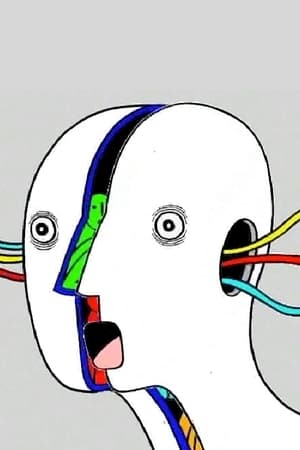
The weird hand creatures undergo different transformations in synchrony with the music.
Abstract animation by Boris Labbé
From the film-almanac on musical works of classics for children "Children's Album". A little film about genesis.
"Mouris’s film, YOU’RE NOT REAL PRETTY BUT YOU’RE MINE…, built upon the strongest elements of QUICK DREAM, and added a pop music soundtrack. Mouris says, “I shot another 100 foot roll on classmate Jerry Strawbridge’s home animation stand, and edited that into the best sequences from QUICK DREAM. The whole film was a tongue-in-cheek series of odd couples/couplings, which the title suggested. The FRANK FILM photo collage animation evolved here.” - Yale
Odds & Ends is a sly comment on the collage film and Beat culture. To discarded travel and advertising footage found at a local film laboratory, Belson Shimane added a mélange of animation—assemblages, cutouts, color fields, and line drawings—and faux hipster narration by Jacobs (credited via the anagram Rheny Bojacs) punctuated by a bongo backing. Strung together with doublespeak and non sequiturs, the monologue skirts the edge of nonsense as Jacobs waxes on about poetry, jazz, “reaching the public,” “having a good time,” and—although “money doesn’t count”—the “possibility of subsidy” through grants. Footage of champagne, tropical beaches, and exotic peoples intermingle with rhythmic drawings and stop-motion flights of fancy. The visuals race on through dazzling transformations, both amplifying and undercutting the patter. —National Film Preservation Foundation. Preserved by the Academy Film Archive in partnership with Iota Center Collection in 2006.
Abiogenesis within machinery. New life begins and strives - before being cut short.
Short film by Jean-Philippe Desclandes and Genevieve Gauckler
Hand painted directly onto film stock by Margaret Tait, this film features animated dancing figures, accompanied by authentic calypso music.
Three memories that become one. An attempt to merge heterogeneous materials: a film sequence shot in Rome, a photo from the 1930s, a noisy soundtrack. Fragmented lines, exploding bass frequencies and flickering.