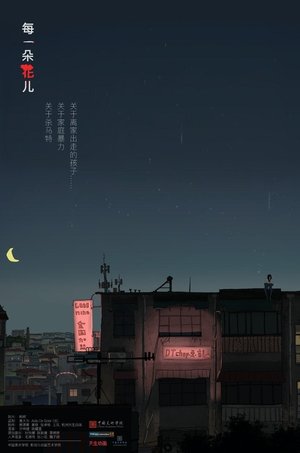
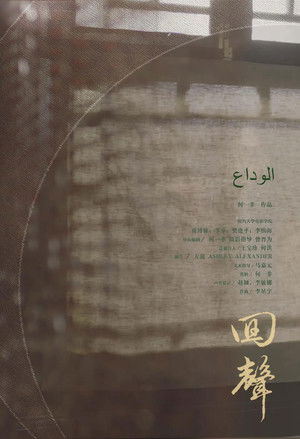
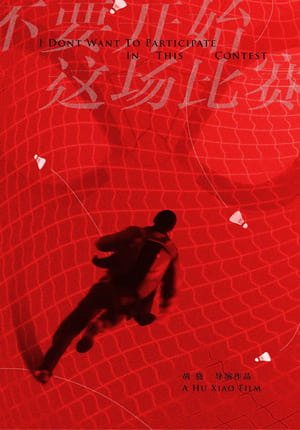
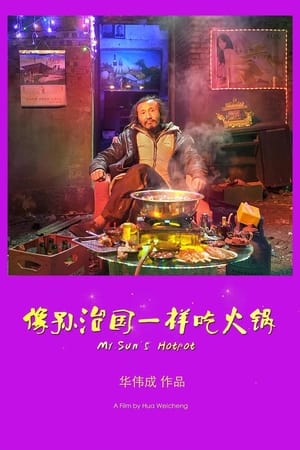
Her, not only her, they are all the only children in the family, Typical underachiever, they often escape away from their broken family r ,Humbling every day with others young people like her in Internet cafes . when she finally plans to go home, she only to find that her family had moved away… ….She became one of them.
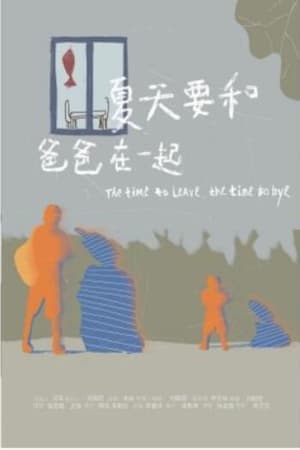
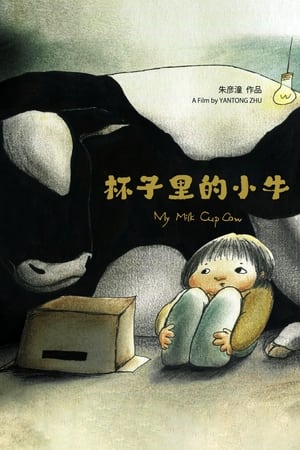
The father tells his daughter Nunu a lie that there is a cow in her milk cup. She believes it and drinks up milk, but there isn't any cow. Her father tells her a variety of lies, which Nunu finds increasingly difficult to believe.
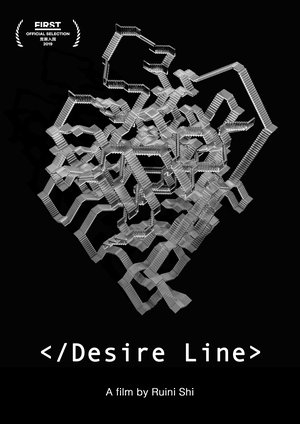
"Desire Line" was originally an architect's term for paths made by people when walking across open grassland, what these lines represent are the shortest or most easily navigated routes between an origin and destination. The film uses this idea in the context of how an artificial intelligence might work: the AI generates optimal solutions to user problems as a form of desire line calculation. The film aims to interrogate the increasingly controversial role of Artificial Intelligence by visualising a statement from a bot about its experience on a Valentine's Day in the near future.
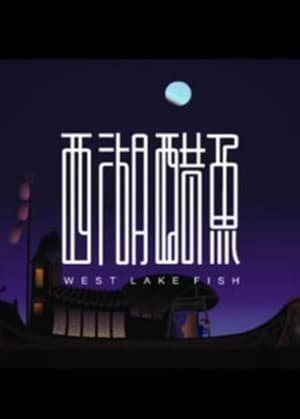
The emperor's southern tour, where the place is full of hospitality, needless to say, local food attractions need to taste the tour. West Lake Moonlight Night, quiet and distant, the emperor sat in the boat and tasted the famous West Lake vinegar cooked by famous chefs. Even though the taste of the world's famous dishes, the emperor is still attracted to the delicious taste of this dish, for a time completely disregard the image, big. The so-called music is very sad, and the bones of the fish are stuck in the throat, and the pain is unbearable. The chef tried his best, and it was hard to see the results. He was also raised by the emperor who was angry and angry. At this time, the calm prime minister is coming out...
Adapted from the online comics Pundusina, the story shows Macao's typical family values and ways of family members getting along with each other, through narrations of the daily life and interesting anecdotes of the Si's, the protagonist, for viewers to learn about the social aspect of this intriguing city.
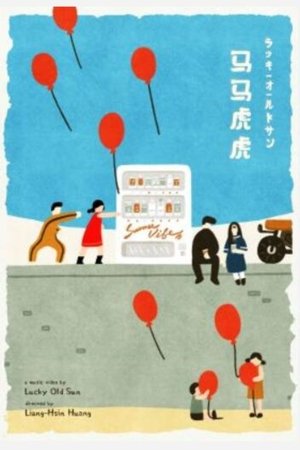
A Music Video made for Lucky Old Sun’s song ‘马马虎虎‘ (Ma Ma Hu Hu) from their new album ‘‘うすらい“. A group of young girls and boys having their summer fantasy with a few daydreams, romance and kungfu actions!
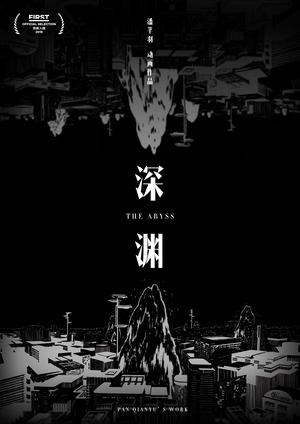
My inspiration is from the novel Us, which was written by Yevgeny Zamyatin, a Russian writer. In this world, no one has his/her own name except a code. Human beings are divided into several levels. Different levels were assigned to different types of work. The “Fountain” is both the source of energy and the landmark landscape in this city. There are many tall towers like diving platforms near the fountain. People can get closed to the “fountain” here. This city is always crowded and dark. D-503 lives a regular life here every day…
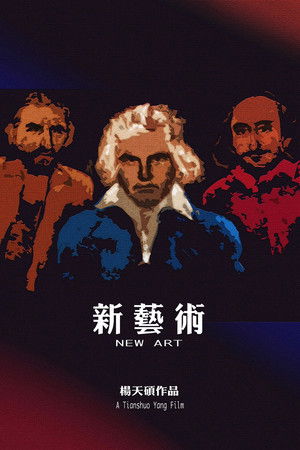
A writer shares an apartment with another painter and musician, but they never talk to each other, nor do they visit each other in the bedrooms. One day, the writer suddenly decides to visit the painter in his bedroom and initiate cooperation between them. Later, when they get stuck with their work, the musician joins them, which signals the emergence of a new form of art...
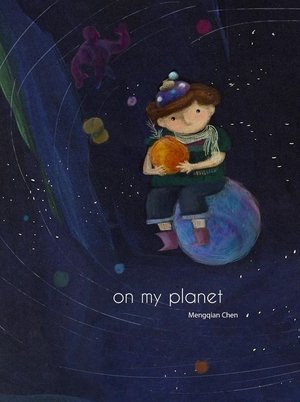
“On my planet” is a short love story. The concept is that everyone owns a little planet. The main character of my story is little boy called blue who owns a big blue planet but lives a very lonely and boring life. Until one day he found out an orange planet where a little girl lives on it , however it would only come every 72 years. This is the story about how he use every methods to attracts the girl’s attention and how he mange to pursuit his love.
A shy boy, who was not good at communicating with others, saw a shining fish in a stream one day and took it home. Since then, his life has changed. The lonely little boy was getting vivacious because of the little fish. But suddenly one morning when he got up, the fish disappeared...
Xuan is a young man working in the film industry in Beijing. To make a documentary film that he wants to present at international festivals, he decides to take advantage of the holidays of the Day of the Dead to return to Chengdu, his hometown located at the other end of the country. The documentary he is about to make is about his relationship with his own lover. He leaves for Chengdu, accompanied by another man, Bo, the cameraman of the film. The two men take the train to Chengdu where Hong, Xuan's lover, is waiting for them. From the first moment of their arrival at the station, Xuan and Bo begin to turn with their camera, Xuan having already explained to Bo what he wanted to film and that Hong would always be "playing", Bo then trusting in Xuan. But Hong is more and more opposed to this camera and the presence of Bo.
The Chinese Department of Sun Yat-sen University (Guangzhou) staged the Chinese debut of "The Vagina Monologues" in December 2003. Since then, this feminist play, which came from the US and has been committed to the elimination of gender-based violence, has incited a vagina hurricane that blew all over mainland China.
Xu Xin’s film “Dao Lu” (China 2012) offers an exclusive “in camera” encounter with Zheng Yan, an 83 year-old veteran of the Chinese Red Army, who calmly relates how he has navigated his country’s turbulent history over three-quarters of a century.Born to a wealthy family in a foreign concession, Yan joined the Chinese Communist Party (CCP) in 1941 because he sincerely believed in the socialist project, and in its immediate capacity to free China from the Japanese yoke and eradicate deep-rooted corruption.
Before the Flood is a study of the final weeks of a dying city, as thousand-year-old Fengjie on the Yangtze River is reduced to rubble and its inhabitants uprooted to make way for the new Three Gorges Dam that will flood the entire valley.
What happens when 300 lesbians from around the world attend the largest United Nations conference? How did two busloads of lesbians headed to an underground nightclub help spark the birth of a lala (LBT) movement in China? At the 1995 Fourth World Conference on Women in Beijing, the first ever lesbian tent at an UN NGO Forum was created. Emerging from hidden shadows of shame and invisibility, Chinese lalas began a hard-fought path of deliverance from themselves, from family, and from an apprehensive environment. In doing so, they sought empowerment and change as they explored concepts and issues from self-affirmation to rights consciousness. The film powerfully moves forward to the present day and shows the drastic change in today’s young feminist lalas – their challenging of sexism and homophobia with daring public street actions on subways – a parallel action to their forerunners in 1995, with much vigor and defiance 20 years later.
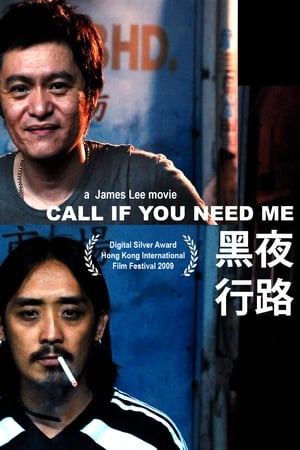
Gentle, easy-going Or Kia moves from the countryside to Kuala Lumpur to work for his cousin and best friend Ah Soon, a mid-level gangster and enforcer. While Or Kia works hard to put a sister through school, Ah Soon cares for an unstable girlfriend prone to mysterious disappearances. As they both sink deeper into a nocturnal world of debts, drugs, and betrayal, Or Kia's loyalties are strained when Ah Soon falls out of favor with the bosses and tries to escape the business.
Yuguo, from Mongolia, lost his father when he was very young. His mother Liuxia was not able to raise him as a heavy drinker. With social support, she sent Yuguo to Wuxi for free education. Liuxia is depressed all day long, and she finds sustenance of missing Yuguo in reindeer and wine. One winter holiday after many years, Yuguo returns to his hometown, the Evenki settlement deep in the Greater Khingan mountains. At that time, he is no longer the boy who just left home, but a thirteen-year-old teenager. Facing alcoholic mother, poetic uncle, pure people from the tribe, familiar yet strange forest, Yuguo, who grew up in the city, doesn’t know what to do. In the snow-laden mountains of Aoluguya, northeast of Inner Mongolia, the film chronicles their brief time together. Yuguo and His Mother is the second documentary of Gu Tao’s Evenki trilogy.
Follow the lives of the elderly survivors who were forced into sex slavery as “Comfort Women” by the Japanese during World War II. At the time of filming, only 22 of these women were still alive to tell their story. Through their own personal histories and perspectives, they tell a tale that should never be forgotten to generations unaware of the brutalization that occurred.
Huangyangchuan township, Gulang County, Gansu province. In a village, two members of a family died in accidents in a short period. People took it seriously, they decided to rebuild the old temple in the village, hoping it could bless them with peace. In the ceremony after the rebuilding was finished, the figure of Buddha, the picture of Chairman Mao, the Taoist and the country shamen, gathered together…This film documented the details of this ceremony, hoping to reveal the common status of Chinese people’s religion.
Workers, peasants, soldiers, students and merchants were five groups of Chinese society in the 1950s, after the so-called elimination of the exploited class. Borrowing this concept, the umbrella is taken as the clue to rediscover changes in various social classes after the economic reform, and to analyze the social problems in China. Workers making umbrellas, merchants selling umbrellas, students looking for jobs in the rain. Umbrella is used as a metaphor that can be seen everywhere. As the raindrop, what we see is sometimes clear, sometimes untraceable.