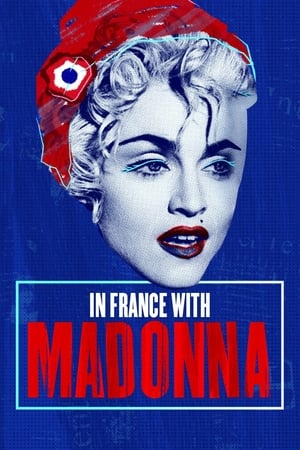
In 1918, the U.S. Army Signal Corps sent 223 women to France as telephone operators to help win the Great War. They swore Army oaths, wore uniforms, held rank, and were subject to military justice. By war's end, they had connected over 26 million calls and were recognized by General John J. Pershing for their service. When they returned home, the U.S. government told them they were never soldiers. For 60 years, they fought their own government for recognition. In 1977, with the help of Sen. Barry Goldwater and Congresswoman Lindy Boggs, they won. Unfortunately, only a handful were still alive.
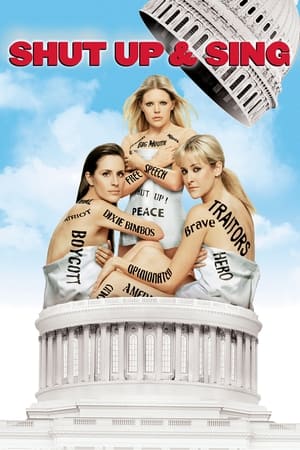
Shut Up and Sing is a documentary about the country band from Texas called the Dixie Chicks and how one tiny comment against President Bush dropped their number one hit off the charts and caused fans to hate them, destroy their CD’s, and protest at their concerts. A film about freedom of speech gone out of control and the three girls lives that were forever changed by a small anti-Bush comment
The compelling story of an extraordinary woman's journey from her birth in a paper thin shack in the cotton fields of Georgia to her recognition as a key writer of the twentieth Century.Walker made history as the first black woman to win a Pulitzer Prize for her groundbreaking novel, The Color Purple.
Documentary about the practice of abortion in France in the early seventies, at a time when it was still illegal.
Delphine Seyrig reads passages from a Valerie Solanas’s SCUM manifesto.
An unconventional portrait of painter Frida Kahlo and photographer Tina Modotti. Simple in style but complex in its analysis, it explores the divergent themes and styles of two contemporary and radical women artists working in the upheaval of the aftermath of the Mexican Revolution.
In this documentary, 6 protagonists tell their personal experiences of abortion and sterilization, from unplanned pregnancy to a happy mother and vice versa from the wanted child to regretting motherhood.
A staged film where over 100 cyclists cycle towards the camera.
A documentary that resurrects the buried history of the outrageous, often brilliant women who founded the modern women's movement from 1966 to 1971.
The 1920s saw a revolution in technology, the advent of the recording industry, that created the first class of African-American women to sing their way to fame and fortune. Blues divas such as Bessie Smith, Ma Rainey, and Alberta Hunter created and promoted a working-class vision of blues life that provided an alternative to the Victorian gentility of middle-class manners. In their lives and music, blues women presented themselves as strong, independent women who lived hard lives and were unapologetic about their unconventional choices in clothes, recreational activities, and bed partners. Blues singers disseminated a Black feminism that celebrated emotional resilience and sexual pleasure, no matter the source.
Told by her daughter Wendy, MINK! chronicles the remarkable Patsy Takemoto Mink, a Japanese American from Hawai'i who became the first woman of color elected to the U.S. Congress, on her harrowing mission to co-author and defend Title IX, the law that transformed athletics for generations in America for girls and women.
Norman Mailer and a panel of feminists — Jacqueline Ceballos, Germaine Greer, Jill Johnston, and Diana Trilling — debate the issue of Women's Liberation.
Two actresses take us through a series of 'raps' and sketches about what it means to be beautiful and black.
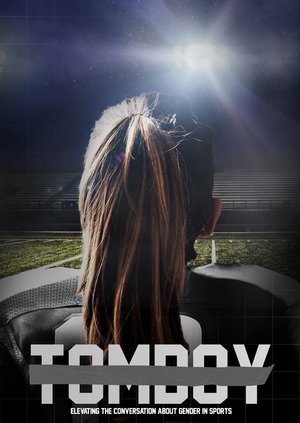
TOMBOY explores the obstacles that young girls encounter on the recreational stage, the stereotypes, language issues and cultural disparities that follow, and ultimately the insufficient media coverage and compensation that afflicts elite professional athletes seeking full recognition for their talents. The journey of the female athlete is often discouraging, and despite progress achieved during the Title IX era, gender equity in athletics has a long way to go.
BERTHA LUTZ: WOMEN AND THE U.N. CHARTER reveals the important and unknown role of a Brazilian biologist and feminist in ensuring that gender issues were addressed at the basis of the United Nations.
A film portrayal of a pioneering aviator and best-selling author whose extraordinary public life had a deep impact on her inner world.
The film portrays the political situation in occupied Latvia 37 years ago, when writer Imants Ziedonis formed a group of like-minded peers into ‘’Dižkoku atbrīvotāji’’ – DAGi. Film reels and photos of the time show Imants Ziedonis and the DAGi participants – Māra Zālīte, Anna Žīgure, Roze Stiebra, Andris Buiķis, Vitolds Kucins and others. Today, with their contemporary experiences, they reflect on a time when the dream of an independent Latvia seemed impossibly far away. We’re Still Here reminds the younger generations that it’s possible to do good in the name your nation and its future not matter the circumstances.
Despite the 1960s free-love and alternative culture, many women found that their lives and expectations had barely altered. But by the 1970s, the Women's Liberation Movement was causing seismic shifts in the march of the world's events, and women's creativity and political consciousness was soon to transform everything - including the face of publishing and literature. In 1973 a group of women got together and formed Virago Press; an imprint, they said, for 52 per cent of the population. These women were determined to make change - and they would start by giving women a voice, by giving them back their history and reclaiming women's literature.
Māris Strazds (also known as "Mr Black Stork") is a man who's been studying black storks and their behaviour for forty years. His love for and relationship with these beautiful birds is longer than the relationship with his wife. Having spent more than half of his life following black storks, Māris is aware that due to deforestation the number of these birds in Latvia is rapidly approaching zero.
An intimate study of one of the most influential and provocative thinkers of the 20th century tracking feminist icon Susan Sontag’s seminal, life-changing moments through archival materials, accounts from friends, family, colleagues, and lovers, as well as her own words, as read by Patricia Clarkson.