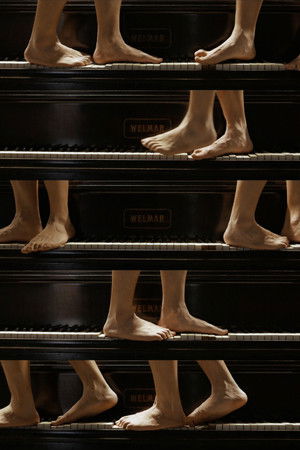
Documentation of Lygia Pape’s 1968 performance Divisor - reactivated in the city of Villeurbanne (France) in October 2014. Commissioned by Institut d'Art Contemporain de Villeurbanne / Rhône-Alpes.
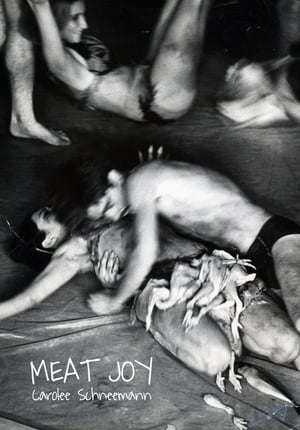
"Meat Joy is an erotic rite — excessive, indulgent, a celebration of flesh as material: raw fish, chicken, sausages, wet paint, transparent plastic, ropes, brushes, paper scrap. Its propulsion is towards the ecstatic — shifting and turning among tenderness, wildness, precision, abandon; qualities that could at any moment be sensual, comic, joyous, repellent. Physical equivalences are enacted as a psychic imagistic stream, in which the layered elements mesh and gain intensity by the energy complement of the audience. The original performances became notorious and introduced a vision of the 'sacred erotic.' This video was converted from original film footage of three 1964 performances of Meat Joy at its first staged performance at the Festival de la Libre Expression, Paris, Dennison Hall, London, and Judson Church, New York City."
Originally formed amidst the chaos of the 1970 Kent State anti-Vietnam War protest killings, the not quite new wave band Devo scored a hit with "Whip It" and gained mainstream success with their message of societal "de-evolution."
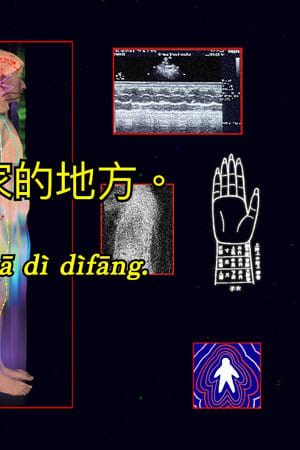
Following a four-month visit to Taiwan during the pandemic, New York-based artist Yo-Yo Lin shares a first-person account of returning to a place of medical and familial trauma. Moving through the artist’s intimate thoughts, Re:collections melds together new media performance, documentary, Chinese medicine, and Taoist cosmology to question how identity and language are conceived in the context of disability and immigration.
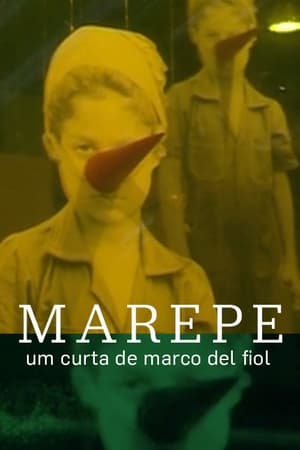
Marepe, an artist from Bahia, produces art with anything he comes across in the town he lives in, Santo Antônio de Jesus. Packs of cigarettes, coconut palms, walls, and memories taken from the streets, go into putting together a personal archeology for this young artist.
THE ARTIST AND THE FORCE OF THOUGHT, reflects the relationship between balance and imbalance within the partiality of movement of the dancer Marcos Abranches. It oscillates the body to wake up from the emptiness and isolation caused by the imbalance. The movement's lack of aesthetics is felt by abandonment and rejection, understanding that relief is in the support of love. Investigating body movement in a world without anguish, without pain, without despair. Search for life. Find in dance the balance of the body and the beauty of the soul.
A documentary about the Kosmos collective in Timisoara: a self-organized group of artists, curators, and musicians who revived a former textile factory.
After discovering a stranger’s livestream, a month unfolds under his balcony, through watching and being watched.
The video revolution of the 1970s offered unprecedented access to the moving image for artists and performers. This Is Not a Dream explores the legacies of this revolution and its continued impact on contemporary art and performance. Charting a path across four decades of avant-garde experiment and radical escapism, This Is Not a Dream traces the influences of Andy Warhol, John Waters and Jack Smith to the perverted frontiers of YouTube and Chatroulette, taking in subverted talk shows and soap operas, streetwalker fashions and glittery magic penises along the way.
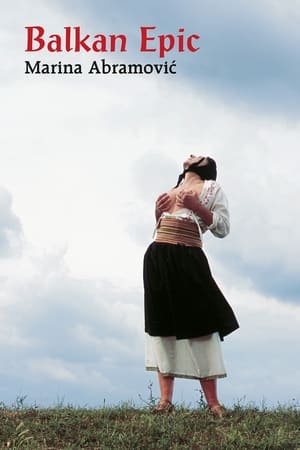
The film explores the sexual aspects of Serbian folklore. Ancient myths that have trickled into everyday household remedies or explanations are juxtaposed with the joys of the female and male sexual forms from which all human life originates. Functioning as both sexual liberation and reinvented modern myth, Balkan Erotic Epic is a display of the need for a cultural change in viewpoint around sex.
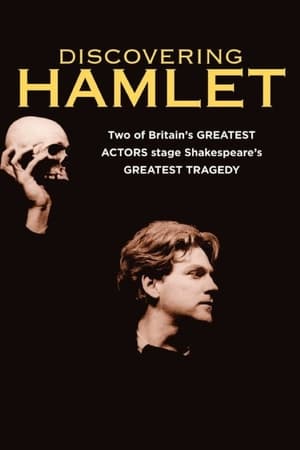
IN 1988, rising star Kenneth Branagh tackled the role of Shakespeare’s prince of Denmark for the first time in his professional career under the guidance of celebrated actor Derek Jacobi. Narrated by Patrick Stewart, this hour-long film documents how Kenneth Branagh and Derek Jacobi, two intelligent and passionate men, found new depths in Shakespeare’s classic drama, Hamlet. Filmmakers Mark Olshaker and Larry Klein follow the company through four weeks of rehearsals, from the first read-throughs to opening night.
In 2012 two members of anarchistic female band Pussy Riot were sentenced to two years in a Mordovian labor camp for "hooliganism motivated by religious hatred". Russian film collective Gogol’s Wives follow each step of the feminist punk band’s battle against Putin including their first disruptive performances on a trolley bus, shooting a video about transparent elections, a controversial performance in a Red Square cathedral, and footage shot in a jail cell. Support comes from many corners including Madonna who painted the words "Pussy Riot" on her back and wore a balaclava during her Moscow show. The documentary portrays the grim state of present-day Russia, a country starkly divided between conservatism and anarchy. Pussy Riot believes that art has to be free and they're willing to take it to extremes. "Pussycat made a mess in the house," they say, and the house is Russia. The filmmakers do not seek to moralize, they simply edit events and leave viewers to draw their own conclusions.
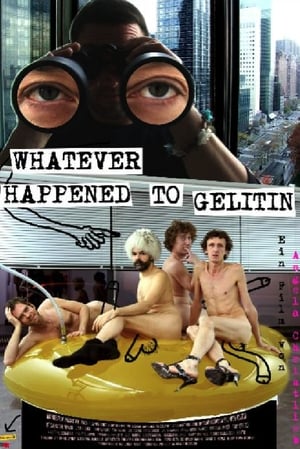
Art dealer Salvatore Viviano and director Angela Christlieb embark on a search for the lost artist collective Gelitin, which since the 1990s has shattered the borders of "good taste" again and again with extravagant actions and installations. Interviews with old companions and artist friends in the U.S., Europe, and Asia are linked with anarchically montaged Gelitin archive material: intense, transgressive, experimental, gaudily colorful, funny, and virulent.
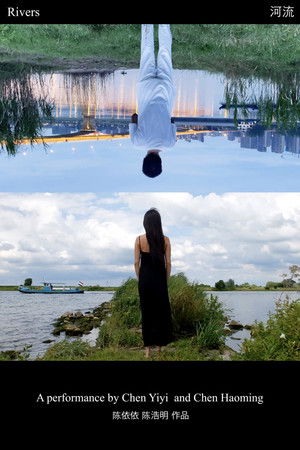
This work re-examines the relationship between the elements that make up the quality of space, namely: "subject" and "object", "organic" and "mechanical", "reality" and "representation", "wholeness" and "partiality", " determinacy” and “indeterminacy”, “visibility” and “invisibility”, “natural” and “non-natural”.
This work is an attempt to overcome alienation amidst the fragmented construction reality of everyday narrative. Rethinking the meaning of reflections and shadows, framed subjects, body movements, screen, as well as sounds that are constructed by connecting the expression of their existence with the history of representation in modern art.
In the first 58 minute Performance, Relation in Space, which took place in July 1976 at the Biennale in Venice, Abramovic/Ulay, both naked, walk towards each other from opposite ends of a room, touching as they pass each other, and then they repeat the movement while their bodies collide and one of them (Marina) falls over under the impact, until they are both exhausted. A statically mounted video camera simultaneously filmed the touching of the bodies in the middle of the room.
Through the voice of its founder Marinella Senatore, the video focuses on a few key themes of The School of Narrative Dance project. The artist describes how the nomadic school, founded in 2013, centers on the concept of "assembly" and collective creation which promotes an educational system based on emancipation, inclusion and self-cultivation. A school which continues to travel and has, until now, worked in more than 15 countries in the world and involved some 5 million persons including activists, both amateur and professional workers, dancers, choreographers, actors and poets in an atmosphere of shared knowledge. As the artist speaks, scrolling across the screen are images from the itinerant performance held in Naples in September of 2019.
Mock -documentary about a Finnish contemporary artist who took the world by a storm.
A hybrid feature film that investigates contemporaneity through the body and its countless possibilities of expression and meanings. The film puts the body and the idea of the body in evidence, through metalanguage, articulation and confrontation of documentary, fictional and performative languages. The film follows the trajectory of the main character who uses her own body to formulate universes and investigate the meanings that are drawn in it. In a kind of subjective diary written on her skin, she records sensations and reflections, building relationships with thinkers, performances and archival materials, which lead her to other bodies and other stories.
The duo made up of musician and actress Julia de Castro and double bass player Miguel Rodrigáñez thus premieres their latest show, Exhalación: vida y muerte de De La Puríssima. With it, they intend to put an end to the ten-year revolution of EL CUPLÉ this scenic musical genre, which the singular tandem has merged with jazz, cumbia and electronics on stages around the world. Show nominated for the Premios Valle Inclán. As the duo explains, De La Puríssima was born in 2009 “as a transit project, in which music was the most direct and ritualistic medium from which to raise core issues such as sex, bullfighting, folklore or religion”. Now, a decade later, it is time to remove the peineta and celebrate the end of a stage in which the provocative lyrics by Julia de Castro have traveled through numerous audiences to bring up to date a genre that was in the forgetfulness of national folklore, the cuplé.