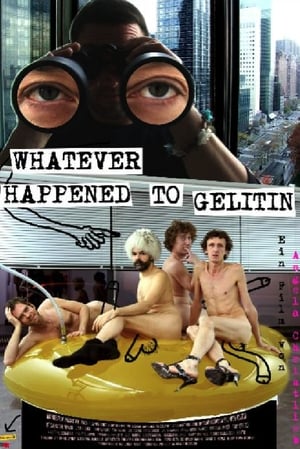
The video revolution of the 1970s offered unprecedented access to the moving image for artists and performers. This Is Not a Dream explores the legacies of this revolution and its continued impact on contemporary art and performance. Charting a path across four decades of avant-garde experiment and radical escapism, This Is Not a Dream traces the influences of Andy Warhol, John Waters and Jack Smith to the perverted frontiers of YouTube and Chatroulette, taking in subverted talk shows and soap operas, streetwalker fashions and glittery magic penises along the way.
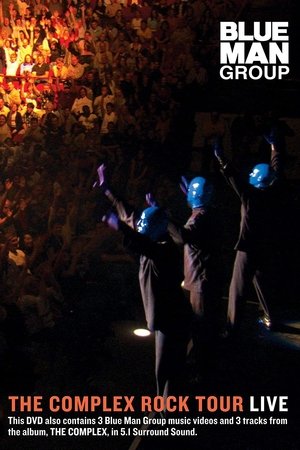
Offbeat performance artists The Blue Man Group have finally been captured live on this disc that features concert footage, three full-length music videos and three songs from Blue Man Group's album, "The Complex." The live footage was filmed during Blue Man Group's successful and widely acclaimed August 2003 rock tour, where they wowed 9,000 fans in two sold-out concerts.
A documentary about the Kosmos collective in Timisoara: a self-organized group of artists, curators, and musicians who revived a former textile factory.
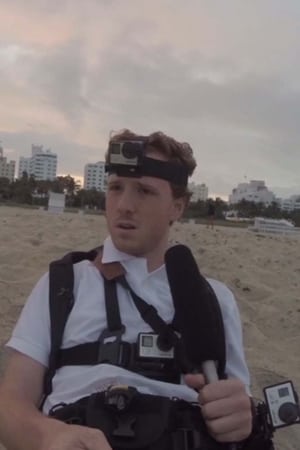
After discovering a stranger’s livestream, a month unfolds under his balcony, through watching and being watched.
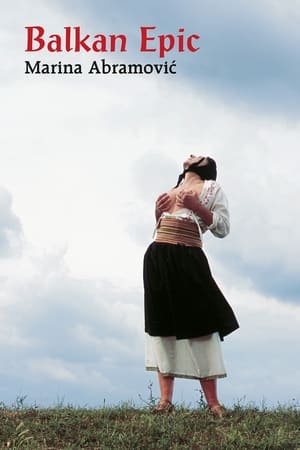
The film explores the sexual aspects of Serbian folklore. Ancient myths that have trickled into everyday household remedies or explanations are juxtaposed with the joys of the female and male sexual forms from which all human life originates. Functioning as both sexual liberation and reinvented modern myth, Balkan Erotic Epic is a display of the need for a cultural change in viewpoint around sex.
"Meat Joy is an erotic rite — excessive, indulgent, a celebration of flesh as material: raw fish, chicken, sausages, wet paint, transparent plastic, ropes, brushes, paper scrap. Its propulsion is towards the ecstatic — shifting and turning among tenderness, wildness, precision, abandon; qualities that could at any moment be sensual, comic, joyous, repellent. Physical equivalences are enacted as a psychic imagistic stream, in which the layered elements mesh and gain intensity by the energy complement of the audience. The original performances became notorious and introduced a vision of the 'sacred erotic.' This video was converted from original film footage of three 1964 performances of Meat Joy at its first staged performance at the Festival de la Libre Expression, Paris, Dennison Hall, London, and Judson Church, New York City."
In 2012 two members of anarchistic female band Pussy Riot were sentenced to two years in a Mordovian labor camp for "hooliganism motivated by religious hatred". Russian film collective Gogol’s Wives follow each step of the feminist punk band’s battle against Putin including their first disruptive performances on a trolley bus, shooting a video about transparent elections, a controversial performance in a Red Square cathedral, and footage shot in a jail cell. Support comes from many corners including Madonna who painted the words "Pussy Riot" on her back and wore a balaclava during her Moscow show. The documentary portrays the grim state of present-day Russia, a country starkly divided between conservatism and anarchy. Pussy Riot believes that art has to be free and they're willing to take it to extremes. "Pussycat made a mess in the house," they say, and the house is Russia. The filmmakers do not seek to moralize, they simply edit events and leave viewers to draw their own conclusions.
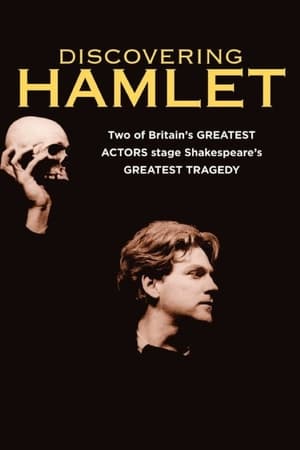
IN 1988, rising star Kenneth Branagh tackled the role of Shakespeare’s prince of Denmark for the first time in his professional career under the guidance of celebrated actor Derek Jacobi. Narrated by Patrick Stewart, this hour-long film documents how Kenneth Branagh and Derek Jacobi, two intelligent and passionate men, found new depths in Shakespeare’s classic drama, Hamlet. Filmmakers Mark Olshaker and Larry Klein follow the company through four weeks of rehearsals, from the first read-throughs to opening night.
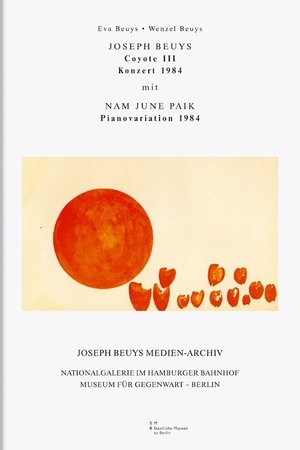
DVD accompanying the book "Coyote III", documenting Joseph Beuys and Nam June Paik performing at the Sôgetsu Hall in Tokyo on the 2nd of June 1984. Nam June Paik sits on one side of the stage playing European classical music, improvisations and Japanese folk music. On the other side, Joseph Beuys acts out experiences from living in an enclosed space with a coyote - a free man who turns back into an animal, into a form of life that he understands as a prerequisite for this freedom
Where do I go from here is a performance arthouse-style film exploring the nostalgia of the concept of home in terms of home as a feeling rather than the architectural structure. Inspired by multiple factors resonating the concept of home, including diaspora, belonging and longing, the artist questions the idea of home through and through, along with the constant search for the idea of "home".
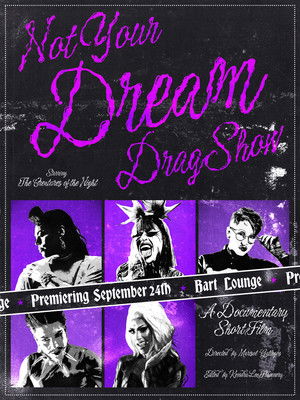
A documentary that follows the Bixa Pare Collective during an edition of the Sarau Bixaria Literária, exploring art, freedom of expression, and issues surrounding the world of drag queens.
In the first 58 minute Performance, Relation in Space, which took place in July 1976 at the Biennale in Venice, Abramovic/Ulay, both naked, walk towards each other from opposite ends of a room, touching as they pass each other, and then they repeat the movement while their bodies collide and one of them (Marina) falls over under the impact, until they are both exhausted. A statically mounted video camera simultaneously filmed the touching of the bodies in the middle of the room.
Living Lines is a series of performances and poetry by artist Stephanie Trujillo documented as a short film, drawing inspiration from her Peruvian ancestry, namely the Nazca Lines – giant, mysterious and ancient earthworks made by pre-colonial and pre-Christian societies in Peru – to create site-specific rituals dedicated to the flora and fauna native to Merseyside.
A performance art piece in which the artist makes themself shed tears over a period of time.
A sonic, surrealist narration in which the musicians fingers’ are the protagonists. Reflecting on common hierarchies and roles of the fingers when navigating through physical, digital and sonic realms, "Pinkie" is taking a perspective of deconstructing and reassigning them towards a queer, holistic reception of playing an instrument.
A witch appears in the south of the city, recites a poem, performs a spell and vomits the world.
This work re-examines the relationship between the elements that make up the quality of space, namely: "subject" and "object", "organic" and "mechanical", "reality" and "representation", "wholeness" and "partiality", " determinacy” and “indeterminacy”, “visibility” and “invisibility”, “natural” and “non-natural”.
This work is an attempt to overcome alienation amidst the fragmented construction reality of everyday narrative. Rethinking the meaning of reflections and shadows, framed subjects, body movements, screen, as well as sounds that are constructed by connecting the expression of their existence with the history of representation in modern art.
A two-hour dvd of one of Sandor’s fermentation workshop, including demonstrations of making kefir and sauerkraut, as well as the history of fermentation and cultured foods, tips on fermentation vessels and storage, and information about micro-organisms, pre-digestion, and food safety (botulism, surface mould, and other fears de-mystified).
Filmed at New York’s Carnegie Hall, Cut Piece documents one of Yoko Ono’s most powerful conceptual pieces. Performed by the artist herself, Ono sits motionless on the stage after inviting the audience to come up and cut away her clothing in a denouement of the reciprocity between victim and assailant.