In 1984-85, people at Lake Tahoe fell ill with flu symptoms, but they didn't get better. Medical literature documents similar outbreaks: in 1934 at LA county hospital, in 1948-49 in Iceland, in 1956 in Punta Gorda, Florida. The malady now has a name, chronic fatigue syndrome, and filmmaker Kim Snyder, who suffered from the disease for several years, tells her story and talks to victims and their families, and to physicians and researchers: is it viral, it is psychosomatic, is it one disease or several (a syndrome) ; what's the CDC doing about it; what's it like to have a disease that's not yet understood? Her inquiry takes her to Punta Gorda and to a high-school graduation.
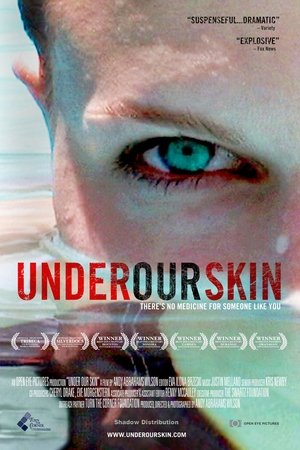
Exposes the hidden epidemic of Lyme disease and reveals how our corrupt health care system is failing to address one of the most serious illnesses of our time.
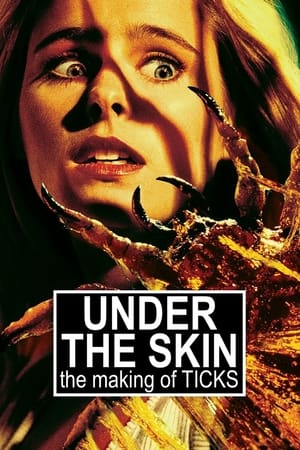
The Making of 'Ticks' documentary
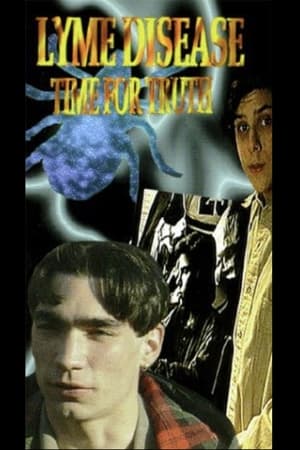
A look through the eyes of those who suffer from Lyme Disease and those who have chosen to fight for them. With digital graphics from DE and original music by Arte Bratton, this explores the real issues involved with this spreading disease.
Ticked Off: The Mystery of Lyme Disease
In 1951 at Fort Detrick, Maryland, construction crews built a hollow metal sphere four stories high. Inside germ weapons were to be exploded, creating mists of infectious aerosols for testing on animals....and people. Employees called it the eight ball. In their eighteen month long journey Grey and Russell travel the country in search of answers and interview top experts in the world of Lyme and Tick-Borne Diseases. Under the Eight ball includes live footage, historical documents, original animation and archival military footage.
This production lifts the veil on a little-known disease caused by the bite of infected black-legged ticks: Lyme disease. Discussing its transmission methods, its spread, its devastating effects on victims, the prognostic and the treatments, this documentary reveals an infectious disease growing in Quebec and round the world.
Director, Joonas Berghäll, suffers from chronic Lyme disease. He looks for a cure to his illness and by doing so finds himself thrown into the midst of a worldwide lobby-driven and political medical debate about Lyme disease and the threat of it becoming the next wide scale epidemic.
A man slowly loses his mind as a strange ticking noise destroys his life.
Rudy and Claire decide to go on a camping trip for their anniversary. Unbeknown to them, there are mutated ticks lurking in the same woods, ready to drain them dry.
A blood virus infects a small group of hunters turning a father & son trip into a fight for survival.
The routine of a sanitary-focused recluse is disrupted once a couple moves in across the street.
Years into being together, a co-dependent couple’s relationship starts crumbling due to a suspected tick bite. As Victor spirals into anxiety over his alleged bite mark, Stella pulls away, burying herself in her work. Victor’s anxiety starts manifesting itself as a giant, bloodthirsty tick, pushing the couple further from each other. When Victor notices Stella is also being slowly devoured by a tick similar to his own, he realizes the anxiety and fear keeping them together is the very thing that’s killing them.
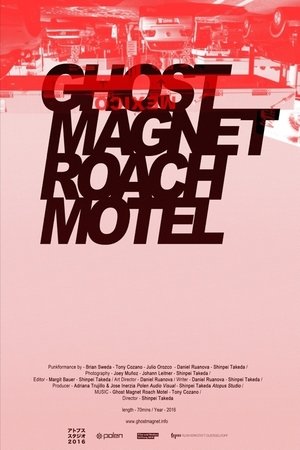
The intimate portrait of two American musicians, two Mexican visual artists and the Japanese filmmaker draws on a bluntly existential confrontation of their individual struggles between addiction and expression, just like a border that sets high between Tijuana.
This multi-award winning film uses psychodrama to help bridge the communication gap between a group of the so-called "hard-core unemployed" - largely Black and "underclass" - and the men who hire, train and supervise them - mostly white and middle class.
Showing his own original footage of Prague Spring, director Evald Schorm describes the atmosphere these days in 1968.
Tempus fugit
Pequeña Babilonia
Documentary travelogue through Haiti.
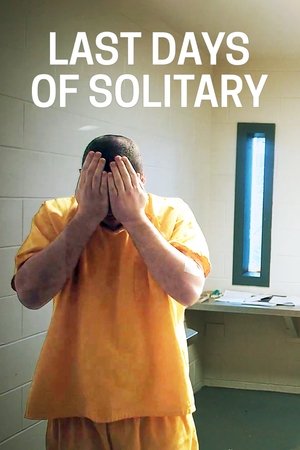
In 2011, Maine State Prison launched a pioneering reform program to scale back its use of solitary confinement. Bafta and Emmy-winning film-maker Dan Edge and his co-director Lauren Mucciolo were given unprecedented access to the solitary unit - and filmed there for more than three years. The result is an extraordinary and harrowing portrait of life in solitary - and a unique document of a radical and risky experiment to reform a prison. The US is the world leader in solitary confinement. More than 80,000 American prisoners live in isolation, some have been there for years, even decades. Solitary is proven to cause mental illness, it is expensive, and it is condemned by many as torture. And yet for decades, it has been one of the central planks of the American criminal justice system.