Iggy Pop reads and recites Michel Houellebecq’s manifesto. The documentary features real people from Houellebecq’s life with the text based on their life stories.
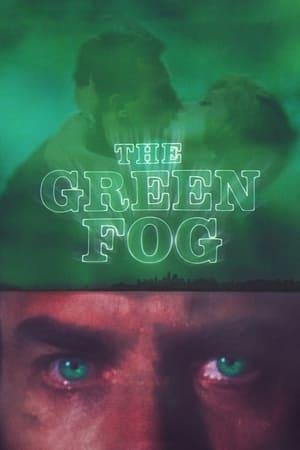
A tribute to a fascinating film shot by Alfred Hitchcock in 1958, starring James Stewart and Kim Novak, and to the city of San Francisco, California, where the magic was created; but also a challenge: how to pay homage to a masterpiece without using its footage; how to do it simply by gathering images from various sources, all of them haunted by the curse of a mysterious green fog that seems to cause irrepressible vertigo…
A flickering dance of intriguing imagery brings to light the possibilities of ordinary movements from the everyday which appear, evolve and freeze before your eyes. Made entirely from archive photographs and footage from the earliest days of moving image, All This Can Happen (2012) follows the footsteps of the protagonist from the short story 'The Walk' by Robert Walser. Juxtapositions, different speeds and split frame techniques convey the walker's state of mind as he encounters a world of hilarity, despair and ceaseless variety.
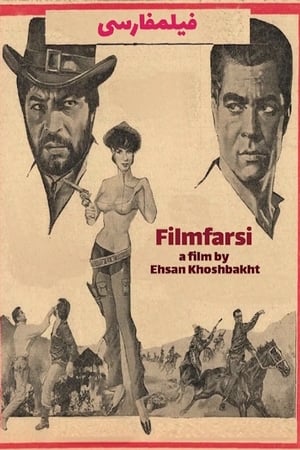
A found-footage essay, Filmfarsi salvages low budget thrillers and melodramas suppressed following the 1979 Islamic revolution.
While Trevor and Sam are smoking pot, Trevor’s mom comes home. When she finds out, Trevor reveals his father’s adulterous ways and destroys his family.
A personal meditation on Rumble Fish, the legendary film directed by Francis Ford Coppola in 1983; the city of Tulsa, Oklahoma, USA, where it was shot; and its impact on the life of several people from Chile, Argentina and Uruguay related to film industry.
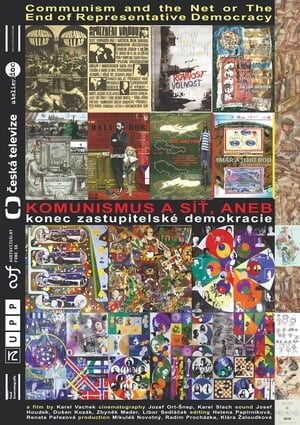
The six-hour essay in four parts examines the history of regimes and revolutions, leaders and martyrs, from a philosophical perspective. The collage of personal memories, staged scenes and archives of collective memory compares the Prague Spring to the Velvet Revolution and shows the exposure, conflict, crisis, and catharsis of the post-communist society.
From the behavior, discourse, and appearance of individual actors, Vachek composes, in the form of a mosaic, a broad and many-layered film-argument about Czechoslovak democracy in the period of its rebirth, all administered with the director’s inimitable point of view.
Commissioned by French television, this is a short documentary on the neo-classical statues found throughout Paris, predominantly on the walls of buildings, holding up windows, roofs etc.
The fascinating story of the rise to power of dictator Benito Mussolini (1883-1945) in Italy in 1922 and how fascism marked the fate of the entire world in the dark years to come.
Every image in The Fall of Communism as Seen in Gay Pornography comes from gay erotic videos produced in Eastern Europe since the introduction of capitalism. The video provides a glimpse of young men responding to the pressures of an unfamiliar world, one in which money, power and sex are now connected.
Morena
Aquela Mesma Estação
This documentary essay introduces a peculiar trio of men united by their passion for hunting. Each of them conceives of hunting in his own way, luring the viewer to an exotic safari, to an antlered trophy collection or to a sitting in the woods.
Recalling his childhood and relationship with his mother, a film student tries to understand the origin of his love for cinema and tragedies.
A personal and subjective video essay series on the Korean cinema, consisting of 9 episodes. Its episodes include fragments of memory about Korean films and their ‘field’, actual moments of what is happening here and now, and images excerpted from Korean films. [Ep 1] My Chungmuro (2002) [Ep 2] For March of Fools (2003) [Ep 3] Smoking Women (2003) [Ep 4] Kino 99 (2003) [Ep 5] Song of Keumsoon (2004) [Ep 6] The Creative Restoration of ‘An Empty Dream’ (2005) [Ep 7] Reflection on Kim Gu (2005) [Ep 8] Garibong, Again (2006) [Ep 9] A Short Film about Pre-1945 Korean Cinema (2006)
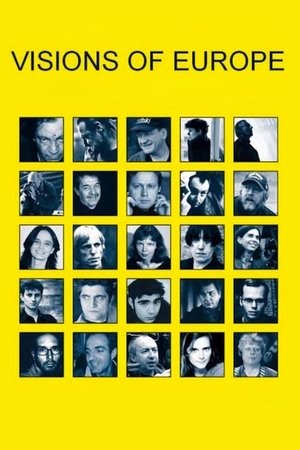
Twenty-five films from twenty-five European countries by twenty-five European directors.
Victor Fleming’s 1939 film The Wizard of Oz is one of David Lynch’s most enduring obsessions. This documentary goes over the rainbow to explore this Technicolor through-line in Lynch’s work.
A look at the Brazilian black movement between 1977 and 1988, going by the relationship between Brazil and Africa.
O malém světě