Short film produced by the BBC about JG Ballard's Crash. “The film was a product of the most experimental, darkest phase of Ballard’s career. It was an era of psychological blowback from the sudden, shocking death of his wife in 1964, an era that had produced the cut-up ‘condensed novels’ of Atrocity plus a series of strange collages and ‘advertisers’ announcements. After Freud’s exploration within the psyche it is now the outer world of reality which must be quantified and eroticised. Later there were further literary experiments, concrete poems and ‘impressionistic’ film reviews, and an aborted multimedia theatrical play based around car crashes. After that came an actual gallery exhibition of crashed cars, replete with strippers and the drunken destruction of the ‘exhibits’ by an enraged audience.” (from: http://aaaaaaaaaaaaaaaaaaaargh.blogspot.de/2013/01/short-film-adaptation-of-jg-ballards.html)
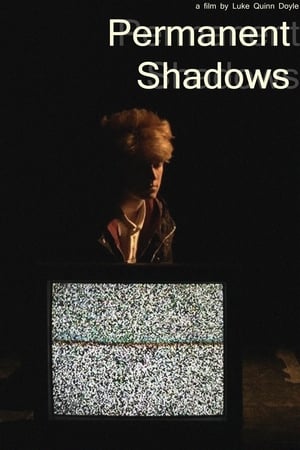
A man and woman embark on a sexual journey to detach mind from body. The relationship slowly grows into one of emotional domination, physical disease, abandonment and the creation of personal pornography.
The main protagonist is a young fellow who tries to live his life within 30 frames. He's a person suitable for any atmosphere, which makes him different from the rest. He's like a plant that differs from others, an informer who wants to escape out from his skin. This man loves, hates, eats, drinks, lies ill, laughs, cries, kisses, plays... These are agonies of a contemporary man.
A young man in search of a place to live, finds a beautiful apartment that he will have to share with someone who is not the person he was waiting for.
An anthology of one-minute films created by 51 international filmmakers on the theme of the death of cinema. Intended as an ode to 35mm, the film was screened one time only on a purpose-built 20x12 meter public cinema screen in the Port of Tallinn, Estonia, on 22 December 2011. A special projector was constructed for the event which allowed the actual filmstrip to be burnt at the same time as the film was shown.
A take it or leave it auteur-experimental fiction exercise: two women are monitoring their dreams, dreams that may of course also be stark naked reality, at least to the dreamers, as they come and they go like bubbles, rising, floating, bursting. A man appears out of nowhere. Poet Peter Laugesen co-wrote the script with Tom Elling, who was Lars von Trier's director of photography on "The Element of Crime".
A gang of women wreak havoc in the city, killing various men who have treated women poorly. And sometimes they do it just for fun.
Seeking fulfillment, a young drifter forgoes isolation to embark on a year-long murder spree.
A Japanese salaryman finds his body transforming into a weapon through sheer rage after his son is kidnapped by a gang of violent thugs.
Francisco Morázan has been in Costa Rica for five months where he has been appointed Provisional Chief of State. It has called for elections to install a National Constituent Assembly, which should be a legal structure to the Costa Rican state. The Assembly has decreed the validity of the constitution of 1825, the same as that of the Central American Federation; It has declared the accession of Costa Rica to the Republic of Central America. Two months later Francisco Morazán is shot one afternoon on September 15, 1842.
An Anishinaabe man is restless and isolated in the city of Minneapolis, haunted by an ominous sense that he doesn’t belong. Shinaab eerily portrays Indigenous people’s dislocation and alienation on their own land as sinister and enigmatic forces.
A Hollywood actor grows tired of making the same corporate movies, so he moves to Argentina to find more experimental and meaningful work.
A short film recounting the travels of a lonely astronaut confronted by the unknown. Unfolding as a mystery, it becomes a carefully subtle, autobiographical examination of the feeling of loneliness and the existential issue of not understanding life on earth and ones place among it.
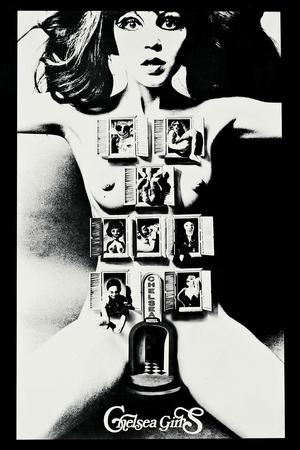
Lacking a formal narrative, Warhol's mammoth film follows various residents of the Chelsea Hotel in 1966 New York City. The film was intended to be screened via dual projector set-up.
August 2019. Frank recognizes his own story of twenty years ago in a recently published book. He remembers Marie, with whom he had a relationship before she moved to the United States and disappeared from his life. Frank sets out in search of her and finds himself in a USA petrified by a heat wave and lost in suspicion and political paranoia. He heads into the desert in pursuit of Marie.
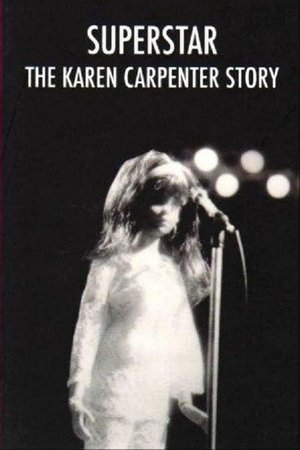
The final 17 years of American singer and musician Karen Carpenter, performed almost entirely by modified Barbie dolls.
Introverted Ricardo Perez likes to approach the world in a very subtle manner, trying not to upset anyone or cause any problems for himself. But to his surprise, he is the prime candidate for accomplishing God's will due to the neglect of others. This presents an internal spiritual conflict within himself. Will he take the challenge by standing up for himself, his family and his faith or will he succumb to the fears of the flesh?—Alfred Castillo Jr. & LaMarcus Tinker
Shiva and Hari, two friends who are polar opposites in demeanour, are the terror in Mangaladevi. What happens when ego, ambition and jealousy creeps in between their strong friendship?
Each day after work, Carlos, a language school teacher, frequents the heady surroundings of his local cruising ground. One evening he encounters a teenage boy from his class named Toni, and the two engage in a brief sexual tryst. As the relationship between teacher and student begins to develop, some dark truths emerge about the young man and his mysterious group of friends.
Bert Deling's surreal, button-pushing and hallucinogenic paean to the emerging possibilities of avant-garde and homemade filmmaking. Telling the tale of a violent ex-cop searching for the man who killed his partner, the film takes an unexpected turn when he encounters drug lord Plastic Man and a tribe of LSD enthusiasts. What follows is both literal and metaphorical mayhem as the boundaries of the film start collapsing and our idea of what's real is pushed to its very limits.