Deep in Mexico two brothers sit in a plaza discussing a broken fuel pump. In a few days they will leave for work. With their father and some friends they will ride a bus 1,300 miles north and enter the United States by walking through the desert. They call America “El Otro Lado,” the other side.
A generational trauma through the lens of an Asian American teenager through food and poetry.
It is winter at an emergency shelter for the homeless in Lausanne. Every night at the door of this little-known basement facility the same entry ritual takes place, resulting in confrontations which can sometimes turn violent. Those on duty at the shelter have the difficult task of “triaging the poor”: the women and children first, then the men. Although the total capacity at the shelter is 100, only 50 “chosen ones” will be admitted inside and granted a warm meal and a bed. The others know it will be a long night.
A cellar. A forgotten amphora. The ashes of a woman. Her granddaughter, daughter-in-law and son characterise her, entwining their memories and experiences. They reflect about filial love, gender and isolation through her overbearing nature.
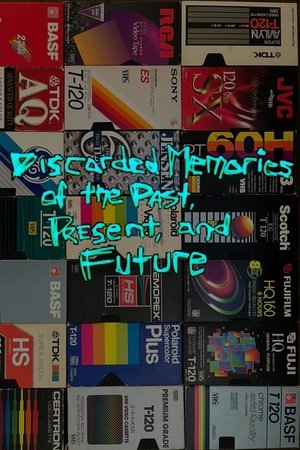
The film consists of video tapes made by the filmmaker’s father documenting daily scenes of family life, family celebrations, and holidays over the course of fifteen years. The tapes are a mixture of the personal and the political – the father was politically engaged in the revolutionary movement that brought Hugo Chávez to power. The family’s life becomes a backdrop for political and economic developments in Venezuela and their impact on the lives of ordinary citizens.
Behind the scenes of a popular deli on New York's Upper East Side, undocumented immigrant workers face sublegal wages, dangerous machinery, and abusive managers. Mild-mannered sandwich maker Mahoma López has never been interested in politics, but in Jan. 2012, he convinces a small group of his co-workers to fight back. Risking deportation and the loss of livelihood, the workers team up with a diverse crew of innovative young organizers and take the unusual step of forming an independent union, launching themselves on a journey that will test the limits of their resolve. In one rollercoaster year, they must overcome a shocking betrayal and a two month lockout. Lawyers will battle in backroom negotiations, Occupy Wall Street protesters will take over the restaurant, and a picket line will divide the neighborhood. If they can win a contract, it will set a historic precedent for low-wage workers across the country. But whatever happens, Mahoma and his compañeros won't be exploited again.
A prefabricated estate in Moscow is meant as a transit stop for four queer Cuban exiles – until Russia’s attack on Ukraine radically shifts their outlook. Moving telephone calls back home provide the structure of Luís Alejandro Yero’s debut work.
Artistic director of the National Theater Eric de Vroedt writes and directs a performance about his own mother Winnie, who passed away in 2020. This piece, titled The Century of My Mother, is a family story about the migration from the Dutch East Indies to the Netherlands. It is De Vroedt's way of examining the relationship with his mother and not having to say goodbye to her yet: 'I can let her live on stage, but when the curtain falls, when the play is completely finished, then she is really dead'.
Frans Bromet goes in search of his family history and discovers that Hermanus Bromet was a well-known slave trader in Suriname. Should he feel guilty for what his ancestor did? How do you deal with a burdened family past?
Epigenetics and psychogenealogy through a VERY personal experience.
The Freedom of the Sea is a short documentary highlighting the freedom of living in the UK - in contrast to a more restrictive life in Iran - through the joy of daily sea swimming in Brighton.
African American filmmaker David A. Wilson decided to look into his family's history during the slave era. The result is this documentary, which provides a unique perspective on the long shadow cast by slavery in America. Wilson travels to North Carolina to visit the plantation where his ancestors once toiled and to meet its current owner -- a white man named David Wilson, whose slave-owning ancestors originally occupied the property.
Nina - Botando o Bloco a Rua
This film tells a story of ethnic Koreans from Russia and the post-Soviet territories making their new home in New York City. The history of the diaspora is told through conversations with Lidiya Kan’s mother, personal stories, fragmented memories, and her family photo archive. An important character of the film is Morkovcha, the Korean carrot salad, an invention of the Russian Korean diaspora; its essence is symbolic of their mixed identity.
Profile of a Chinese immigrant to Canada narrated by her son.
David Lloyd George tours Germany, escorted by Nazi government officials, while his chauffeurs lark about with an SS Officer. Lloyd George was pro-German from the mid-1920s, and met Adolf Hitler in 1936. However, by 1938 he had become a leading opponent of appeasement with Germany. This film is believed to have been shot by George Ryder, Lloyd George's chauffeur.
As ICE raids intensify across Los Angeles, a high school teacher leads the grassroots resistance.
Born in 1943 in Bessarabia region, Victor was forced to flee his homeland because of the war. After 77 years, his grandson, Dan, goes back there with his grandpa, Victor, who is recounting memories and seeking information about his birth and his lost relatives, in the country that is now the Republic of Moldova.
Stuck in a creative rut, filmmaker Gilda Pourjabar returns to Iran, her homeland, to talk with her brother Siamak, an illustrator based in Tehran. This encounter raises questions about their relationship to Western popular art, as they grew up in a culture that the current political regime describes as “westoxicated.” This documentary uses playful animations by Siamak, inspired by Franco-Belgian comics and rock concert posters, superimposed on archival footage of the most recent popular uprisings in Iran to become a logical collaboration for these artists who shared a record collection as children. Together, they examine how art slips through the cracks of repression to light the rebellious sparks in the hearts of young people.
A Palestinian activist's fight for freedom draws a Japanese American filmmaker into confrontation with detention regimes of past and present.