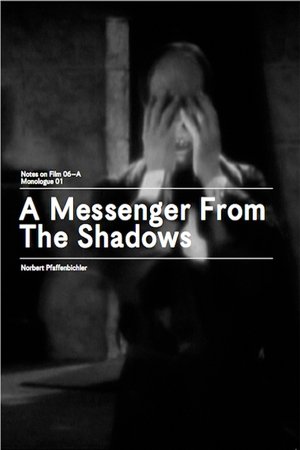
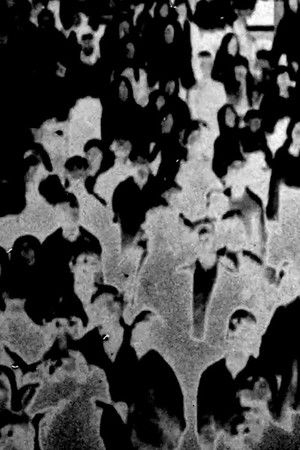
Thanks to his myriad film roles, Lon Chaney is known as “the man of a thousand faces,” and you could say that the early horror era never beheld a figure more intriguing. Yet because of his numerous transformations, his face never became as iconic as that of, say, Boris Karloff. Accompanied by a soundtrack from Bernhard Lang, this “re-imagination of shots” taken from Chaney´s forty-six surviving films offers a beguiling excursion into the history of film. The director reveals surprising associations, while highlighting the enduring magic of works which are now more or less forgotten.
The title comes from Sergei Yesenin's last poem before comiting suicide. Using Virginia Woolf's last letters as a base, this film is meditation on the power of the word and its undertsanding and the the last moments before saying "goodbye".
Part 2 of Trilogy. Dedicated to Phil Solomon. The "Truths" of this film, which the title prompts, are slightly recognizable patterns of fish and animal biology, plant and flower shapes, and human anatomy which are interwoven with pastel cubes and other geometries - pastels as if "hung" in a white light interwoven with straight and diagonally bent black lines, eventually clear architectural forms. The recognizable patterns are literally etched on black leader (primarily) and interspersed with very organic painted forms on white. There is often an intended sense of hair and mucous membrane amidst these forms and interwoven with the electric "x-ray" sense of bones. The interplay between black-and-white sections and multi-colored sections increases until there is some sense of merging the two toward the end.
Observing as the World Burns: Poems is an evocative, introspective short film that transforms lines of verse into raw visual poetry—confronting the dual forces of personal introspection and outward chaos. Anchored by cinematic performances, layered voice-over, and an emotive soundscape, the film embodies the tension between witnessing life’s unraveling and finding meaning within it. Rather than dramatizing action, this film immerses the viewer in the experience of attention—the act of watching, contemplating, and articulating what it means to be alive. At the same time, everything feels like it’s burning. It is both a cinematic poem and a visual diary—an invitation to witness, feel, and reflect alongside the narrator.
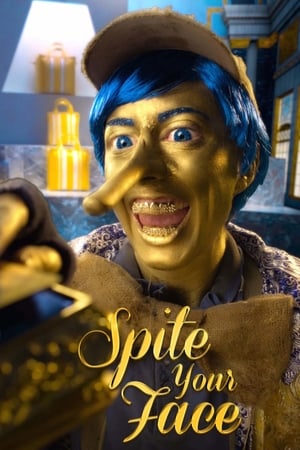
Simultaneously sumptuous and gorgeous, garish and grim, this is a re-working of Pinocchio for the neo-liberal era. Rachel Maclean’s dark fairytale, which represented Scotland at the Venice Biennale 2017, depicts a brash and baroque binary world of poverty and riches where the prospect of easy wealth tempts even good boys like Pic into bad ways. But if everyone believes the lie, what’s the problem?
“There was an art event at a closed school, Kataura Junior High School, in Nebukawa, Kanagawa Prefecture. If I did not participate in this event to show my films, I would never have got off at Nebukawa Station. I saw the sea from the school building. The installation by Tetsuya Iimuro was placed in a science room at the school, where one could see the ocean through the windows.” - Yo Ota
“Peter Kubelka…was teaching at Staatliche Hochschule für Bildende Künste – Städelschule (Städel) at the time. His classes, filmmaking and cooking, were very unique, and this film was made around the time I was studying with him at Städel… This is a single-shot film, moving along the passageway using a handmade dolly. I used an Arriflex 16ST camera, and I changed the filming speed from 48fps to 4-6 fps while shooting.” - Yo Ota
“Sequences of space-time manipulation that raise the problem of continuity in the shot.” - Yo Ota
A poet and a spirit have an ongoing deal: Haiku for life.
An expansion upon an idea put forward in Marie Menken's film Notebook; single-frame footage of the moon shot on various nights, blinking and darting around within Menken's field of vision.
The main protagonist is a young fellow who tries to live his life within 30 frames. He's a person suitable for any atmosphere, which makes him different from the rest. He's like a plant that differs from others, an informer who wants to escape out from his skin. This man loves, hates, eats, drinks, lies ill, laughs, cries, kisses, plays... These are agonies of a contemporary man.
The main morality is the chronic desire for rest Within the historians, filmmakers, astronomers and the bread Which once was dough front to back Relationship stops along the way You are not a wax-work in a glass Become the concept of freedom Freedom exists and must bring fruit The universe glancing for purchase reasoned
"The filming of the entrance to the company dormitory in which the film-maker was living. Centering the film on one pillar, he warps the spaces to the left and right and creates an unstable space similar to painting that employs anamorphosis. Made as were SPACY and BOX with a large number of photographs, the film ends with a violent movement, but is poetic for this." - Takashi Nakajima
A man and woman embark on a sexual journey to detach mind from body. The relationship slowly grows into one of emotional domination, physical disease, abandonment and the creation of personal pornography.
"The majority of my 8-mm works were made for the three-minute "Personal Focus" film special put on in Fukuoka. This film is an animation of photographs I had taken on a regular basis as a sort of diary, and was made to have a rough feel to it." - Takashi Ito
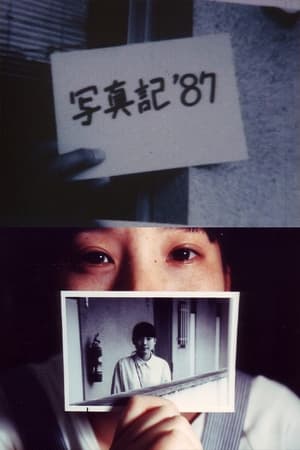
I turned my gaze to the various events in daily life and made this filmic diary in a manner as if confessing my feelings. Of course, since I was making the film, I wanted to depict these feelings and events with tricky techniques. I used various methods to shoot photographs of a relative's wedding, the landscape I see from window of my house, commemorative travel photographs and the like frame-by-frame.
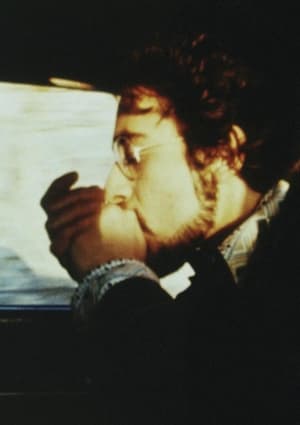
Arguably Larry Gottheim’s most exuberant experiment in the single-shot, single-roll format (and his first with a soundtrack), HARMONICA trains the camera on a friend improvising a tune in the backseat of a moving car. Held out the window, the harmonica becomes a musical conduit for the wind, while Gottheim's film transforms before our eyes into a playful meditation on wrangling the natural elements into art. - Max Goldberg
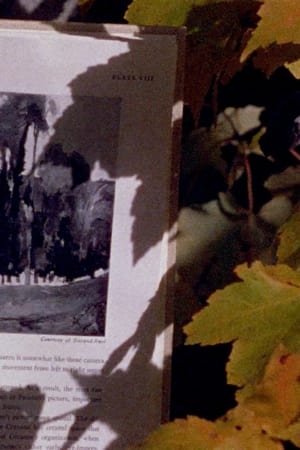
Four four-minute image sections and four four-minute sound sections are linked in all combinations of the sound sections with each of the image sections. This established affinities between each of the image sections to the others, and the sound sections to each other. The image sections are: surveyors measuring the land near my house as seen through an old window, a family of Siamang Gibbon apes in the Washington zoo, an industrial site, and a page turned from a book on Cézanne’s composition showing a diagram of his painting Mardi Gras, filmed against bright leaves. The sound sections are: a dramatic scene from Debussy’s opera “Pelléas et Mélisande”, a passage from William Wordworth’s autobiographical poem “The Prelude,” sounds from rowing on a lake at night, and the sounds of the apes vocalizing.
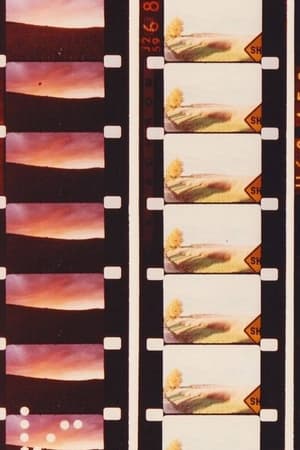
Working with Virgil’s four-part poem “Georgics” and Antonio Vivaldi’s concertos “The Four Seasons” as models, Gottheim arranged his painterly compositions into four distinct sections, each edited according to its own exacting pattern. The seasonal flux thus informs both the form and content of the image, with the basic elements of trees, sky, hills and the occasional crisscrossing clothesline filmed in every imaginable light.
In 1933, at age 33, Harry Alan Potamkin died of complications related to starvation, at a time when he was one of the world's most respected film critics. In his writings, he advocated for a cinema that would simultaneously embrace the fractures and polyphony of modern life and the equitable social vision of left radical politics. This film-biography is assembled out of distorted fragments of films on which he had written, an impression of erupting consciousness.