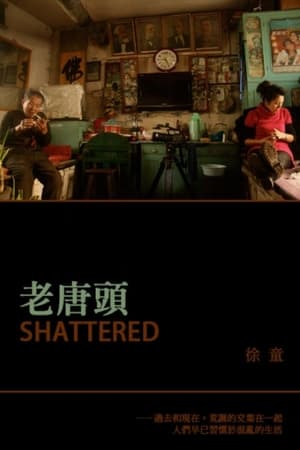
A microcosm of China past and present flows through Xu Tong’s intimate docu “Shattered,” in which the maverick indie filmmaker continues to refine his techniques and concerns shown in his previous “Wheat Harvest” and “Fortune Teller.”
What happens when 300 lesbians from around the world attend the largest United Nations conference? How did two busloads of lesbians headed to an underground nightclub help spark the birth of a lala (LBT) movement in China? At the 1995 Fourth World Conference on Women in Beijing, the first ever lesbian tent at an UN NGO Forum was created. Emerging from hidden shadows of shame and invisibility, Chinese lalas began a hard-fought path of deliverance from themselves, from family, and from an apprehensive environment. In doing so, they sought empowerment and change as they explored concepts and issues from self-affirmation to rights consciousness. The film powerfully moves forward to the present day and shows the drastic change in today’s young feminist lalas – their challenging of sexism and homophobia with daring public street actions on subways – a parallel action to their forerunners in 1995, with much vigor and defiance 20 years later.
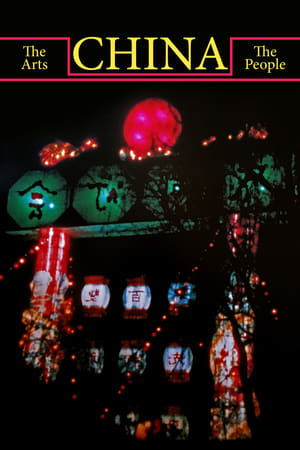
China marks the beginning of the extensive Asian theme in Ottinger’s filmography and is her first travelogue. Her observant eye is interested in anything from Sichuan opera and the Beijing Film Studio to the production of candy and sounds of bicycle bells.
Xu Xin’s film “Dao Lu” (China 2012) offers an exclusive “in camera” encounter with Zheng Yan, an 83 year-old veteran of the Chinese Red Army, who calmly relates how he has navigated his country’s turbulent history over three-quarters of a century.Born to a wealthy family in a foreign concession, Yan joined the Chinese Communist Party (CCP) in 1941 because he sincerely believed in the socialist project, and in its immediate capacity to free China from the Japanese yoke and eradicate deep-rooted corruption.
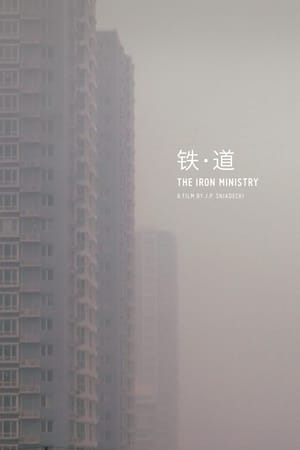
Filmed over three years on China’s railways, The Iron Ministry traces the vast interiors of a country on the move: flesh and metal, clangs and squeals, light and dark, and language and gesture. Scores of rail journeys come together into one, capturing the thrills and anxieties of social and technological transformation. The Iron Ministry immerses audiences in fleeting relationships and uneasy encounters between humans and machines on what will soon be the world’s largest railway network.
In the summer of 2007, Gan Xiaoer led an independent film projection team, using projectors and self-made screens, to tour villages in Henan province to show his feature film "Raised from dust" for 8 times, and recorded the process. The 81-minute version of Church Cinema records only one stop, the Qiliying Church, where "Raised from dust" was shot.
Follow the lives of the elderly survivors who were forced into sex slavery as “Comfort Women” by the Japanese during World War II. At the time of filming, only 22 of these women were still alive to tell their story. Through their own personal histories and perspectives, they tell a tale that should never be forgotten to generations unaware of the brutalization that occurred.
“If there is any chance, I will let him live well No matter where he is.” The old lady cried and said that when I was visited her and her husband one year ago. Her heartfelt wishes are my motivation, I know that I am going to create this documentary work - the son.
A documentary chronicling the coming of age of a young chinese man.
The baby is a temporary floating population. He works diligently, from a small restaurant owner to a tea shop manager to a bar manager. This film records the survival state of children centered and gay comrades: trivial, messy, boring, and entertaining themselves. The camera calmly captures every bit of their daily life for more than two years, and as time goes by, the changes the baby presents are more ordinary. The film calmly explains the relationship between "comrades" and "society", and the various small details interpenetrated in the film also metaphorically reflect the changes of today's society
Zhang Ming went back to his hometown Wushan to record the last images before it being changed forever by the upcoming Three Gorges Dam.
Children at a Village School
Li Shouwang is the leader of a blind storytellers team, learned storytelling at the age of 19. His childernare living hard in other cities. Li's money amost goes to his children's pocket every year. But with urbanisation, the storytellers have lost almost all their audience. As the conflict between the storytelling team and the village team intensified, his son, who was far away from home, became the only spiritual sustains... When he was excited that his son would be taking his family home for Chinese New Year, what's await is a sigh.
In Yuncheng County, Shandong, there is a girl born in the 90s named Han Wenjing who was paraplegic in a car accident in her childhood. As Han Wenjing gets older and older, she is worried about her future life. Marriage has become the biggest concern of parents. Han Wenjing got acquainted with a soldier online, but finally broke up under his father's opposition. The younger sister-in-law also had a dispute between the two over her marriage. When Han Wenjing was depressed, her father proposed to carry her to Liangshan. First, fulfilling Han Wenjing's wish was also compensation for Han Wenjing. Later, Han Wenjing met a dumb while studying e-commerce sales. The dumb liked her very much. Both parents were satisfied when they met. However, Han Wenjing felt that she still couldn't accept the disabled and wanted to try to combine healthy people, even if it failed. Under the pressure of her parents and sister-in-law on Han Wenjing, Han Wenjing still insists on her choice
For Chinese parents, finding out that their kid is gay usually presents a major tragedy, with the big majority utterly unable to accept the homosexuality of their son or daughter. However, during recent years a fresh rainbow wind has been blowing over the Chinese mainland: a pioneer generation of Chinese parents has been stepping up and speaking out on their love for their gay kids. This documentary features 6 mothers from all over China, who talk openly and freely about their experiences with their homosexual children. With their love, they are giving a whole new definition to Chinese-style family bonds.
The term "garbage" is relative, but most people's definition of garbage is absolute and rigid, and the definition of a person like "garbage man" is also relative. Compared to the ostrich that disappears when humans avoid garbage and not see psychological. With a lively and lovely tone, the film brings out the special views of how the two protagonists look at trash when they walk between the cities, and then connects the delicate relationship between their love for trash and their families.
The location of Hunan's southwestern Hunan, the local economy is not active, the people either go out to work or go up the mountain to mine. Due to the constant mining disasters, despite the government's efforts to rectify and regulate, many people still illegally mine. Miners often do not pay attention to the protection of mines. Many years later, many miners have pneumoconiosis. The film started shooting in 2010 until 2018, with a filming period of nearly ten years, until the death of Zhao Pingfeng, the protagonist of pneumoconiosis, leaving young children and mentally handicapped wife.
In 1994, the oil-rich city of Karamay in Northwest China was the site of a horrible fire that killed nearly 300 schoolchildren. The students were performing for state officials and were told to stand by while the officials exited first. After the fire, the story was heavily censored in the Chinese state media. To this day, the families of Karamay have not been allowed to publicly mourn their children.
Set in a quasi-ghost town that once thrived with oil in China's arid northwest, Yumen is a haunting, fragmented tale of hungry souls, restless youth, a wandering artist and a lonely woman, all searching for human connection among the town's crumbling landscape. One part "ruin porn", one part "ghost story”, and entirely shot on 16mm, the film brings together performance art, narrative gesture, and social realism not only to play with convention and defy genre, but also to pay homage to a disappearing life-world and a fading medium.
KJ is a biography of a HK musical genius. At the age of 11, KJ won the Best Pianist price and went to Czech to perform with a professional orchestra. Touching on subjects such as the meaning of life, God and the artistic process, the director’s 6-year-conversations with KJ reveal how a young man inspires by his music teacher, Nancy Loo and how he conflicts with his peers and parents. KJ is not about the victory of a genius, but how he learns to be a "human being".