China keeps claiming sovereignty over Taiwan. The USA believes the Tech industry of the island nation needs to be protected. Prominent international experts from both sides, China vs. USA, Empires At War explores all the issues that could lead to war.
Livestreaming your life to a devoted audience is big business. What happens when the cameras are off?
Matthew Polly analyzes the film and its impact
MANUFACTURED LANDSCAPES is the striking new documentary on the world and work of renowned artist Edward Burtynsky. Internationally acclaimed for his large-scale photographs of “manufactured landscapes”—quarries, recycling yards, factories, mines and dams—Burtynsky creates stunningly beautiful art from civilization’s materials and debris.
In a quiet village in southern China, Fang Xiuying is sixty-seven years old. Having suffered from Alzheimer's for several years, with advanced symptoms and ineffective treatment, she was sent back home. Now, bedridden, she is surrounded by her relatives and neighbors, as they witness and accompany her through her last days.
This is the story of a young nobleman and knight Błażeja Wronowski set in 17th-century Poland. Błażej begins military education with Jan Jerlicz, a veteran of the Moscow War. Jerlicz returns to his homeland to at the urging of his former companion, Jerzy Wronowski, to train the young Błażej. It is a story of honor, bravery and combat seen through the eyes of a young knight growing up in the former Polish-Lithuanian Commonwealth.
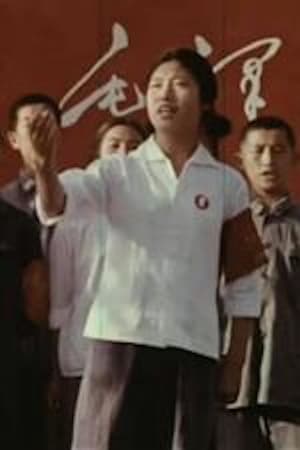
Red Guards were a student movement supported by Mao Zedong in 1966-67 during the Cultural Revolution. A group of students at Qinghua University who issued 2 big-character posters in May-June 1966 called themselves Red Guards. The students criticised the university administration of elitism and bourgeois tendencies. In August 1966 Mao Zedong expressed support for the Red Guards. This gave the student movement political legitimacy and it spread outside Beijing. The Red Guards started to attack the Four Olds and marched across China to eradicate old ideas, old cultures, old customs and old habits. Ultimately the struggle between different Red Guard factions led to a chaotic civil-war-like situation. During 1967-68 the Peoples Liberation Army got the movement under control and restored social order. Beginning late 1968 members of the Red Guard movement were sent to the countryside to undergo re-education. We met and filmed them in August 1971.
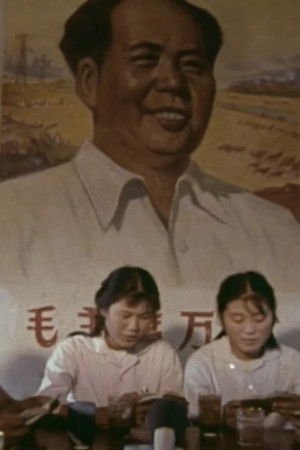
Mao Zedong was not only a revolutionary leader and thinker, he was also a poet. In poems written in the classic calligraphic tradition he expresses his experiences and visions. In this film, 8 of Mao's poems are sung, recited and interpreted: 'Changsha' (1925), 'Jinggang Mountains' (1928), 'The Long March' (1935), 'Snow' (1936), 'The People's Liberation Army Captures Nanjing' (1949), 'Swimming' (1956), 'Reply to Comrade Guo Moruo' (1961) and 'Reascending Jinggang Mountains' (1965). Through these poems we get a picture of the Chinese revolution from its first beginning in 1921 until the Cultural Revolution. The poems of Mao Zedong have been published in more than 57 million copies
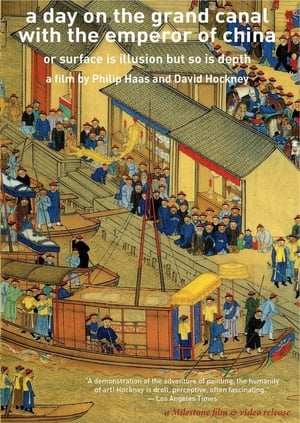
Director Philip Haas and artist David Hockney invite you to join them on a magical journey through China via a marvelous 72-foot long 17th-century Chinese scroll entitled The Kangxi Emperor's Southern Inspection Tour (1691-1698), scroll seven . As Hockney unrolls the beautiful and minutely detailed work of art, he traces the Emperor Kangxi’s second tour of his southern empire in 1689.
Undercover in Tibet reveals the regime of terror which dominates daily life and makes freedom of expression an impossibility. Tash meets victims of arbitrary arrests, detention, torture and ‘disappearances’ and uncovers evidence of enforced sterilizations on ethnic Tibetan women. He sees for himself the impact of the enormous military and police presence in the region, the hunger and hardship being endured by many Tibetans and hears warnings of the uprising taking place across the provinces now.
Railroad of Hope consists of interviews and footage collected over three days by Ning Ying of migrant agricultural workers traveling from Sichuan in China's interior, to the Xinjiang Autonomous Region, China's northwest frontier.[1] Through informal interviews aboard the cramped rail cars, Ning Ying explores the hopes and dreams of the workers, many of whom have never left their homes before.
This is the last working narrow gauge steam railway in China. Built 70 years ago to haul coal out of the valley, the 19 km line has evolved to be the main source of transport in the valley carrying children to school, workers to their jobs and pigs to market; all fighting for space in the train's small, unglazed carriages. Now the railway is at a critical point. The mine has shut down and the villagers are fighting to keep the line - and its aging steam locomotives - running. Already the villagers have to make replacement parts by hand. When the boiler goes they face catastrophe. Too large to fabricate themselves, they search far and wide for a company to make a new boiler for them. But even if they can find a new boiler, how can they get it to Jiayang Valley? At a time when attention is focused on China's great leaps in technology, on its maglev and bullet trains, Little Train takes viewers on a journey to the quiet backwaters that are still home to half of China’s population.
The film explores the pursuit of the “Chinese Dream.” Driven by mesmerizing—and sometimes humorous—imagery, this observational documentary presents a contemporary vision of China that prioritizes productivity and innovation above all.
Tibet: The Survival of the Spirit
Over the last 40 years, China has been transformed out of all recognition. The scale of its growth and the sheer speed of change has been astonishing. The country has seen the largest lifting of people out of poverty that has ever taken place in human history. How did an impoverished and backward communist country become an engine of global capitalism? What lies ahead for this economic behemoth?
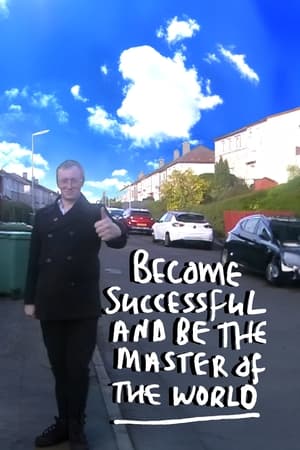
Filmed mostly on a Mini DV camera Gavin has thought of a quick way to become successful and be the master of the world but he has to wait for it all to fall into place… he has to wait for the postman to start production documenting the process of being master of the world.
En ulovlig norgesmester
A documentary about Caroll Spinney who has been Sesame Street's Big Bird and Oscar the Grouch since 1969. At 78-years-old, he has no intention of stopping.
In China more people are on death row than the rest of the world combined. The children of the convicts are often left alone, stigmatized and living in the streets. Grandma Zhang, as the kids call her, is a former prison guard who has founded an orphanage in Nanzhao.
Historias de las montañas de la bruma