The story is set at the beginning of the 20th century in Sicily. Salvatore, a very poor farmer, and a widower, decides to emigrate to the US with all his family, including his old mother. Before they embark, they meet Lucy. She is supposed to be a British lady and wants to come back to the States. Lucy, or Luce as Salvatore calls her, for unknown reasons wants to marry someone before to arrive to Ellis Island in New York. Salvatore accepts the proposal. Once they arrive in Ellis Island they spend the quarantine period trying to pass the examinations to be admitted to the States. Tests are not so simple for poor farmers coming from Sicily. Their destiny is in the hands of the custom officers.
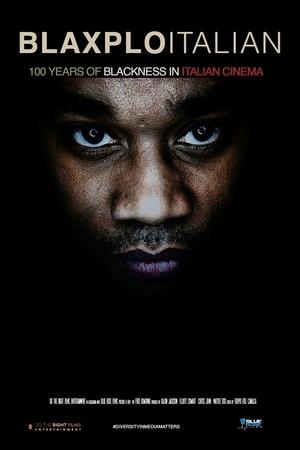
A documentary that uncovers the careers of a population of entertainers never heard from before: Black actors in Italian cinema. With modern day interviews and archival footage, the documentary discloses the personal struggles and triumphs that classic Afro-Italian, African-American and Afro-descendant actors faced in the Italian film industry, while mirroring their struggles with those of contemporary actors who are working diligently to find respectable, significant, and non-stereotypical roles, but are often unable to do so. Blaxploitalian is more than an unveiling of a troubled history; it is a call-to-action for increased diversity in international cinema through the stories of these artists in an effort to reflect the modern and racially diverse Italy.
After the World War I, Mussolini's perspective on life is severely altered; once a willful socialist reformer, now obsessed with the idea of power, he founds the National Fascist Party in 1921 and assumes political power in 1922, becoming the Duce, dictator of Italy. His success encourages Hitler to take power in Germany in 1933, opening the dark road to World War II. (Originally released as a two-part miniseries. Includes colorized archival footage.)
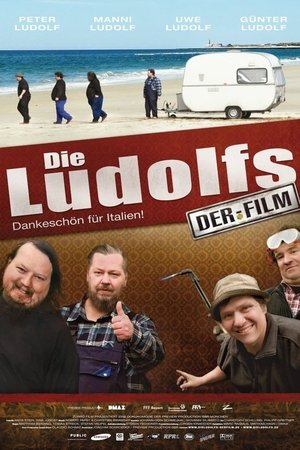
After surviving a heart attack, bus company owner Marianne Toeplitz should actually be more concerned about her health than her ailing business. But she only does this after an argument with her daughter Susanne, who wants to merge with the competition. Against all reason, Marianne sets off for Italy with her granddaughter: Teenager Nellie is in love and wants to join her boyfriend in Rimini - where Marianne experienced an unforgettable romance with the charming Giuseppe many years ago. Susanne follows the two runaways and gets closer to her ex-husband again. Marianne also learns that old love never rusts.
Le Parti du cinéma
At the turn of the sixteenth century, Michelangelo (Mark Frankel), Raphael (Andrea Prodan), and Leonardo Da Vinci (John Glover) create their masterpieces, while dealing with religious persecution, political turmoil, and the discovery of America.
Casanova, a young patriot in 18th-century Sicily, upon learning that his father and sister have been murdered, returns to Palermo and engages in guerilla tactics against the forces of the Governor. Lady Bianca, the Governor's daughter, is in love with one of the patriots, Lorenzo, and desires to escape from the palace. Her lady-in-waiting, Zanetta, enlists the aid of Casanova and he rescues them and takes them to the partisan's camp. The rebels are victorious. Lady Bianca makes plans to marry Lorenzo, and Casanova and Zanetta have similar plans.
Every summer on Palermo's Mondello beach, over 1,000 cabins are built in preparation of the Ferragosto holiday. Centered around a family who goes into debt, three women holding onto the feeling of youth, and a politician seeking votes -- a vanity fair of beachgoers hiding behind the memory of a social status that the economic crisis of recent years has compromised.
The 1960s opened with La Dolce Vita by Federico Fellini and its unforgettable lead: Marcello Mastroianni. The actor seemed to glide effortlessly through his roles — and through life — as if to say that life is not all that serious, or perhaps that it is far too serious not to be laughed at. But what kind of man was hiding behind the actor with the handsome, boyish looks, who appeared so gentle and nonchalant?
He is considered the greatest European poet of the Middle Ages and his work unfolds the whole panopticon of occidental education – theology, philosophy, sciences, politics and literature. But who has really read it, the “Divine Comedy”? Who knows more of its creator Dante Alighieri than that he had an eagle-like profile and was in love with a woman named Beatrice? 700 years after Dante’s death, the filmmaker Adolfo Conti travels through Italy with Dante’s words in mind and eyes to see the world as Dante did. As the film encounters the beauty of arts and the Tuscan landscape, the forces of nature, a dramatic life story is unfolded.
In 19th-century Italy, Giacomo Leopardi channels his debilitating illness and isolation into poetry.
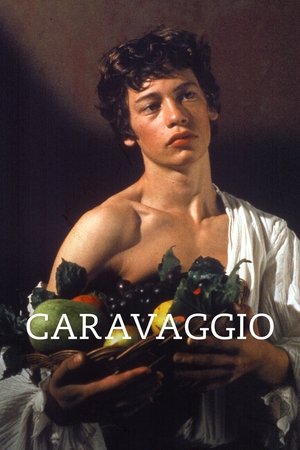
A retelling of the life of the celebrated 17th-century Baroque painter Michelangelo Merisi da Caravaggio through his brilliant, nearly blasphemous paintings and his flirtations with the underworld.
What are we talking about when we talk about negotiations? About the state's concessions to the Mafia in exchange for ending the massacres? About who assassinated Falcone and Borsellino? Of the eternal coexistence between the Mafia and politics? Between the mafia and the church? Between the Mafia and law enforcement? Or is there more? A group of actors enacts the most relevant episodes of the affair known as the Mafia-state negotiation, impersonating mobsters, secret service agents, high officials, magistrates, victims and murderers, Freemasons, honest and courageous people, and courageous people up to a point. Thus one of the most intricate events in our history becomes an exciting tale.
Disciplined Italian composer Antonio Salieri becomes consumed by jealousy and resentment towards the hedonistic and remarkably talented young Salzburger composer Wolfgang Amadeus Mozart.
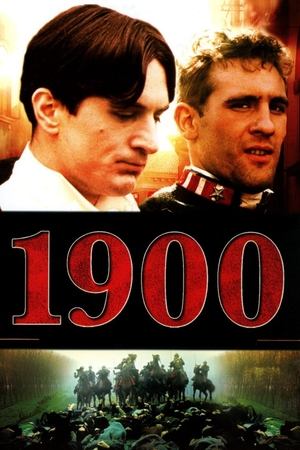
The epic tale of a class struggle in twentieth century Italy, as seen through the eyes of two childhood friends on opposing sides.
In a race against time and all odds, the revolutionary F1 racing car Ferrari 312B will get back on the Monaco circuit, 46 years later, under the wing of it’s creator, the genius engineer Mauro Forghieri.
Italian airship engineer Umberto Nobile enjoys a quiet life with his beloved dog Titina. One day, Norwegian explorer superstar Roald Amundsen contacts him and orders an airship to conquer The North Pole.
The Catholic Church secretly investigates Caravaggio as the Pope weighs whether to grant him clemency for killing a rival.
House of the Wickedest Man in the World is the story of a ruined building near the city of Cefalú in Sicily. In the early 1920s, Aleister Crowley, the most famous occultist of his time, lived in the building, practicing magical rituals. In the summer of 1955, Kenneth Anger, considered one of the pioneers of experimental cinema, traveled with sexologist Alfred Kinsey to Sicily to find Aleister Crowley’s temple to shoot a film about the occultist’s time in Cefalú. The Thelema Abbey film was never released.
A history of the Spanish Transition told in first person by the main protagonists: on the one hand, the politicians, idealistic or merely opportunistic, who brought it to a successful conclusion in the tribunes and offices; on the other hand, the citizens who, in the streets, supported it sincerely or fought it with ferocity.