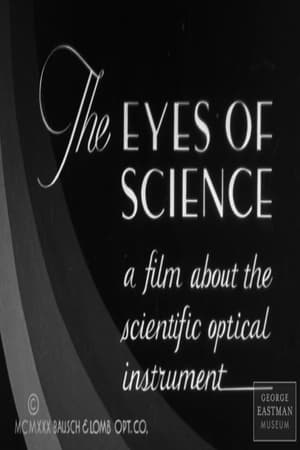
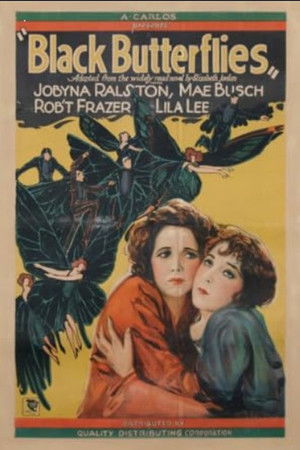
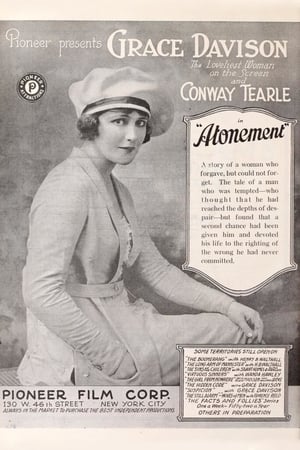
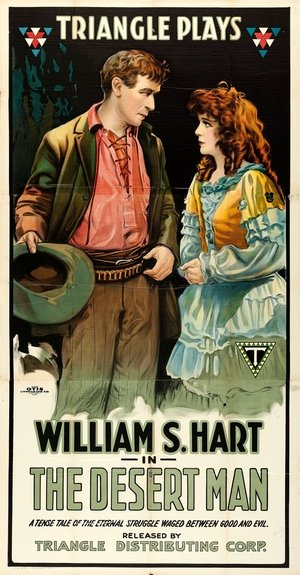
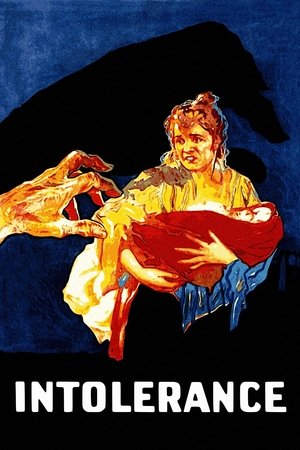
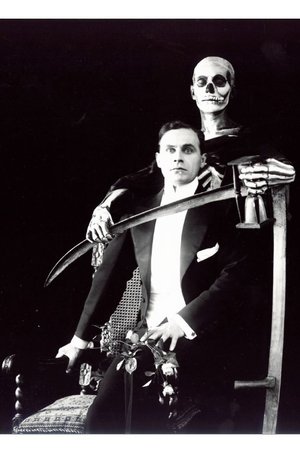
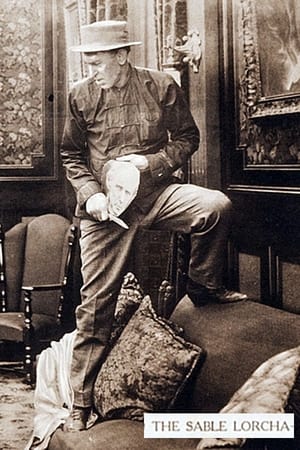
The optical company Bausch & Lomb of Rochester, New York, contracted Watson and Webber to create this corporate industrial film to showcase the company’s extensive catalog of lenses and other optical instruments, displaying their practical applications in industry and everyday life. The Eyes of Science easily straddles the fields of avant-garde and industrial filmmaking, making both a fascinating object of form and style, as well as a highly educational, entertaining, and informative piece of film and industrial history. Originally 45 minutes.
The Morning Sun Shines is a fiction-documentary film by Kenji Mizoguchi and Seiichi Ina. The film is a combination of a drama about a reporter, and documentary footage about newspaper production. Only 25 minutes of footage has survived.
Yamamoto Senji fought against the Peace Preservation Law in the Diet. On March 5, 1929 he was assassinated by the right wing. A farewell ceremony was held near the University of Tokyo. Prokino's Tokyo Branch shot the procession.
In 1961 Turin celebrated the centenary of the Italian unity with a large exposition which lasted from May till October of that year. One of the most popular exhibits was the 28 minute documentary ITALIA ´61 IN CIRCARAMA which was produced by the Walt Disney company and sponsored by the Italian automobile manufacturer Fiat. The spectacular views of this Cinerama tour of Italy (filmed with nine cameras) impressed more than two million visitors during the entire duration of that Turin Expo.
On May 1st, unions all over Japan celebrate May Day, the international day for workers. Workers gather together at parks and hold demonstrations and parades. May Day has its origins in a strike that occurred in the United States on May 1, 1886, a strike that called for an eight-hour workday. Prokino recorded the May Day every year from 1927 to 1932. Among these films, this work is the only one that has survived. However, only its first part has survived. The original film depicts the march to the Ueno Park where the rally was dismissed. Iwasaki Akira coordinated the entire Tokyo Prokino organization as it photographed the 1931 May Day celebrations. They shot in both 16mm and 35mm (other 35mm productions were planned, but this is the only one that achieved completion). A 16mm print was circulated around the countryside by mobile projection units, and a 35mm print was shown at Soviet film nights in Tokyo and Osaka.
The surviving 14 minutes of the original documentary about the Villas Boas expedition to the Amazonian tribes in Brazil.
Documentary by Portuguese Silvino Santos, about the Amazon, its flora, fauna, its inhabitants and among other wonderful images from the beginning of the 20th century with alternating close-up shots of caimans, jaguars and tropical flora with footage of Indigenous rituals--including some of the earliest known moving images of the Indigenous Witoto people--and longer sequences showcasing the region’s extractive industries: rubber, the Brazil nut, timber, fishing, even the egret feathers that were a staple of women’s fashion at the time.
Billie Dove, as Elena, pulls out all stops as a Russian princess and a woman-of-the-streets in Paris in an exotic romance and hand-wringing drama set in two countries and the way-stations in between.
Divorce lawyer Maurice (Matt Moore) does not pay much attention to his wife Alice (Florence Vidor). When he spends their anniversary with famous actress Marianne (Louise Fadenza) Alice decides to seek a divorce herself.
Der Fremdenlegionär
Der Mann ohne Schlaf
Just as Galeen and Wegener's Der Golem (1915) can be seen as a testament to early German film artistry, The Story of the Kelly Gang (1906) symbolizes both the birth of the Australian film industry and the emergence of an Australian cinema identity. Even more significantly, it heralds the emergence of the feature film format. However, only fragments of the original production of more than one hour are known to exist, preserved at the National Film and Sound Archive, Canberra; Efforts at reconstruction have made the film available to modern audiences.
Steuermann Holk
California cowpuncher Jim Kern and his pal enlist in the war against Germany and, shortly thereafter, meet Frank Akuri, who has pledged to colonize the United States for his homeland, Japan. While Jim and other white males are fighting in France, Akuri forces Jim's sweetheart Mary to sell her ranch, as she is not able to run it because the only men left, the Japanese, have pledged not to work for the whites. With the ranch, Akuri begins his colony. Mary counters by organizing her society women friends to appeal to Congress against the "yellow menace." When it seems that his plans will be thwarted, Akuri issues orders for the death of Mary and her friends, but Jim and his pal return and rescue them. Akuri then kidnaps Mary and takes her to his apartment, but with the help of Akuri's wronged Japanese lover, Jim learns her whereabouts. He organizes a posse of American Legion locals and rescues Mary just as Akuri is about to murder her. Akuri's group is routed out.
To the Hills Again in Spring
Newlyweds Käthe and Max met while studying law. Trouble ensues when Max takes on his first case without telling his wife.
In a circus, visitor who has just fallen for the “gypsy” dancer Militza is stabbed by a jealous clown, Bajazzo. Militza escapes to the country village of Marienhagen, finding shelter in the house of a local Catholic priest. The priest also falls for Militza. When he is subsequently struck dead by a bolt of lightning one evening during Mass, his mother blames Militza and has her cast out of the village. Militza joins a theatrical troupe whose married leader is disappointed with the general lack of artistic talent and begs Militza to leave with him. Militza refuses, and instead flees on her own. Onboard a ship, she is surprised to encounter the leader of the troupe again. The ship sinks, he dies. She is rescued by a nobleman who takes her to his country estate. Here she finds peace and true love. When the dead priest’s vengeful mother learns that Militza is alive, she kindles fear and superstition among the villagers, who stone Militza to death.
A cautionary tale for aspiring flappers. Five of six reels survive.
The Happy Vagabonds
A melodrama about a painter who is infected with syphilis, refuses treatment, turns to the use instead of narcotics, and withers away.