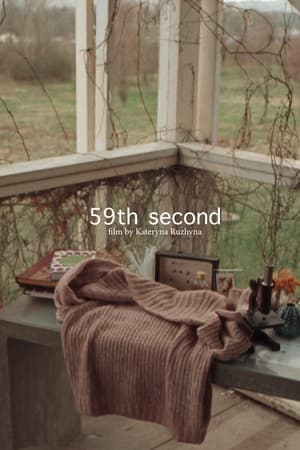
A short film depicting the universality of life, growth, and how beautiful life is to simply exist. The film shows how beautiful it can be when we show tenderness & love for one another, through the narration & home movies of four sisters & their mother from when they were born up to the present. The film was made over 18 years on The Australian Coast.
An up-close look into the life of the often misunderstood movie director Grigori Kromanov through the lens of old friends and colleagues.
Every year, five to ten percent of all deceased Berliners are buried by the authorities because no relatives are found. Most of them are put into the ground by mortician Bernd Simon going alone. But sometimes companions do turn up and say goodbye in their very own way. An observational documentary about an undertaker who actually wanted to become an entertainer, a bizarre city portrait and a mirror of how we deal with death, mourning and commemoration.
From Belgium, Jialai Wang maintains contact via smartphone and camera with her mother and grandmother in China. When her grandmother’s health deteriorates, Jialai returns to Shanghai, but when she arrives, her grandmother has already died, and she is left alone with her mother. A devout Buddhist, her mother seems to pay more attention to her daily prayers, Maoist past and dog Dongdong than she does to her daughter. She herself had been abandoned as a child by her own mother, when she divorced Jialai’s grandfather and moved to the city.
A engaging and exotic man–nature documentary that is sure to capture audiences in many countries. Beautifully filmed by Peter Gerdehag and sensitively edited by Tell Johansson. He lives for horses, he lives with horses, he works with horses and he just about dies when he is forced to leave his horses because of a storm that turns his life upside down.
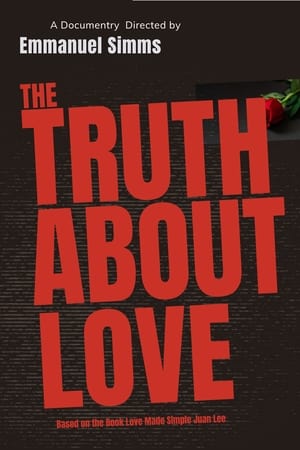
18 partners discuss the choices they’ve made in deciding on their mates. At its heart, this unscripted documentary film is about acceptance; a gentle message that we shouldn’t judge the choices of others, even if they seem a little different.
Jasmin is joy, living in the moment. A 15-year-old boy described as "non-verbal autistic." He communicates through his eyes. He makes sounds, says a word. He constantly sings the rhythm of a song whose lyrics only he knows. A bubble of sweetness and love.
A cheerful documentary about the daily life of a community of Franciscan sisters. “Hasta mañana, si Dios quiere” (See you tomorrow, God willing) is a film born from the desire to understand that mysterious feminine universe that gives up its life and leaves behind family, home, lovers, disobedience, and physical love.
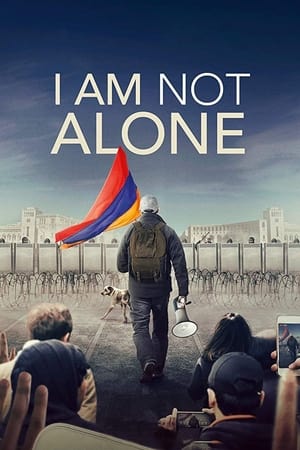
Just after midnight on 10 March 1945, the US launched an air-based attack on eastern Tokyo; continuing until morning, the raid left more than 100,000 people dead and a quarter of the city eradicated. Unlike their loved ones, Hiroshi Hoshino, Michiko Kiyooka and Minoru Tsukiyama managed to emerge from the bombings. Now in their twilight years, they wish for nothing more than recognition and reparations for those who, like them, had been indelibly harmed by the war – but the Japanese government and even their fellow citizens seem disinclined to acknowledge the past.
Through archival footage of his parents' wedding, the filmmaker reflects on love and marriage in contemporary Serbia. Observing traditional Balkan rituals, he questions his own place as an LGBT individual in a society resistant to equality. The film explores the tension between tradition and modern love, and the hope for a future where everyone can experience love freely. Through his personal journey, he confronts family expectations and dreams of acceptance.
Filomena
Rena is on the threshold of adulthood. For her and her mother, the Internet is a form of escape from their humdrum everyday lives. In the world of talent shows, Facebook and YouTube, the keyboard seems to be a gateway to fame and love. Yet the border between fantasy and reality is quickly obliterated.
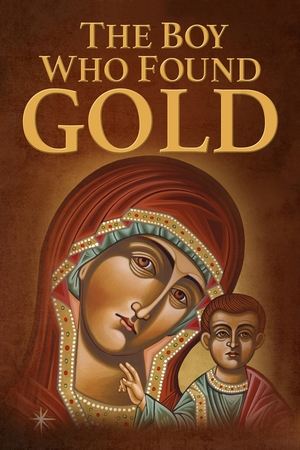
William Hart McNichols is a world renowned artist, heralded by Time magazine as "among the most famous creators of Christian iconic images in the world". As a young Catholic priest from 1983-1990 he was immersed in a life-altering journey working as a chaplain at St. Vincent's AIDS hospice in New York city. It was during this time that he became an early pioneer for LGBT rights within the Catholic church. "The Boy Who Found Gold" is a cinematic journey into the art and spirit of William Hart McNichols. The film follows his colorful life as he crosses paths with presidents, popes, martyrs, and parishioners, finding an insightful lesson with each encounter. McNichols' message as a priest, artist and man speaks to the most powerful element of the human spirit: Mercy.
I was scrounging around the neighborhood for inspiration. Within a block from my apartment, I found a wild mushroom in the grass, and an advertisement for a psychic named Sara.
A Woman Watches People.
Before leaving for Rome with his mother, five year old Natan is taken by his father, Jorge, on an epic journey to the pristine Chinchorro reef off the coast of Mexico. As they fish, swim, and sail the turquoise waters of the open sea, Natan discovers the beauty of his Mayan heritage and learns to live in harmony with life above and below the surface, as the bond between father and son grows stronger before their inevitable farewell.
ATENTAMENTE is a film that, through the sensation of the time passing by and the presence of the death that wanders into a nursing home, allows us to feel the life through the illusion that love brings along. Libardo and Alba, a couple of elders who met each other at the nursing home where they live, they fall for, they become boyfriends and start to struggle in order to find fifty thousand pesos to rent a room for one night at a hotel so they can have a privacy moment, since at the nursing home where they live is not possible to have that. While struggling they must face each other, face their fears, their limitations, their pains, their time as well as their fragility so they can construct that moment in which they meet love. A struggle that seems to be easy, but for them is an odyssey against time, against their limitations and their own ghosts.
Casimê Celîl was born into a Yezidi Kurdish family in 1908, in a village called Kızılkule, located in Digor, Kars. The village and family life, which he longed to remember throughout his life, ends with the massacre they endured in 1918. During his long road to Erivan, Armenia, he lost all his family members. Left all alone, Casim was placed into an orphanage and was forced to change his name. To remember who he was and where he came from, every morning he repeated the mantra “Navê min Casim e, Ez kurê Celîlim, Ez ji gundê Qizilquleyê Dîgorê me, Ez Kurdim, Kurdê Êzîdî me”, which translates to: “My name is Casim, I am the son of Celîl, I come from the village of Kızılkule in Digor, I am a Kurd, and I am Yezidi”. He clings to every piece of his culture he can find, reads, and saves whatever Kurdish literature or art he comes across. As the year’s pass, Casim finds himself with an impressive collection of Kurdish culture and history.
'From One Day To The Next' follows four elderly people through their everyday lives, observing how they cope with a gradual loss of autonomy.
Fox Rich, indomitable matriarch and modern-day abolitionist, strives to keep her family together while fighting for the release of her incarcerated husband. An intimate, epic, and unconventional love story, filmed over two decades.