Written for exceptional singers, Il Trovatore has remained popular ever since its first performance at the Teatro Apollo in Rome on 19 January 1853, when even the toughest critics were convinced of its place in the repertoire. People are attracted to Il Trovatore because of its rousing melodies, its brutal, powerful plot, and its simple structure: elements that make it one of the best examples of Verdi’s theatre pieces. Recorded live at the Sferisterio theatre of Macerata in the summer of 2016, under conductor Daniel Oren's vibrant and incisive direction, this production boasts a first-rate cast and elegant direction from Francisco Negrin. The sets and costumes by Louis Désiré and lighting by Bruno Poet were well received by the Sferisterio audience.
Prodaná nevěsta
Philippe Jaroussky as Ruggiero is in thrall to Patricia Petibon as the sorceress Alcina in Katie Mitchell’s virtuosic production of Handel’s opera from the 2015 Aix-en-Provence Festival, described by Bachtrack as “a night of a thousand delights”. Conducted by Andrea Marcon, this was, in the words of Opera News, “musically … a performance of the highest festival level”. The production of Alcina, by the British director Katie Mitchell, was welcomed by the Financial Times as “meticulously executed …, rich in detail, consummately polished”. As the New York Times wrote: “It involves a huge sorcery machine for turning people into animals (or whatever). And Ms. Mitchell works magic of her own onstage, constantly showing the enchantresses Alcina and Morgana alternating between glamorous public personas and their ‘real life’, older, private selves …There are also bits of simulated sex, mingling genders and suggesting, among other things, inventive new ways to hit high notes.”
Trpělivý Sokrates
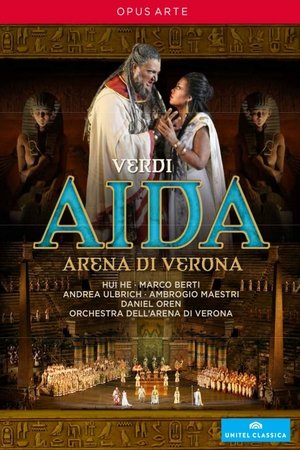
An Egyptian military commander, Radamès, struggles to choose between his love for the enslaved Ethiopian princess Aida, and his loyalty to the Pharaoh. To complicate the story further, the Pharaoh's daughter Amneris is in love with Radamès, although he does not return her feelings.
In Baden-Baden, Nayo Titzin follows the producers of the opera Don Giovanni, created for the Innsbruck Festival of 2006. He is looking for a musical truth... What if Mozart's masterwork Don Giovanni had been interpreted in a wrong way for more than two centuries? Conductor René Jacobs, famous for his performance of Così fan tutte and laureate of a Grammy Award for his innovative recording of The Marriage of Figaro, comes back with new ideas on the comprehension of one of the greatest operas of all times. In this relevant documentary, Nayo Titzin clarifies and highlights all the brightness of those melodies and recitatives. Rewarded with many praises in the international press, this production shows the dramaturgical perfection of the "opera of the operas," the absolute of the genre, as Wagner once said. Once more, the Bulgarian director offers a fun and subtle report, and makes sure that everyone will understand this myth.
France, 1792. Chenier is an idealistic poet, in love with the aristocratic Maddalena. While Chenier supports such notions as "liberte, fraternite egalite," his sympathies do not extend to the current Reign of Terror. Likewise, the Revolutionary Tribunal has no need for poets or their girlfriends, especially those judged to be an Enemy of the State. Heads will roll.
The gorgeous and evocative Otto Schenk/Günther Schneider-Siemssen production continues with this second opera in Wagner’s Ring cycle. Hildegard Behrens brings deep empathy to Brünnhilde, the favorite daughter of the god Wotan (James Morris) who nevertheless defies him. Morris’s portrayal of Wotan is deservedly legendary, as is Christa Ludwig, as Fricka. Jessye Norman and Gary Lakes are Sieglinde and Siegmund, and Kurt Moll is the threatening Hunding. James Levine and the Met orchestra provide astonishing color and drama. (Performed April 8, 1989)
Siegfried is the third of the four operas that constitute Der Ring des Nibelungen (The Ring of the Nibelung), by Richard Wagner.
A collectively made filmic opera in 35 parts. The Black and predominantly queer art collective, an evolving line up of poets and artists from across the world, abstracts and reimagines opera in any traditional conception. Set to hip-hop, blues, noise, R&B and electronica, the piece uses the voice (chanting, singing, screaming; written by poet and activist Dawn Lundy Martin) as its primary tool, verbalising centuries of alienation, vulnerability and protest in the global African diaspora through its disruptive libretto.
Christmas is now more beautiful and cosy than ever! Experience Christmas in London, together with André Rieu. Decorated Christmas trees everywhere you look, beautifully lit streets, tempting Christmas window displays... Combine the unique London Christmas atmosphere with a magnificent Christmas concert by André Rieu, and you have all the ingredients for a lovely party in the dark December days. Together with fantastic soloists and his always joyful Johann Strauss orchestra, André Rieu provides a fabulous evening with the most beautiful and moving Christmas carols, but also with emotional songs such as Leonard Cohen's Hallelujah, The Holy City and the classic Concierto de Aranjuez. Christmas in London means an evening enjoying lovely music, beautiful costumes and plenty of London cosiness.
Franco Zeffirelli directs these two legendary La Scala productions telling tragic tales of jealousy. Mascagni's Cavalleria Rusticana features performances by Elena Obraztsova, Plácido Domingo, and Renato Bruson. Leoncavallo's I Pagliacci stars Teresa Stratas, Plácido Domingo, and Juan Pons. Both are conducted by George Pretre. This production of Pagliacci earned director Franco Zeffirelli the coveted Emmy as Best Director in the category of Classical Music Programming.
Although he is unanimously credited with having democratised opera, making it accessible to the greatest number, focus is rarely put on the strategy he devised and implemented in order to carry out his actions, nor what his actions reveal of the man and artist, and of the resulting metamorphosis from opera singer to pop artist. Through this angle, this film sets out to pay tribute to the man who summed up his credo, obsession and life’s work, in the following way: “They led the public to believe that classical music belonged to a restricted elite. I was the way to prove to the world that was wrong.
Soprano Anna Netrebko appears in her highly anticipated Met role debut as Leonora, the tortured heroine who sacrifices her own life for the love of the Gypsy troubadour. Dmitri Hvorostovsky sings Count di Luna, Yonghoon Lee is Manrico in his Met role debut as the title character, Dolora Zajick sings her signature role of the gypsy Azucena, and Štefan Kocán is Ferrando. Marco Armiliato conducts Sir David McVicar’s Goya-inspired production.
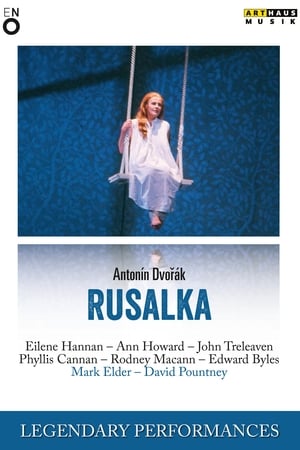
Renée Fleming sings one of her signature roles, the title character in Dvořák’s sumptuously melodic Rusalka. The story of the opera, which is about a water spirit’s tragic romance with a human prince, is drawn from several folktale sources including Hans Christian Andersen’s “The Little Mermaid.” Star conductor Yannick Nézet-Séguin leads a cast that also includes Piotr Beczala as the handsome Prince whom Rusalka yearns to love; Dolora Zajick as the cackling swamp witch Ježibaba; Emily Magee as the Foreign Princess, Rusalka’s rival; and John Relyea as Rusalka’s father, the Water Sprite.
Radiant mezzo-soprano Susan Graham and dashing Italian tenor Marcello Giordani are unlucky lovers in La Damnation de Faust, Hector Berlioz’s classic take on dancing with the devil.
Valery Gergiev conducts Mariusz Trelinski’s thrilling new production of these rarely heard one-act operas. Anna Netrebko stars as the blind princess of the title in Tchaikovsky’s lyrical work, opposite Piotr Beczala as Vaudémont, the man who wins her love—and wakes her desire to be able to see. Nadja Michael and Mikhail Petrenko are Judith and Bluebeard in Bartók’s gripping psychological thriller about a woman discovering her new husband’s murderous past.
One night in Judea, a disabled shepherd boy-turned-beggar and his mother are visited by three strangers. They are the Three Kings, and they are on their way to Bethlehem to visit the Christ Child, who has just been born.
As Blanche’s fragile world crumbles, she turns to her sister Stella for solace – but her downward spiral brings her face to face with the brutal, unforgiving Stanley Kowalski. This is the world premiere performance by the San Francisco Opera on September 19, 1998.
A destitute, crippled child and his mother are visited late one night by three traveling strangers who claim to be following a star so that they may bring gifts to a newborn king. The yearly live telecasts of Gian Carlo Menotti’s Amahl and the Night Visitors were a cherished Christmas tradition throughout the 1950s. In addition, since its premiere in 1951, Amahl has been performed regularly by community groups and small opera companies throughout the US, making it the single most popular American opera. This production, staged by the composer himself and originally telecast on Christmas Day, 1955, is a testament to the work’s enduring power to move the heart and stir the soul. Starring Rosemary Kuhlmann as the Mother and Bill McIver as Amahl. Members of the Symphony of the Air are under the direction of Thomas Schippers.