A memorial mourns as time passes
Departing from the traditional factory lines of production on the plastic plant manufacturing industry. From there, the film expands into the realm of synthetic nature, portraying a highly engineered landscape,developed by startups. The images appear to be bound together by a dark slime—an oily, recurrent presence as a connection to the strange and gory logics of petro capitalism and global territories of extraction.Petroleum, in both refined and unrefined forms, serves as a temporal vector: it is the raw material for plastic plants, Revealing the absurd techno-solutionist vision of the future.
A ritual of grids, reflections and chasms; a complete state of entropy; a space that devours itself; a vertigo that destroys the gravity of the Earth; a trap that captures us inside the voids of the screen of light: «That blank arena wherein converge at once the hundred spaces» (Hollis Frampton).
The innovative and influential British filmmaker Derek Jarman was invited to direct the Pet Shop Boys' 1989 tour. This film is a series of iconoclastic images he created for the background projections. Stunning, specially shot sequences (featuring actors, the Pet Shop Boys, and friends of Jarman) contrast with documentary montages of nature, all skillfully edited to music tracks.
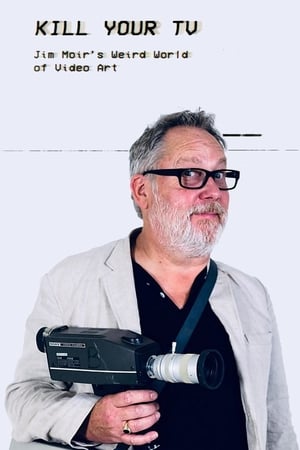
Jim Moir (aka Vic Reeves) explores Video Art, revealing how different generations ‘hacked’ the tools of television to pioneer new ways of creating art that can be beautiful, bewildering and wildly experimental.
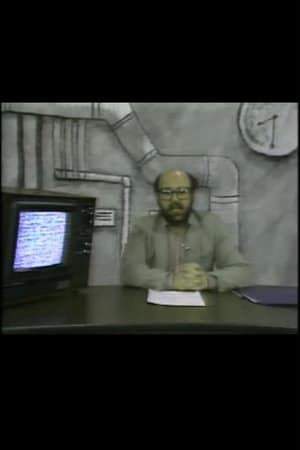
After concluding the now-legendary public access TV series, The Pain Factory, Michael Nine embarked on a new and more subversive public access endeavor: a collaboration with Scott Arford called Fuck TV. Whereas The Pain Factory predominantly revolved around experimental music performances, Fuck TV was a comprehensive and experiential audio-visual presentation. Aired to a passive and unsuspecting audience on San Francisco’s public access channel from 1997 to 1998, each episode of Fuck TV was dedicated to a specific topic, combining video collage and cut-up techniques set to a harsh electronic soundtrack. The resultant overload of processed imagery and visceral sound was unlike anything presented on television before or since. EPISODES: Yule Bible, Cults, Riots, Animals, Executions, Static, Media, Haterella (edited version), Self Annihilation Live, Electricity.
SPEED is the result of an artificial intelligence transforming bin footage into something beautiful in order to free the planet from pixel pollution. By video recycling trash shots into video art using the latest algorithm technology, visual art may help to understand our limited resources on earth and how to use them in a respectful manner. Every day we produce millions of clips sharing them on social media without even noticing anymore how much pixel garbage we create. At the same time, we produce every day millions of tons of plastic waste, polluting our environment without even noticing it anymore. SPEED wants to be a symbol of change as we are running out of time.
A dream where obsession for German as a second language mixes up with an obsession for neatness and cleanliness as a distinctive feature of the national culture in question seen from the perspective of a foreigner. The dream is not a nightmare only because the set it is dreamt into is the seashore of the mare nostrum, where the dreaming subject is perfectly at home. A homeland which she, in turn, in her more secret thus naïf dreams would dream of being cleaner and tidier as in the reality, especially in front of such beauty of nature. As is right and proper.
Someone born in the 1990s, who never actually lived in 1990s Istanbul, can only long for what they’ve seen in old videos. But how do you yearn for moments you never experienced... or why do you? In this nostalgic Istanbul we don’t remember, a digital passage unfolds from the European side to the Asian side, told only through the footage recorded on the cameras of those who once lived it.
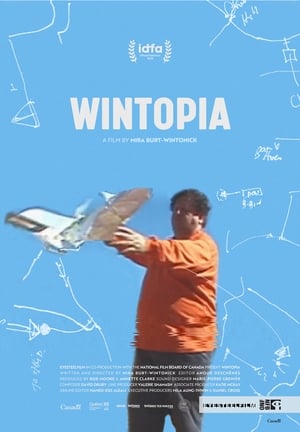
IDFA and Canadian filmmaker Peter Wintonick had a close relationship for decades. He was a hard worker and often far from home, visiting festivals around the world. In 2013, he died after a short illness. His daughter Mira was left behind with a whole lot of questions, and a box full of videotapes that Wintonick shot for his Utopia project. She resolved to investigate what sort of film he envisaged, and to complete it for him.
A feminine machine, stuffed with modern nano-technology and useless operations is depicted in this mixed-media 2D animation short, highlighting the consequences of consumerism and the downfall of civilized society. The machine reminiscent of a two-dimensional video game, leads to a destructive chain reaction after a strange malfunction, with people turning into clones and robots.
In his book "1984", George Orwell saw the television of the future as a control instrument in the hands of Big Brother. Right at the start of the much-anticipated Orwellian year, Paik and Co. were keen to demonstrate satellite TV's ability to serve positive ends-- Namely, the intercontinental exchange of culture, combining both highbrow and entertainment elements. A live broadcast shared between WNET TV in New York and the Centre Pompidou in Paris, linked up with broadcasters in Germany and South Korea, reached a worldwide audience of over 10 or even 25 million (including the later repeat transmissions).
Reynivellir is a representation of the transit that is generated when approaching the art work, described with visual games that can well be evoked by the same brain when witnessing the impossible figures of Jose María Yturralde. Reynivellir is also a beach in a country that is a musical sonnet, and this is so because the mental image does not always connect the articulated parts of a sensation, it is systematic, but aleatory, and it is from these notions of the field of observation, that it approaches and moves away from understanding, linking and unlinking forms, movements, sounds, sensations and knowledge.
Furio’s Furious Fragments & Friends - Furio Jesi (1941 Turin -1980 Genoa), enfant prodige moving between a plethora of disciplines – egyptology, history of religions, German philology, literary criticism - passed away prematurely, not without leaving bright fragments which throw light on mechanisms beneath many socio-cultural practices, for instance regarding cultural belonging, the functions of myth in modern society. He saw kind of “mythological machines” at work underneath our cultural production of meanings, historically determined, departing from a void, something that is still in culture but as residue, a missing link to an alleged authentic experience nowadays compromised up to the point to became just rhetoric, a byword, which is in no way neutral, but a tool, a macchina, for maintaining the status quo and serving the power apparatus. As in the case of holidays, celebrations and festivals.
Confined to an endlessly burning waiting room, a dying sedentary woman experiences herself blurring in and out of her body. In her last remaining fragments she tries to make amends with her spirit before her remaining fragments either decay or create.
A political work in which Ko Nakajima opposes himself to the Vietnam War.
Guy Ben-Ner, one of Israel's foremost video artists, gained international recognition with a series of low-tech films, starring his family in absurdist settings carved out of their intimate spaces and their everyday surroundings. Many of his videos are inspired by screenplays for films, folktales and novels. Analyzing these literary and cinematographic passages allows him to exploit the conventions of film narrative: how to tell a story, captivate an audience through a tale, sustain a degree of tension and entertainment, and so on. At the same time, he corrupts the magic of fiction by openly showing us the entrails of everything he records, without worrying about revealing the tricks of the trade. A large part of his filmic oeuvre features a conglomeration of cinematic and literary references which the artist quotes, adapts or interprets. Ben-Ner self-referentially links the great themes and their literary, cinematic and artistic realization.
A Bunch of Questions with No Answers (2025) is a 23-hour film by artists Alex Reynolds and Robert M. Ochshorn. Compiled entirely from questions posed by journalists at U.S. State Department press briefings between October 3, 2023, and the end of the Biden administration, the work removes the officials’ answers, leaving only the unresolved demands for clarity and accountability.
The quixotic journey of Nam June Paik, one of the most famous Asian artists of the 20th century, who revolutionized the use of technology as an artistic canvas and prophesied both the fascist tendencies and intercultural understanding that would arise from the interconnected metaverse of today's world.
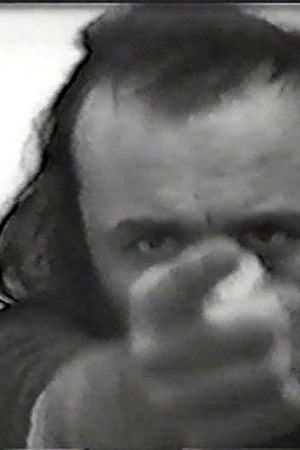
Poet and artist Vito Acconci points his finger towards the camera and his own reflection in an offscreen video monitor.