TGV, la réussite française
This Traveltalk series short celebrates San Francisco, past and present.
A small group of activists take on systemic racism and prejudice in Baltimore's public transportation, battling against the odds to create a brighter future for their community.
"I especially hope to inspire young women, because I often feel like so much emphasis is put on how beautiful you are, and how thin you are, and not a lot of emphasis is put on what you can do and how smart you are. I'd like to change the emphasis of what's important when looking at a woman." Filmed in San Francisco in 2000, Margaret Kilgallen (1967-2001) discusses the female figures she incorporated into many of her paintings and graffiti tags. Loosely based on women she discovered while listening to folk records, watching buck dance videos, or reading about the history of swimming, Kilgallen painted her heroines to inspire others and to change how society looks at women. Three of Kilgallen's heroines—Matokie Slaughter, Algia Mae Hinton, and Fanny Durack—are shown and heard through archival recordings. Kilgallen is shown tagging train cars with her husband, artist Barry McGee, in a Bay Area rail yard and painting in her studio at UC Berkeley (source: Art21).
The largest railroad community in history at work making the Pennsylvania Railroad become the Standard Railroad of the World. Generations of Altoona shopmen and train crews created the extraordinary legacy this film brings to life.
Vignettes of the New England Steam features the films of noted rail photographers Albert Michaud and William P. Price, as they document the handsome steam power (and the occasional pesky diesel) of the Grand Trump, Central Vermont, Boston & Maine, and New York, New Haven & Hartford Railroads. The mostly color and mostly 16mm production begins with the Grand Trunk in New Hampshire, then moves to the Central Vermont in the White River Jct vicinity, and the Boston & Maine and New Haven, primarily around Boston. Many wheel arrangements are featured, as is the passenger and freight rolling stock of the era ...including truss-rodded clerestory-roofed wooden maroon passenger cars on the B&M! So come along with Clear Block Productions as we journey back to the late 1940's and early 1950's to witness Steam's Final Stand in the Northeast in Vignettes of the New England Steam.
Cargos - Dans les soutes de la mondialisation
This 2001 Nine special tells the story of St. Louis-based Trans World Airlines (TWA). The story of how the company went from barnstorming to bankruptcy is the story of American air travel.
Secrets of the Dead: Death on the Railroad
The film explores how the three British colonies of New Brunswick, Nova Scotia and Prince Edward Island became provinces of Canada and charts the subsequent decline of their economies after Confederation. Photographs, archival drawings, cartoons and interviews with Maritime historians are used to document the case.
Trucking is big business. Cashing in on the boom is Shannan’s trucker driving school. But can she pass her own HGV test?
No matter what your age you'll love watching this impressive and comprehensive story of the development of railroading in America. Rail enthusiasts as well as history buffs, teachers and home schoolers, plus kids of all ages will appreciate this magnificent rail adventure covering live action historic operating railroads, rare photos of drawings and valuable memorabilia, and live action re-enactments. Featuring spectacular cinematography and an inspiring musical score, this Award-Winning four part DVD covers over one-hundred years of railroading evolution.
In the heart of New York City stands Grand Central Terminal. Explore the magnificent secrets of this iconic landmark as we take you inside the heart, soul and amazing engineering of this superstructure. From railroad cars to rush hours, we unlock the colorful tales of its past, present and future.
Spains Worst Rail Disaster
A hand-colored ride along the Bangor-Conwy-Colwyn Bay railroad filmed from an express train from the London and North Western Railway; Stations, vistas and a tunnel under the Conwy Castle (misspelled in the title) in North Wales.
For the past ten years, Jürgen Henn has filmed over-height trucks crashing into the 11foot8 train bridge affectionately nicknamed the "Can Opener." In that time, millions have viewed the crashes online. Regional, national, and international news organizations have dined out on the story and the goofy crash reels. But why do motorists continue to crash despite the many warnings, sensors, and signs? And what is it about these crashes that holds our attention? In this piece, we look for the humanity in human error.
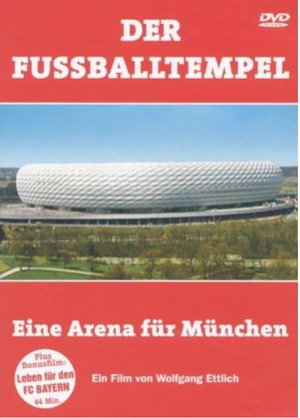
It does not happen every day that a gigantic stadium is built on a greenfield: In October of 2001, the citizens of Munich voted with a clear yes for a new soccer stadium in the north of the city. 66,000 soccer fans of FC Bayern and 1860 Munich will find a new common home in the futuristic looking structure. But before that stand four years of work on a construction site of superlatives. The director Wolfgang Ettlich and his cameraman Hans-Albrecht Lusznat followed the construction of the new Munich soccer arena since the first groundbreaking. They have recorded several phases of the construction and did thereby get to know the microcosm of a large construction site from the inside: The logistics, with which hundreds of construction workers have to be coordinated, and the steady growth of the stadium all the way to the perfectly conceptualized illuminated structure, with VIP-boxes, mass restaurants, and Europe’s largest parking garage.
The pilgrimage to Mecca is one of the most important religious journeys for millions of people around the world. But how to get there? This documentary shows us how 12 companies met the immense challenge of running a high-speed train through Saudi Arabia's sandy rocky desert in temperatures of up to 50 degrees Celsius. A true marvel of engineering and cooperation, and together, overcoming obstacles.
A unique look inside over 70 signal boxes taken from Video 125's archive filmed over a period of 30 years. Features 'boxes of all shapes and sizes, all kinds of operating methods from 19th century mechanical lever frames to 20th century panels to 21st century state-of-the-art Rail Operating Centres.
Not everyone who nowadays drives on the A73 between Nuremberg and Bamberg knows that they are travelling on a former waterway. Still half a century ago, the old Ludwig-Main-Danube-Canal (in short: Ludwig-Canal) was located here, which represented the last puzzle piece to a navigable connection between the oceans. Build within a remarkable ten years’ time of construction, the canal, which was opened in 1846, was the realization of a small dream of humanity as it finally connected the North Sea with the Black Sea. Unfortunately, the idea could not support itself financially: Too powerful were the railroads, which saw its rise simultaneously, and which soon undermined the ambitious canal project’s future as they were in every regard the faster, more comfortable, and better means of transportation of the hour.