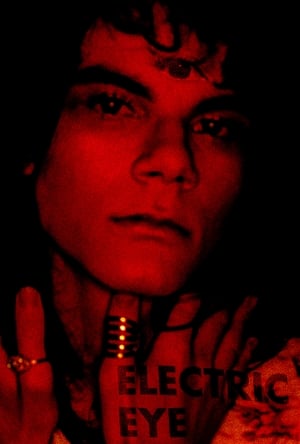
An experimental short film, shot during the COVID-19 pandemic, made by one person. Using recorded scenes and archival footage, the short presents an unorthodox narrative to explore the themes of self-identification, identity, gender expression and androgyny.
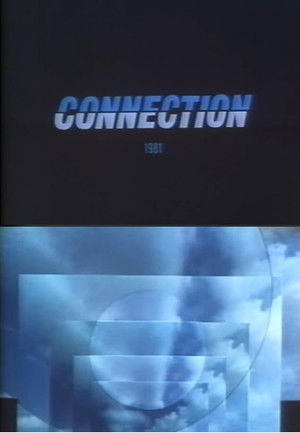
In Connection, a static shot of the sky with moving clouds is subdivided into regular geometrical regions, which are then individually (and rhythmically) manipulated.
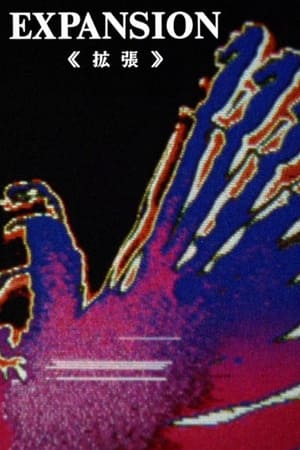
Expansion remixes the images of Matsumoto’s Esctasis into an more colourful psychedelic short.
In the sixth great mass mortality of the earth, humankind became extinct. Their technology had recently progressed so far as to deconstruct the algorithms of evolution and allow artificial life to develop on Earth.
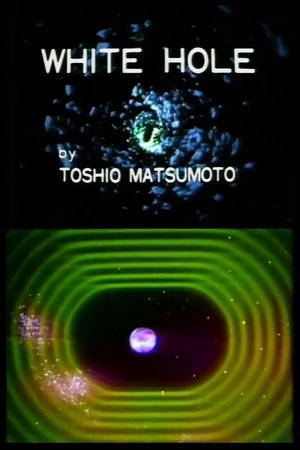
A mesmerizing trip through the psychedelic vastness of space.
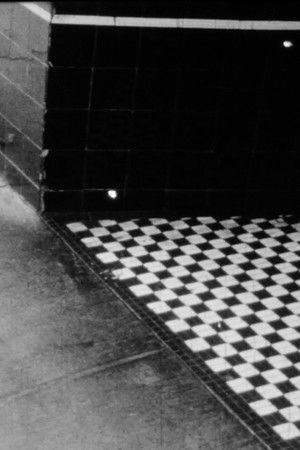
"As a painter carries a sketchbook and practices drawing, I carried a Super 8 camera and shot frame by frame, as an everyday exercise to make animations of lines and shapes found in the public space. The entire film was edited in camera and hand-processed afterwards." (Tomonari Nishikawa)
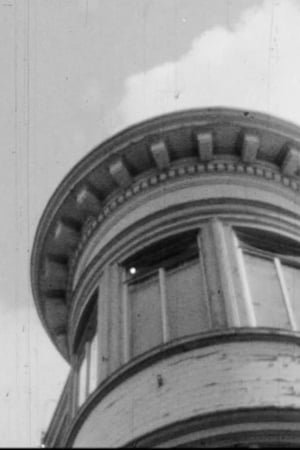
"The second film in the series, showing my study especially in apparent shapes – a shape that cannot be seen in a single frame but only through a series of consecutive frames when projected. It was edited in camera and hand-processed afterwards." (Tomonari Nishikawa)
"The third film in the series, which starts with a sequence of paired images: a focused image and a blurred image of the same subject, which was caused by a diagonal camera movement. Later, it shows an experiment to produce an apparent depth by rotating an apparent shape. It was edited in camera and hand-processed afterwards." (Tomonari Nishikawa)
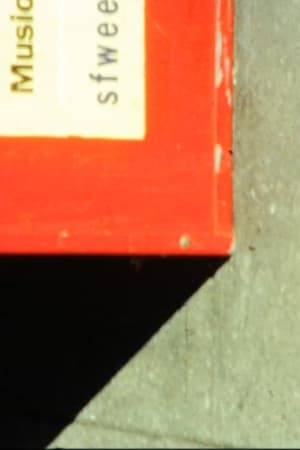
"The fourth film in the series, for which I focused on colors and shapes. It was shot on Kodachrome, all edited in camera, and processed at Dwayne’s Photo." (Tomonari Nishikawa)
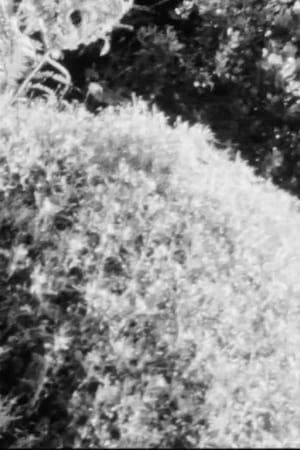
"This is the last film in the series. I shot at the site of Marin Headlands County in California when I was an artist in residence at the Headlands Center for the Art. The footage shows the nature in the area, as well as the historic buildings originally built for the US Army, including batteries and the Nike Missile Site. It was all edited in camera and hand-processed afterwards." (Tomonari Nishikawa)
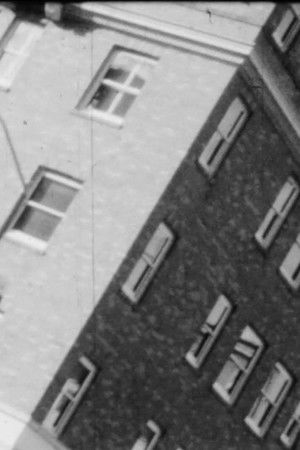
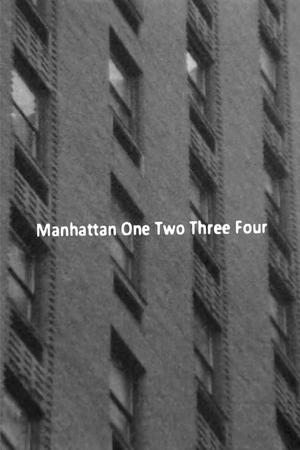
"A study in visual rhythm with images of architecture in Manhattan, New York, using the technique I did for the first sequence in Sketch Film #3. All edited in-camera and hand-processed afterwards. This film was commissioned by Echo Park Film Center for the celebration of its 12th anniversary." (Tomonari Nishikawa)
SPHINX ON THE SEINE is a film poem: the beginning of a metaphysical journey, musing on a series of brief, but enigmatic images taken from around the world. These images follow one after the other, but geographically span thousands of miles and large passages of time between each cut. Notions of time, space, and memory collide within a visual fabric of abstractions, landscapes, textures, superimpositions and graphic forms, to suggest the first moments of dream-sleep.
A short film about ties and gaps between a child and a parent. The author rediscovers letters her dad used to write her from prison. That love seems to be gone now. She decides to write back in hope to find the connection again. She puts in writing what could not be said: blaming him for family´s break-up but also trying to understand.
“Both NEW YORK LOFT and DOLL HOUSE convey a strong sense of resourcefulness, this ‘making something’ out of interiors, specifically domestic spaces. And domestic they are, in an avant-garde sort of way. The filmmaker gives plentiful evidence of arranging things, moving them, adjusting, placing and re-placing. First are poles and sticks found; second is fabric, sheets, pillows; in a third section we see round things. Circular magnets, machine parts, film cans and the like eventually become visually paralleled with the camera lens itself. The lens is seen as Barbara films into a round mirror. How different are the visions of this woman-with-a-movie-camera from Vertov of sixty years ago! Each extols the camera-eye, but Hammer replaces Vertov’s sociopolitical kino-truths with adventures in domestic space.” – Claudia Gorbman, Jump Cut
Using century old technology, PXXXL creates digital glitch from analog process. It was animated directly on the celluloid without a camera, in a darkroom, using lights, objects, and handmade lenses. There is no digital manipulation involved-- just light, celluloid, and processing.
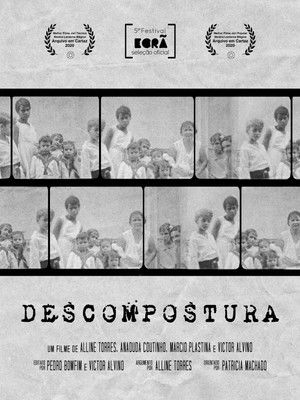
Discomposure is an experimental movie made of moving images of women, while they worked and were filmed under an aesthetic of fracture. Her bodies were positioned by the white middle classes men's eyes as if they were parts that served like props, support, and of spectators of lives which depended on these women. The movie disorganized this visual aesthetic. It did to see that, between who was filming and those entered, marginally, the scene, there was the black female look that stared at the camera, as an affront, so showing affirmation, contestation, and constraint.
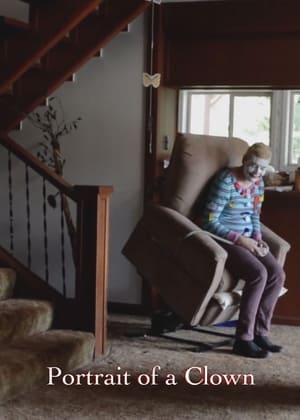
A portrait of the performance artists in colorful clothes and painted faces whom have transitioned from a symbol for joy and laughter, to horror and terror, to melancholy and sadness.
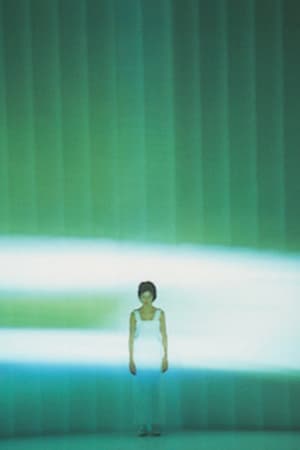
Looked from various view points, be it religious, philosophical, medical, cultural or emotional, on a stage flooded in flickering light, with an advanced technique of combining bodies, images, video, sounds and lighting, [OR] is a meditation on the "grey humour" overhanging the space between life and death.
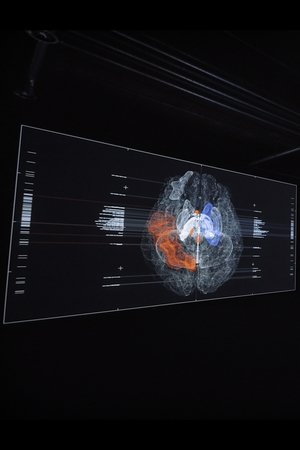
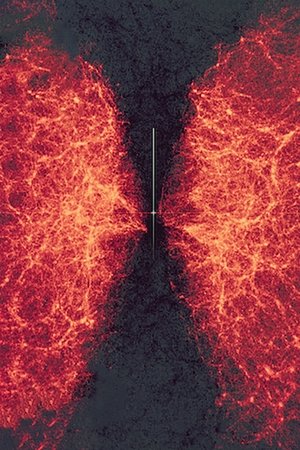
data-verse is a data-driven audio-visual trilogy by artist and composer Ryoji Ikeda which marks a two-decade culmination in the artist’s research. The trilogy addresses the layered dimensions of our world, from the microscopic, to the human, to the macroscopic. Through Ikeda’s process, massive scientific data sets have been transcribed, converted, transformed, de/re/meta-constructed and orchestrated to visualise and sonify the different dimensions that co-exist in our world between the visible and the invisible. Each variation immerses visitors in the vast data universe in which we live, capturing hidden facets of nature and the vast scientific knowledge underpinning our existence. This large-scale data-driven trilogy is generated by extremely precise computer programming and features a minimalist electronic soundtrack, harmonised with Hollywood-standard, high-definition, 4K DCI video projections of scientific data onto a large screen.