Following in the great tradition of his classic "How To" animated shorts of the 1940's, Goofy makes his return to the big screen in "How to Hook Up Your Home Theater". When Goofy is desperate to watch the Big Game, he heads to his local electronics store to tackle every consumer's nightmare - selecting the perfect home theater system and worse, trying to hook it all up.
The inhabited world is a constructed environment: a space that has been defined, created, and scaled for the sustenance and privilege of the human species alone. Humans have created a language that we cannot see beyond, one based on capital that hurdles us towards social and climate collapse. Contours reveals this position while also meditating on what it would mean to move away from this language in order to privilege not only the human but the other than human as well.
This experimental "film" consists of an empty room with a bare lightbulb, and windows covered with a translucent material, for a duration of 24 hours. It is not necessary for visitors to stay for the entire duration - they can come and go as they please. Created by Anthony McCall, it is based on the architectural framing of time and light. It came at the end of a series of works in which McCall was stripping back cinema to its absolute minimum - light, time, and human experience/perception.
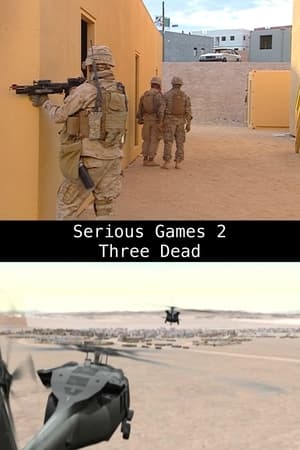
An exploration of how the U.S. military employs video game technology to train troops for war. Three Dead depicts a military exercise within a mock Iraqi town built on the outskirts of Twentynine Palms, California, blurring the line between computer simulation and reality.
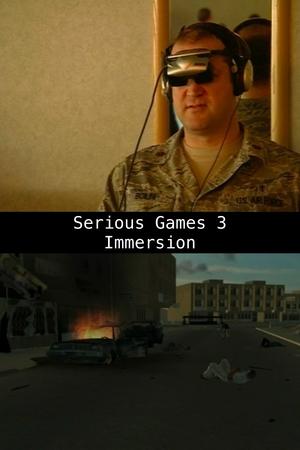
An exploration of how the U.S. military employs video game technology to train troops for war. Filmed at the United States Marine Corps Air Ground Combat Center, Watson is Down pairs footage of soldiers at computers engaging in combat-simulation training with scenes from the video games.
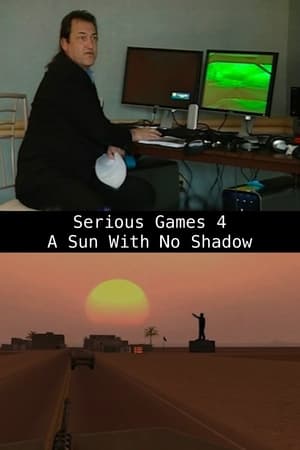
An exploration of how the U.S. military employs video game technology to train troops for war. In A Sun With No Shadow, Farocki calls attention to the subtle differences between the simulations for combat training and PTSD. With the former, the sun can be programmed to cast shadows in the virtual combat zones, while the latter, less expensive technology does not offer this feature.
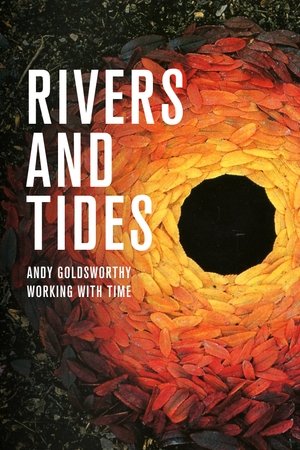
Portrait of Andy Goldsworthy, an artist whose specialty is ephemeral sculptures made from elements of nature.
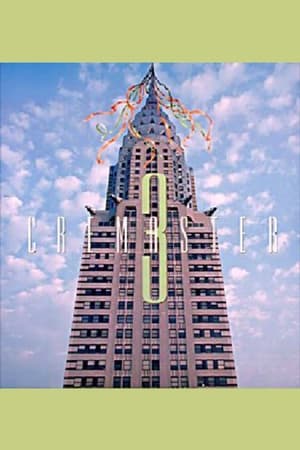
CREMASTER 3 (2002) is set in New York City and narrates the construction of the Chrysler Building, which is in itself a character - host to inner, antagonistic forces at play for access to the process of (spiritual) transcendence. These factions find form in the struggle between Hiram Abiff or the Architect ...
Bass takes over the upstairs Kanter-McCormick Gallery at the Art Center, expanding the territory of her gothic world in a new work The Latest Sun is Sinking Fast, an immersive, multi-channel installation incorporating 16mm film/video, sound, architecture, and featuring performances by Sarah Stambaugh, Bryan Saner, and Matthew Goulish. The solo exhibition features a spatial narrative installation that delves, through movement, texture, sound, and gesture, into the psychology of a recurring figure in Bass' previous films; while also introducing two new characters, blending the past into the present. Bass has designed the installation by altering the gallery, leading the viewer through a evocative memory of place, embedding us in a timeless society of lost souls in a haunted landscape. -Allison Peters Quinn, Exhibition Director, Hyde Park Art Center
1-channel film installation (21‘20‘‘). 2.00:1 aspherical widescreen, stereophonic sound. A wife waits for her dead husband. An adaption of three japanese poems in three different translations. An examination of waiting and the slowness of time. An exercise in slow cinema.
Video installation by UMMMI.
"This experimental melodrama follows Hikari, and her boyfriend Taro’s visit to his family home. While there Hikari forms an unexpected relationship with Taro’s auntie, Kyoto. As their relationship develops it becomes clear that Kyoko is struggling to control her mental state and the issues that ensue. Taro discovers that Hikari has had a brief affair with a friend of Kyoko’s and cannot control his emotions. This film is about the destruction of old love, and the cultivation of new love becoming tainted by history repeating itself." -UMMMI.
Three-channel video (black and white and color, three-channel sound) commissioned by the Museum of Modern Art, New York, for the entrance to exhibition "Toward a Concrete Utopia: Architecture in Yugoslavia, 1948–1980".
Ilya Kabakov is considered one of the most important contemporary artists worldwide. Born and raised in the Ukraine in the period between Stalin and Gorbatschow he left the country in the 80s. In his Installations and his numerous paintings Kabakov creates a world of its own, which leaves the heaviness of socialist and post-socialist life far behind. The film links Ilya Kabakovs artistic spaces with insights into Russian everyday life, which itself sometimes appears like an installation by the artist.
Catatonik is a multi sensory installation project which becomes part of my final study for the course design for social change. It is an attempt at trying to build spatial and sensorial elements which lets the body feel the microcosms of experiencing part of a coal mine and in turn an ingrained empathy as the effect of the experience. A consciously designed installation set to present the physicality of a place purely through an ethnographic reconstruction of sound and image in a different fabric of reality informed through research. The installation was entirely made in the campus of DJAD both the recording of the audio, video and its related textures.
Past and present life in the anarchistic "free city" of Christiania, in Copenhagen, Denmark. In Sandra of the Tuliphouse or How to Live in Free State, Christiania is approached at face-value, as a self-described laboratory of freedom, an environment that provides an almost unparalleled opportunity to unravel a very particular history of markedly contrasting power relations and vivid social forces. Borrowing from the usually disparate practices of cultural geography and fictional narrative, the project is constructed as a visual, spatial, and aural investigation of the site. The situation at Christiania in 2001 is compared with its distant past as a military base, its more recent utopian regeneration, and its possible future.
This three-channel video installation by James Benning shows three scenes from David Wark Griffith’s The Birth of a Nation (1915). The two-minute-long screen arrangement of imperceptibly moving images alludes to the beginning of racism. The three screens each show a solider in the American Civil War, black slaves picking cotton in the field, and imposing KKK.
An experimental installation inspired by the shot and reverse shot, one of the basics methodologies of cinema. The audiences follow the path designed by Jang to see the images, and simultaneously they are also recorded by a hidden camera in the reverse angle. This embodies the concept “gaze of gaze.” The film was shot in three different places to capture the atmosphere of DMZ. The installation consists of two-channel projections, CCTV cameras, and objects representing the DMZ.
Based on an installation by Alberto vev