Unconventional portrayal of mining in the Swedish Lapland ore fields, a powerful image and sound symphony that can be experienced both as a documentary and symbolic work.
Fordlandia Malaise is a film about the memory and the present of Fordlandia, the company town founded by Henry Ford in the Amazon rain forest in 1928. His aim was to break the British rubber monopoly and produce this material in Brazil for his car production in the United States. Today, the remains of construction testify to the scale of the failure of this neocolonialist endeavor that lasted less than a decade. Nowadays, Fordlandia is a space suspended between times, between the 20th and 21st centuries, between utopia and dystopia, between visibility and invisibility: architectural buildings of steel, glass, and masonry still remain in use while traces of indigenous life left no marks on the ground.
Notre ami l'empereur Bokassa Ier
L’or du golfe
Writer and filmmaker Assia Djebar explores Algerian history, the psychological impact of war, and post-colonial female identity in this 1979 classic of film literature. Named for (and taking its structure from) a traditional song with five distinct movements, the film combines documentary-style observation with loose narrative form to tell the story of Lila, an Algerian expatriate returning to her country 15 years after independence has been won. In comparing her life with the lives and experiences of rural Algeriennes, Lila is able to put her childhood demons to rest and discover a new history -- one written in the ongoing strength of generations of women. Like much of Djebar's writing, the film has a strong subtext dealing with resistance to patriarchy and women's desire to appropriate the means of power and expression -- one of which, of course, is the filmmaker's camera.
Lingerie--a word that conjures up silk, seduction and sensuality, the items that can create a curve or a mood. Underwear is the first thing to touch you in the morning and the last to touch you at night. Whether or not it's seen by anyone else, what you're wearing next to your skin matters. This sexy documentary shows you who makes these all-important articles, who sells them, and what influences people to buy them.
What kind of world power is Iran becoming, and how will Western countries deal with it?
In 2006, the American aluminium company ALCOA decides to build their plant in Greenland. The massive billion dollars’ project is the opportunity for Greenland to become financially independent from Denmark. The film zooms in on the isolated fishing town Maniitsoq as the years pass and the local inhabitants are put on hold – waiting for the American Dream.
A film about fireworks, the people who make them and the cultures behind them across the globe.
Progress in South Australia manifests itself around the Flinders Range country in the industries of Whyalla, Port Pirie, Port Augusta, Leigh Creek and Aroona Dam. Wildflowers cover the countryside.
This short documentary features Newfoundland fisherman Billy Crane, who speaks frankly on the state of the inshore fishery and how the lack of government support has contributed to the industry’s downfall. He is being forced to leave home to seek employment in Toronto. This film was made with the Challenge for Change program.
The portrait of Eldridge Cleaver, the "Minister of Information" for the Black Panthers movement, in exile in Algiers.
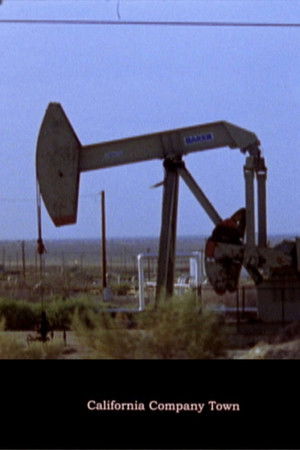
Lee Anne Schmitt explores California's landscape and past to document the history of one-time boom towns built and abandoned by the industries that necessitated their creation. Sold as a limitless land expansive with free opportunity, California was actually, from its onset, fissured by the interwoven needs of private and public interests. Schmitt's film covers various locations through time, as the major industries of the early 20th century (mining, lumber, oil) give way to the military, eventually leading to multinational corporations, and the use of small towns as satellites for growing urban metropolises.
An oil boom has drawn thousands to America’s Northern Plains in search of work. Against the backdrop of a cruel North Dakota winter, the stories of three children and an immigrant mother intertwine among themes of innocence, home, and the American Dream.
Filmed over a period of 3 years, this video work is a meditation on the borderline of the river Tejo, between Marvila and Barreiro. A psychogeographic piece that seeks out a feeling of doubt, inertia, and waiting. "Two sides, along the boundary line All the weight of the water above Metal arms extended to the heavens As if the sky was tilting to meet them And those giants again; Four by four . . . . all in a line, up against the tide."
An overview of the lobster fishing industry in Nova Scotia.
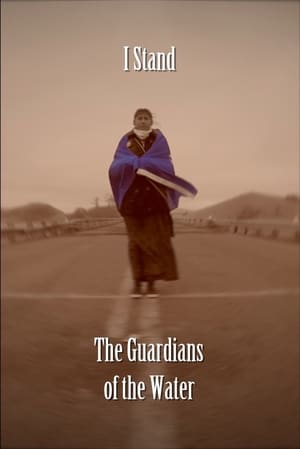
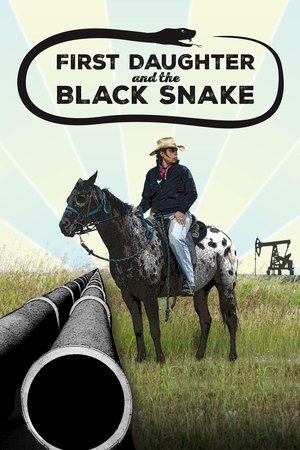
The “Prophecy of the 7th Fire” says a “black snake” will bring destruction to the earth. For Winona LaDuke, the “black snake” is oil trains and pipelines. When she learns that Canadian-owned Enbridge plans to route a new pipeline through her tribe’s 1855 Treaty land, she and her community spring into action to save the sacred wild rice lakes and preserve their traditional indigenous way of life. Launching an annual spiritual horse ride along the proposed pipeline route, speaking at community meetings and regulatory hearings. Winona testifies that the pipeline route follows one of historical and present-day trauma. The tribe participates in the pipeline permitting process, asserting their treaty rights to protect their natural resources. LaDuke joins with her tribe and others to demand that the pipelines’ impact on tribal people’s resources be considered in the permitting process.
Short documentary on the wool industry.
In the Bernese Alps, the Agassizhorn peak memorialises Louis Agassiz – a controversial 19th-century scientist, who not only named the mountain after himself, but who claimed he had discovered the Ice Age and went on to become one of the century's most virulent, most influential racists.
The invention and use of a jeep are described, from the viewpoint of one of the vehicles.