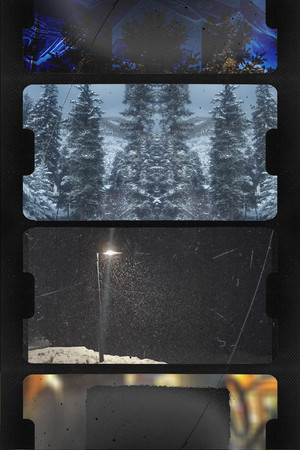
Time passes, slips away, dissolves. But what if we could hold it for a moment? "Capturing Memories" is a dive into the essence of the inconsistent, an invitation to reflect on the importance of preserving moments before they are lost in oblivion. Through visual fragments, the documentary reveals how small scenes of everyday life carry echoes of the past and seeds of the future. In a world where everything passes, what really remains? This film is a tribute to the art of immortalizing the moment, to the beauty of seeing beyond the present and to the need to give meaning to what may one day become a memory.
Daulatdia is an entire village in Bangladesh dedicated to prostitution. Every day, 1,600 trafficked, enslaved and abandoned women and girls sell themselves for £2 a time. In the midst of the trade live 300 children, many born in the village. Some will be groomed to be the future of the business like their mothers and grandmothers. With education programmes and support provided by Save The Children, a few may find their way out.
A short documentary chronicling the personal lives and narratives of Thai "ladyboys," who are born men but present themselves as women, living openly in Thai society. The film interviews ladyboys from all walks of life-- performers, filmmakers, activists-- to learn what it's like to live in a society with visible gender fluidity, and to explore if Thailand is really as open to and accepting of sexual diversity as it seems.
On the coast of the Arctic Ocean of Chukotka live people cut off from the world. Their life revolves around hunting walruses and whales and protecting villages from bears coming from the tundra. This turns the film into a reflection on death. Marine animals become the food of people, animal leftovers are used to feed arctic foxes on a fur farm, human cemeteries become prey for bears. It seems that all the inhabitants of these places are involved in the cycle of food and death. The film departs from the usual rhythmic structure of cinema, being built on the principle of a shamanic ritual, a meaning-forming event for northern peoples.
This mini-documentary follows Stewart McPherson's journey to Tristan da Cunha, the most remote inhabited island in the world. We meet the Tristanians and an interview with ex-chief islander Harold Green reveals what life is like in Tristan's only settlement, Edinburgh of the Seven Seas.
"Smoke Signals" follows the volunteers at High Point Lookout, one of the last remaining fire lookout towers in California. Alternating between the daily duties of the fire lookouts, and a series of profiles on wildfires that have traced their history, "Smoke Signals" questions the role of the fire lookouts in the face of rapidly advancing technology and climate change.
Joan Braderman talks about and appears in front of a projected version of the soap opera Dynasty.
"Michikha Is Not Afraid of Airplanes" is a visual essay about a journey - even one that is impossible, didn't take place, or was undertaken vicariously. The project examines the extent to which the early 20th century story of Evenk guide Michikha and Polish anthropologist Maria Antonina Czaplicka is a universal tale about power couples in describing the world.
The Bahamas is a state in Central America formed by a coral archipelago that includes 700 islands, many of which uninhabited. The term "Bahamas" comes from Spanish, and means "shallow water". Many of these islands are cays, or small coral islands.
Following the example of an entomologist watching the behavior of insects Edmond Bernhard scrutinizes the doings and the words of a priest - assisted by his choirboys - in the process of saying his mass.
However impressive the site is, however bossy the guides are, the visitors of the Musée Napoléon listen only absent-mindedly. Does this young lady really care about the tragic destiny of emperor Napoleon or Europe's changing face or isn't she more interested in her won reflection in a window case? And isn't the camera operator more prone to film the cornet wimples of visiting nuns than the fossilized remains of Napoleon's fallen grandeur...?
Is this documentary actually about the magnificent palace of Beloeil, owned for generations by the princes of Ligne and about its splendid park? Or is it about those who visit it and those who having fun in its park on a Saturday afternoon? Both actually, because Edmond Bernhard never visits a place without taking an interest in the people present there.
Image production is fiction-weaving. Together with Sheena Absalud, we spent an entire day in Pride Month in my room documenting ourselves using different cameras: three mobile phones, one action camera, one CCTV camera, and one laptop, while asking each other questions about our asexuality. Recognizing the role of the moving image in constructing prejudice, self-identity, and desires, and therefore the expansion of neoliberalism, "The Function of Fiction" attempts to abandon temptations to define “asexuality” and its place in the context of “LGBTQIA+”, in pursuit of new socialities and possibilities. Music in the film was spawned with plants and machines.
Hearing Films is a portrait of Joe Sidarose, a blind film lover who experiences cinema through sound, rhythm, and feeling. His world of film is shaped by voices, music, and the spaces between them, where stories come to life in ways beyond sight.
A documentary that follows the journey of a young man named Kristian, who suffers from anxiety and a fear of flying, as he attempts to overcome his fears and travel to Tokyo, Japan. The film captures the raw emotions and experiences of Kristian including the challenges he faces along the way.
In If play is neither inside nor outside, where is it?, Helen McCrorie takes us to Cultybraggen Camp in Perth and Kinross, Scotland. Originally built during World War II as a prisoner-of-war camp, Cultybraggen has also functioned as an army training base, a nuclear monitoring post, regional government headquarters, a data storage centre, an orchard and now – in McCrorie’s film – a world run by children.
A glimpse over the Diguillín River through the mechanical eye of an old digital camera. Light’s trail presents itself fortuitously over the reflection of the sun on the water, tracing infinite threads of concrete luminous information.
Got You
A part of Porto’s nightlife history is revealed. In this work, the artist draws on her extensive archive of video recordings of Porto’s artistic and cultural landscape, which she has captured over the last 26 years, to focus on some of the city’s nightclubs that haven’t survived the years. A work commissioned by Batalha Centro de Cinema.
Also known as Reindeer Time and Inheritance, this 9-minute short by Arne Sucksdorff documents the Sámi people’s autumn migration as they guide their reindeer herds back to the forest lands. Blending ethnographic observation with lyrical nature imagery, the film follows the reindeer through mountain landscapes, calving, herding, and branding, underscoring the deep interdependence of humans, animals, and the northern environment.