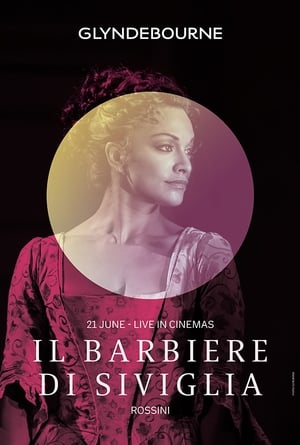
Figaro uses every trick he can muster to outwit Dr Bartolo and ensure his master wins his chosen bride. He meets his match in the would-be-bride Rosina, who has schemes of her own. Glyndebourne favourite Danielle de Niese adds the crafty Rosina to her growing list of bel canto heroines. Directed by Annabel Arden with playful energy springing from Rossini’s joyous music, this new production heralds the welcome return of a masterpiece not seen at Glyndebourne Festival since 1982.
Rossini: L'inganno felice - Teatro Fraschini di Pavia
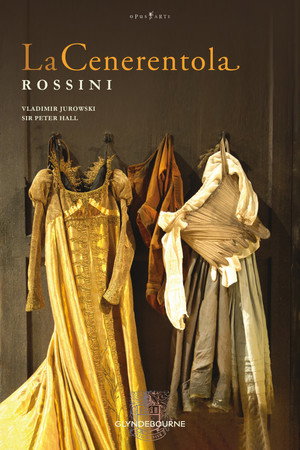
In late 18th-century Italy, in the mansion of Don Magnifico, the young and pretty Angelina works as a maid. Teased by her two frivolous half-sisters, Clorinda and Tisby, Angelina believes she is in love with a young valet and goes to the ball. Dressed in her finest finery, she meets the man who is in fact the Prince and flees from him after giving him a bracelet that will allow him to recognise her a little later. The masks come off, and kindness and love triumph! ‘La Cenerentola’ is the last opera buffa composed by Gioachino Rossini for an Italian audience. A dramma giocoso in two acts, with a libretto by Jacopo Ferretti, freely adapted from Charles Perrault’s fairy tale ‘Cinderella’ (1697), omitting the magic in favour of a realism tinged with humour and social criticism. Premiered for the Rome Carnival at the Teatro Valle in Rome on 28 January 1817. Recorded live at Glyndebourne Opera, Lewes, East Sussex, on 2 and 4 June 2005.
Behind the Hollywood Bowl stage which is playing the opera The Barber of Seville, Bugs Bunny flees into the backstage area with Elmer Fudd in close pursuit. Seeing his opportunity to fight on his terms, Bugs raises the curtain on Elmer, trapping him on stage. As the orchestra begins playing, Bugs comes into play as the barber who is going to make sure that Elmer is going to get a grooming he will never forget.
Rossini: La Gazza Ladra - Teatro alla Scala
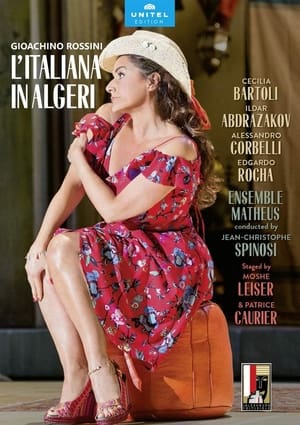
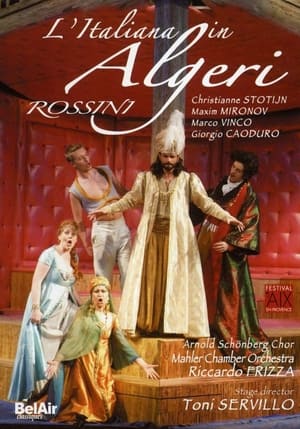
Isabella is a strong, independent woman who has no intention of giving in to the clumsy advances of the powerful Mustafà. In this production by Mosh Leiser and Patrice Caurier, which plays on preconceptions about culture clash, Mustafà is no longer a handsome Ottoman, but a shady gangster who traffics in electronic goods in the port of Algiers. Make of it what you will...
Live performance, Festival d'Aix-en-Provence, July 2006. 'L'italiana in Algeri' (English: 'The Italian Girl in Algiers') is an operatic dramma giocoso in two acts by Gioachino Rossini to an Italian libretto by Angelo Anelli, based on his earlier text set by Luigi Mosca. It premiered at the Teatro San Benedetto in Venice on 22 May 1813. The music is characteristic of Rossini's style, remarkable for its fusion of sustained, manic energy with elegant, pristine melodies.
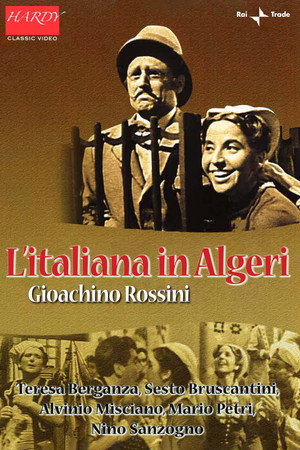
In 1810, Mustafà, Bey of Algiers and thoroughly fed up with his wife, the docile Elvira, orders the captain of the corsairs to find him one of those feisty Italian women. It turns out to be Isabella, an Italian woman of unparalleled beauty searching for her fiancé Lindoro, whom Mustafà happens to be holding captive in his seraglio. The Bey intends to give Lindoro to his wife Elvira, hoping to get rid of him once and for all. Isabella, accompanied by her annoying suitor Taddeo—whom she passes off as her uncle to save him from the gallows—relies on her powers of seduction. “L’italiana in Algeri” (The Italian Girl in Algiers) is a two-act dramma giocoso (opera buffa) by Gioachino Rossini, with a libretto by Angelo Anelli. It premiered at the Teatro San Benedetto in Venice on May 22, 1813. Recorded in the studios of Radiotelevisione Italiana (RAI) in Milan on July 10, 1957.
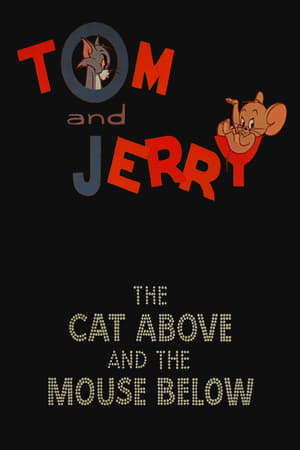
Tom, famous baritone Signor Thomasino Catti-Cazzaza, enthralls a concert audience with his rendition of "Largo al factotum", from Rossini's "Il Barbiere di Siviglia", while Jerry strives for sleep under the stage.
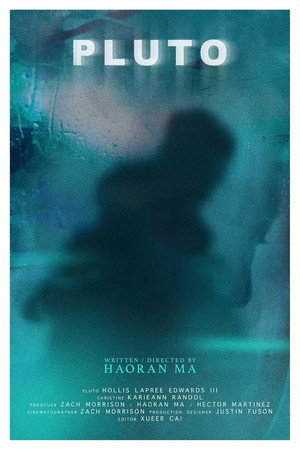
A silent black-and-white comedy inspired by the fizzing rollercoaster of Largo al factotum - the familiar aria from Rossini's The Barber of Seville - featuring the young apprentice hero and a recalcitrant, increasingly monstrous hairball.
Maria-Eleonora is an actress. During a film premiere she leaves the screening hall and crashes her car into the concrete wall of a parking lot, killing herself. Her longtime friend and aspiring film director Peter try to find out the reasons behind this dramatic act and interviews her relatives, colleagues, closest friends. He adds to the interviews video footage that he himself shot during their life together and some film scenes in which Maria-Eleonora took small supporting parts. Thus, Peter creates the film "Scenes from the life of an actress". Peter learns that everyone has a story about what happened, but no one really knew the deceased actress. Peter didn't knew her too.
In an era when humans coexist with AI, Pluto is a human-like AI psychiatrist who has a stronger brain power. He can detect human emotions which bring positive emotions to his clients. However, he is confused about what real emotion is. When he develops feelings for his free-spirited client, he loses his ability and is expelled from the AI community while being on a road that leads to a new humanity...
Agripino and Sandoval roam around their workplace, Machiavelli Incorporated, a venture which they plan to expand whatever the costs.
Tony is a Sicilian man whose job is to prepare bread with spleen. He undergoes a genetic mutation after being buried by a load of rubbish and his super-power consists in hitting the enemies with slices of spleen.
Found recently and restored in 2019 this short silent film tells the story of an artist and his model. One day she's getting seriously ill ... .
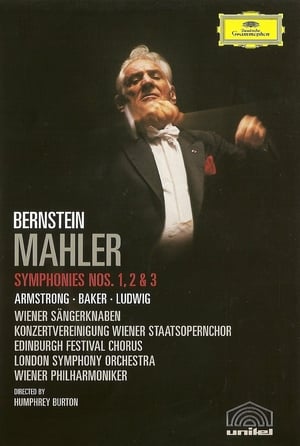
Beginning with the First Symphony, Bernstein reveals Mahler's position at the hinge of modernism, while emphasizing his emotional extremism. The uplifting Second "Resurrection" Symphony, with which Bernstein had an especially long and close association, is recorded here in a historic performance from 1973, set in the Romanesque splendor of Ely Cathedral. In the Third, Bernstein encompasses the symphony's spiritual panorama like no other conductor, with the Vienna Philharmonic players alive to every nuance.
Found recently and restored in 2019, this silent short films follows a young man who is wounded and hides with his girlfriend... .
Known for its radical and reckless theatricality, avant-garde New York troupe Radiohole's Whatever, Heaven Allows is a star-spangled American meta-melodrama inspired by film director Douglas Sirk's 1950s potboilers and Milton's epic Paradise Lost.
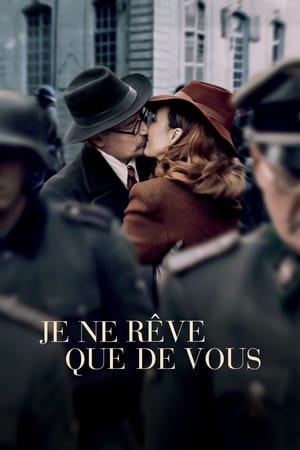
1940, Jeanne Reichenbach turns her back on a peaceful life to link her destiny to Léon Blum. She's been loving him since her teenage years, and is ready to sacrifice her freedom to mary him at Buchenwald, where he's held prisoner. They will survive together.