The Death of 'Superman Lives': What Happened? feature film documents the process of development of the ill fated "Superman Lives" movie, that was to be directed by Tim Burton and star Nicolas Cage as the man of steel himself, Superman. The project went through years of development before the plug was pulled, and this documentary interviews the major filmmakers: Kevin Smith, Tim Burton, Jon Peters, Dan Gilroy, Colleen Atwood, Lorenzo di Bonaventura and many many more.
Phases of Matter follows living and inanimate residents of a teaching hospital in Istanbul, moving from the operating room to the morgue, between life and other states, the real and the virtual.
Young, inexperienced members of the Dutch Boarder Patrol undergo an intensive training on escorting refused asylum seekers to their homeland.
In August 1997, the tragic death of Diana, Princess of Wales, stunned her family and catapulted the British public into one of the most extraordinary weeks in modern history. What was it about Diana that resulted in such an outpouring of grief? And what does that week reveal about Britain's relationship with the monarchy, then and now?
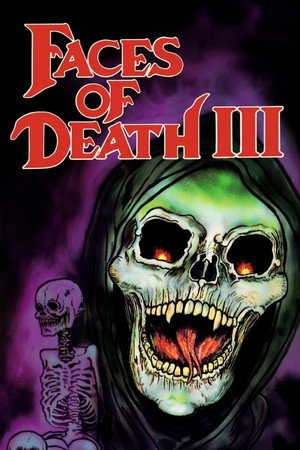
The third installment of the infamous "is it real or fake?" mondo series sets its sights primarily on serial killers, with lengthy reenactments of police investigations of bodies being found in dumpsters, and a staged courtroom sequence.
An experimental look at the origin of the death myth of the Chinookan people in the Pacific Northwest, following two people as they navigate their own relationships to the spirit world and a place in between life and death.
The extraordinary moving story of Toni Crews, a young mum with a rare terminal cancer who charted her illness online before donating her body for medical research and public dissection.
A documentary about the corrupt health care system in The United States who's main goal is to make profit even if it means losing people’s lives. "The more people you deny health insurance the more money we make" is the business model for health care providers in America.
I meet Herbert in the same week I get diagnosed with cancer. We fall madly in love and plan to stay together for the rest of our lives. Three months later, he is dead. Herbert was a BASE Jumper. Leaping off a cliff with nothing but a parachute, he loses his balance, slams into the rock face and falls to his death. His loss in the midst of my chemotherapy completely throws me. Why does he gamble his life away, while I fight for mine? Desperate for answers, I return to Lauterbrunnen, the scene of the accident where Andreas, his best friend and coach, introduces me to the world of BASE. The jumpers teach me not only about the sport, but about facing fears, harnessing and controlling them. To make the most of the life we get. In the Swiss Death Valley I slowly find my way back to life.
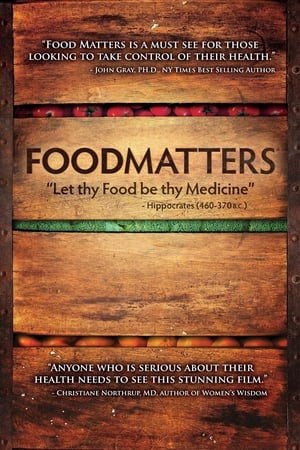
With nutritionally-depleted foods, chemical additives and our tendency to rely upon pharmaceutical drugs to treat what's wrong with our malnourished bodies, it's no wonder that modern society is getting sicker. Food Matters sets about uncovering the trillion dollar worldwide sickness industry and gives people some scientifically verifiable solutions for curing disease naturally.
An exclusive interview with Death as he goes about his everyday business.
The Connection is a film about how frontier research is proving that there is a direct connection between your mind and your health.
Parallel stories connected through an intimacy with death. The living and the dead communicate through visions, memories and reality.
Mondo-style docudrama about a war correspondent who comes back home and has a spiritual crisis about his own mortality. Surreal fantasy sequences are mixed with graphic real autopsy footage.
In New Jersey, the Good Grief community focuses on a holistic way of dealing with grief, where children can give in to rage in ‘the volcano room,' and say goodbye to a dying teddy bear patient in ‘the hospital room.' Over the course of a year, we follow the weekly meetings and get close to Kimmy, Nicky, Peter, Nora, Nolan, and Mikayla and their close companion: grief. It is sometimes heartbreaking, but also humorous, to experience the questions about life and death through their open and curious minds. Grief is high and heavy as a mountain, but it helps you understand what has happened, and that death is irreversible.
Orson Welles presents a proposed film project to prospective investors in Spain. Speaking to an audience of wealthy arts patrons, Welles outlines his vision for an improvised, documentary-style fiction set in the world of bullfighting, centered on a solitary, existential matador who stands apart from his peers. As he expounds on cinema, performance, and the ritualized spectacle of death, the film captures a project that would ultimately remain unrealized.
Since 2007, dozens of young people have been found hanged in Bridgend, a town in southern Wales. Many of them knew one another-they were friends, neighbors, and family. The striking similarities between their deaths have confounded authorities and struck fear into the hearts of parents. Headlines splashed across the UK earned Bridgend its infamous nickname: ""Death Town."
Making Dust is an essay film, a portrait of the demolition of Ireland's second largest Catholic Church, the Church of the Annunciation in Finglas West, Dublin. Understanding this moment as a 'rupture', the film maps an essay by architectural historian Ellen Rowley on to documentation of the building's dismantling. Featuring oral interviews recorded at the site of the demolition and in a nearby hairdressers, the film invites viewers to pause and reflect on this ending alongside the community of the building. The film is informed by Ultimology, and invites its audience to think about the life cycles of buildings and materials, how we mourn, what is sacred, how we gather, what we value and issues of sustainability in architecture.
My Flesh and Blood is a 2003 documentary film by Jonathan Karsh chronicling a year in the life of the Tom family. The Tom family is notable as the mother, Susan, adopted eleven children, most of whom had serious disabilities or diseases. The film itself is notable for handling the sensitive subject matter in an unsentimental way that is more uplifting than one might expect.
A short documentary on the River Ouse, following it downstream from Lewes to Newhaven, meditating on the surrounding area.