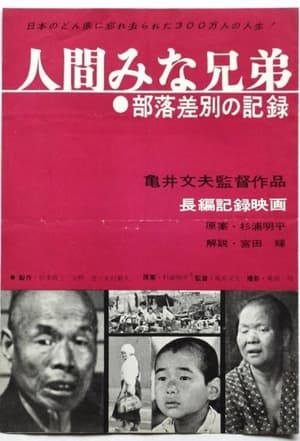
Documentary against buraku discrimination
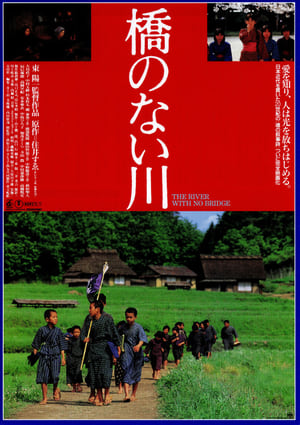
Brothers Koji and Seitaro Hatana, belong to the "outcast" caste. Despite their personal qualities—intelligence and fairness—they encounter numerous obstacles due to their caste affiliation. Together with other "outcasts," the brothers take up the fight for their human rights.
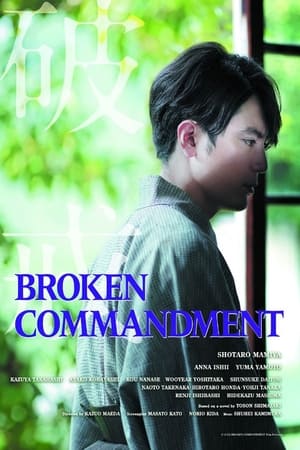
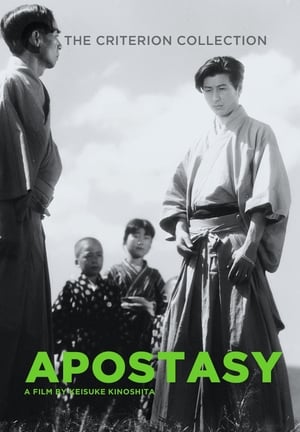
At the strong insistence of his father, Ushimatsu Segawa conceals his origins from a “buraku” area of low-class “untouchables,” leaving his hometown to serve as an elementary school teacher where he excels and is loved by his students. But he constantly struggles with the secret of his low-birth status and is disturbed by all of the discrimination levelled upon his class. It prevents him from pursuing a romance with Shiho, whom he meets at the temple where he resides, but who descends from a samurai family.
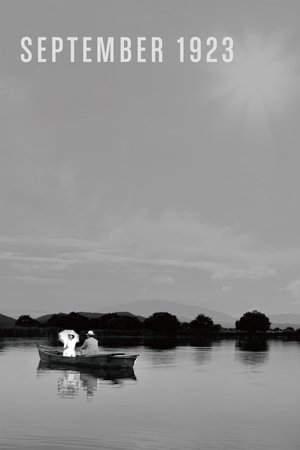
Based on the murder of nine street peddlers in the aftermath of the Great Kanto earthquake.
In the Meiji period, a schoolteacher tries to hide his lower-class upbringing as he supports a visiting liberal intellectual.
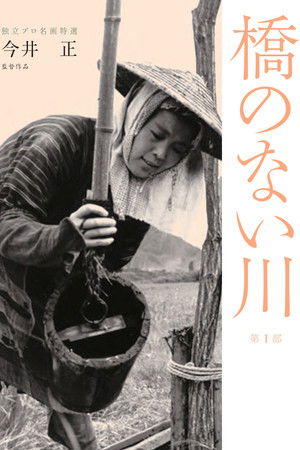
A widow and her two sons, Seitaro and Koji, live in the small town of Komori, where Buraku people are forced to reside. The two boys are continuously harassed by their teachers and classmates through their childhood as a result of their Buraku heritage. In the midst of the 1918 Great Rice Riots in Osaka, Seitaro meets with Asako, the daughter of a rice shop owner, and falls in love with her. She too is of Buraku descent. At the same period, Hideaki, an old friend of the brothers returns to Komori, and he along with Koji and the townspeople create "Zenkoku Suiheisha", the National Levelers Association, an organization pledged to build a bridge over the river of discrimination, making all people equal in every way.
Ushimatsu's father told him never to reveal his lower-caste heritage; years later, he now contemplates confiding in an activist fighting against such discrimination.
Jane Addams, born into wealth and privilege, had been intrigued by social reform since a visit to a settlement house in London’s impoverished East End. An inheritance made it possible for her to bring that concept to Chicago with the creation of Hull House. Audio-narrated descriptions are available.
“The River Remembers” is a character-driven documentary that follows Tribal members of the Elwha and lower Klamath Rivers as they lead the largest dam removals in U.S. history, restoring salmon and renewing culture after a century of struggle. The film is a story of resilience and hope, showing that when rivers heal people heal too.
In this feature-length documentary, filmmaker Patricio Henriquez seeks to untangle the web of lies surrounding the Chilean navy's training vessel, the Esmeralda. Heralded as a symbol of national pride, a dark secret lies behind the facade of the ship the Chileans call The White Lady: Following the 1973 coup d'état, it was used as a floating prison. Thirty years later, the victims of the dictatorship are demanding justice. The Dark Side of the White Lady is a fascinating journey to uncover the truth.
Bob Quinn's 1981 film on the decline of the Gaeltacht, written and presented by Desmond Fennell.
Notre Père
A short documentary about women's football in Ireland.
A documentary on a sean-nós singing seminar that took place in An Spidéal in Conamara. Filmed in 1981 by Bob Quinn for RTÉ's Aisling Gheal series.
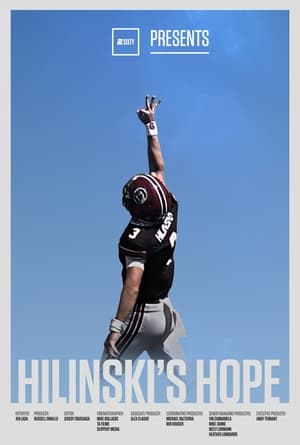
Seven months after the death of Washington State quarterback Tyler Hilinski, his parents cope with their grief and memories.
A formerly internet famous tomboy, Ashley Jones, realizes her days of internet fame are long gone. No longer receiving the online attention she craves, she turns to drastic measures to reclaim her stardom. Even if that means becoming a "female to male to female" transgender to get TikTok famous. Follow her journey to deceive hundreds of thousands of internet users in her quest for online attention, with the raunchiest, most offensive, and tone deaf documentary of recent times.
A woman goes about her day while she reminisces on her deceptive ex-husband.
Ott shot his time-lapse plant footage in his Winnetka greenhouse. He installed automatic temperature, humidity, and irrigation systems to help with growing different species of plants, and outfitted his greenhouse with automatic photofloods, iron window shutters, and an army of Bell & Howell “Filmo Model 70” 16mm cameras mounted on dolleys. The nerve center of all of this was an elaborate setup of switch panels and controls connected to a timer. Ott’s automatic greenhouse was called “ingenious” by American Cinematographer in 1947.
A short promotional film containing time-lapse photography for Swift & Company's commercial lawn fertilizer, Vigoro.
A short film that documents horticulturalist Andrew Benson, owner of Andrew Benson, Inc., working at his greenhouse located in Des Plaines, Illinois.