This late 1940s/early 1950s rather graphic color film about carelessness and safety operating heavy machinery is presented by Caterpillar.
"All sounds travel in waves much the same as ripples in water." Educational film produced by Bray Studios New York, which was the dominant animation studio based in the United States in the years surrounding World War I.
A series of interviews with students living in London reveals the dangers present in the capital's nightlife.
This is the untold story of a Nazi vision, that went far beyond the military conquest of European countries. As part of their crazed dream to create a thousand-year Reich they developed detailed blueprints for Aryan settlements and vast hunting parks for ‘Aryan’ animals. Goering and Himmler employed Germany’s best scientists to launch a hugely ambitious programme of genetic manipulation to change the course of nature itself, both in the wild and for domestic use. In a fascinating blend of politics and biology, Hitler's Jurassic Monsters is the true and asthonishing story of how the Nazis tried to take control of nature and change the course of evolution.
Coast Guard film about the importance of life jackets. Stresses safety in boating and shows how boating accidents can happen.
One day in the lives of an average Greenlandic family, which happens to be of great importance for 8-year old Kali - he's about to catch his first prey with the harpoon. The whole family is looking forward for the huge step in boy's maturation.
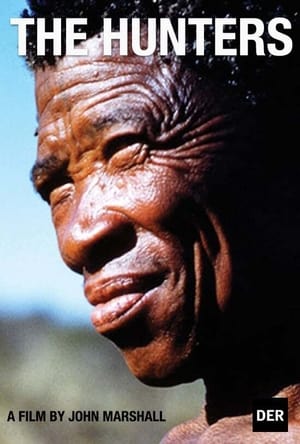
An ethnographic film that documents the efforts of four !Kung men (also known as Ju/'hoansi or Bushmen) to hunt a giraffe in the Kalahari Desert of Namibia. The footage was shot by John Marshall during a Smithsonian-Harvard Peabody sponsored expedition in 1952–53. In addition to the giraffe hunt, the film shows other aspects of !Kung life at that time, including family relationships, socializing and storytelling, and the hard work of gathering plant foods and hunting for small game.
Dramatizes the plight of a young adventure seeker whose canoe is capsized by a wall of water during a flood. Shows community flood preparations, pointing out that a flood's predictability usually allows ample warning time to save lives. Designed to stimulate discussion on civil preparedness for floods
Intercuts scenes from Jack London's To build a fire with modern urban and rural winter scenes to point out the dangers of winter storms and low temperatures. Designed to stimulate discussion on civil preparedness for winter storms.
The film highlights the dangers of extreme heat and the importance of staying hydrated and cool. It portrays a conversation between two friends, one of whom insists on playing basketball despite the oppressive heat. The narrative emphasizes that heat-related illnesses can be avoided by recognizing the body's signals and taking necessary precautions, such as drinking water and staying indoors. The film concludes with a report of record-breaking temperatures, underscoring the seriousness of heat exposure.
The Defense Civil Preparedness Agency began an informational campaign in 1972 called Your Chance to Live. As part of the campaign, a series of films was released along with a companion book. Each installment covers a different disaster scenario, including tornadoes, blizzards, earthquakes, forest fires, blackouts and a nuclear disaster. The California Department of Education helped produce the films and hosted a workshop of educational professionals to discuss the best ways to present the desired emergency preparedness information to school age audiences. The process was filmed and assembled, along with clips from each production, and distributed as an Instructor's Guide in 1975.
Raquel Welch demonstrates a series of practical yoga exercises inspired by hatha yoga.
The movie explores the origin of the Ukrainian language and persecution of those who defended its authenticity. Using examples of other countries, creators of the film prove that a nation cannot exist without a language.
Training and Customer Service information film sponsored by the Marketing Retail Sales Department of the Standard Oil Company. Features product placement for brands like Atlas and Chevron.
Focuses on an open-pit mining operation. Shows huge haulage trucks, pointing out existing and potential hazards involved in their operation. Re-enacts common accidents, explains their causes and outlines the steps necessary to prevent their re-occurrence.
The film emphasizes the importance of safety when using hand tools in a workshop. It discusses the significance of keeping tools sharp and in good condition, proper handling techniques, and the need for safe storage. The film also covers guidelines for using specific tools like saws, chisels, screwdrivers, and wrenches, highlighting the dangers of using dull or damaged tools. Additionally, it stresses the importance of maintaining a clean and organized workspace, wearing appropriate protective gear, and being aware of one’s surroundings to prevent accidents.
In the bitter winter of 1978, four desperate council members from a small Virginia town hatched a daring Bigfoot hoax to save it from the brink of bankruptcy. But as the money grew, so did the greed-triggering the town's first unsolved murder.
This U.S. Chemical Safety Board (CSB) video uses expert testimony and computer-animated reenactments to describe and discuss its detailed investigation into the March 23 2005 explosion of the ISOM (isomerization) unit at the BP (British Petroleum) refinery at Texas City, Texas. The explosion killed 15 workers, injured 180 others, and cost BP billions of dollars.
Semi-documentary exposé of scandalous hunting practices in the Sologne, a wooded area south of Orléans where he shared a house at the time. The film, part tribute to Jean Renoir's The Rules of the Game (1939) and its celebrated hunting scene, is notable for its cinematography by Polish director Walerian Borowczyk.
Give the muscles a morning stretch with 10 minutes of hatha yoga.