Nowhere else in the world is so regularly ravaged by infernos of the intensity, scale and destructive force of the Australian bushfire. As our population grows and spreads and as the effects of climate change are felt, the danger to loss of life and property escalates. What do we know about bushfires and how can we prevent their devastating consequences? Not surprisingly, Australia is a world leader in fire research and the complex and technologically sophisticated job of fire fighting and prevention. Inside The Inferno takes us into the terrifying heart of major fire events, unfolding the research that explains how fires start, grow and change; and how we predict them, prevent them, fight them and hopefully survive these violent natural disasters. Inside The Inferno explores not only the devastating mega fires such as Black Saturday in Victoria 2009 and the Canberra fires of 2003, but also major fire-fronts that received little attention.
TV's most-watched history series brings to life the compelling stories from our past that inform our understanding of the world today.
Science Investigators
Survival instructor Marc Mouret have 100 days to sharpen his body and mind to take on extraordinary challenges.
Popularis
An animated documentary series in which Lori Malépart-Traversy takes a playful and uninhibited look at solo sexuality.
Louis T veut savoir
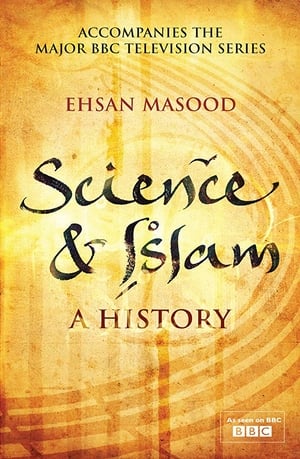
Science And Islam
Youngtimer Duell
Explore some of the most death-defying accidents caught on film. Survivors and eyewitnesses explain what went wrong and a panel of experts dissect the scientific principle behind these
Jean-Michel Vanasse and Marilou Ethier set out to explore the world of new technologies that are transforming our relationship to sex.
Ozone Univerzum - Nemzetközi űrhírek
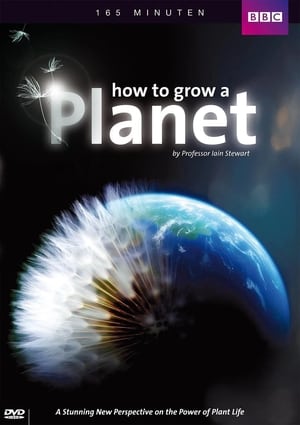
Geologist Iain Stewart explain in three stages of natural history the crucial interaction of our very planet's physiology and its unique wildlife. Biological evolution is largely driven bu adaptation to conditions such as climate, soil and irrigation, but biotopes were also shaped by wildlife changing earth's surface and climate significantly, even disregarding human activity.
Tales of the Unexpected is a new strand of provocative, confronting and thoroughly entertaining science documentaries. Each episode reveals a fascinating, sometimes awkward, and frequently unsettling world where peculiar ideas are put to the test. Come with us to where nothing is quite as it seems, where diseases are diagnosed by palm-readers, where paternity uncertainty drives the mating game, and where breasts are a toxic health hazard.
NOVA scienceNOW is a News magazine version of the long-running and venerable PBS science program Nova. Premiering on January 25, 2005, the series was originally hosted by Robert Krulwich, who described it as an experiment in coverage of "breaking science, science that's right out of the lab, science that sometimes bumps up against politics, art, culture". At the beginning of season two, Neil deGrasse Tyson replaced Krulwich as the show's host. Tyson announced he would leave the show and was replaced by David Pogue beginning season 6.
Researchers are pushing the boundaries of their fields to develop more accurate and efficient responses against international terrorism.
Scientists, researchers, and entrepreneurs are revolutionizing the way people see, touch, taste, hear, and smell with cutting-edge advances in technology.
A stunning new documentary series exploring the incredible story of uranium, from its creation in an exploding star to its deployment in nuclear weapons, nuclear power, and nuclear medicine. It’s a journey across nine countries and more than a century of stories, to discover the rock that made the modern world. It’s part science, part history, and all epic adventure. Join physicist and YouTube phenomenon Dr. Derek Muller as he reveals the untold story of the most wondrous and terrifying rock on Earth.
Catalyst is Australia's premier science investigation series. Each week the team brings you stories from Australia and around the world, meeting scientists at the forefront of discovery.
Pandora's Box is a six-part 1992 BBC documentary television series which examines the consequences of political and technocratic rationalism. The episodes deal, in order, with communism in The Soviet Union, systems analysis and game theory during the Cold War, economy in the United Kingdom during the 1970s, the insecticide DDT, Kwame Nkrumah's leadership in Ghana during the 1950s and 1960s and the history of nuclear power.