Nowhere else in the world is so regularly ravaged by infernos of the intensity, scale and destructive force of the Australian bushfire. As our population grows and spreads and as the effects of climate change are felt, the danger to loss of life and property escalates. What do we know about bushfires and how can we prevent their devastating consequences? Not surprisingly, Australia is a world leader in fire research and the complex and technologically sophisticated job of fire fighting and prevention. Inside The Inferno takes us into the terrifying heart of major fire events, unfolding the research that explains how fires start, grow and change; and how we predict them, prevent them, fight them and hopefully survive these violent natural disasters. Inside The Inferno explores not only the devastating mega fires such as Black Saturday in Victoria 2009 and the Canberra fires of 2003, but also major fire-fronts that received little attention.
Survival instructor Marc Mouret have 100 days to sharpen his body and mind to take on extraordinary challenges.
TV's most-watched history series brings to life the compelling stories from our past that inform our understanding of the world today.
Science And Islam
Ozone Univerzum - Nemzetközi űrhírek
Louis T veut savoir
Take a mind-blowing journey through human history, told through six iconic objects that modern people take for granted, and see how science, invention and technology built on one another to change everything.
Join Derek Muller (Veritasium) as he looks into the weird, bizarre, and seemingly inexplicable images found on Google Earth to discover what on Earth they actually are. It’s a travel vlog, documentary, and science show wrapped into one. It’s Pindrop.
A journey into our evolutionary past, piecing together the bodies of our prehistoric family.
Dr Helen Czerski examines the world of sound waves.
Scienza Brutta
They are some of the world’s all-time greatest building projects. Most have stood the test of time, but with today’s technology, could they be duplicated and done better?
2050 dans votre assiette
In one of his final TV projects, the presenter takes a journey around the human body, putting his own to the test to help viewers understand their own.
Researchers are pushing the boundaries of their fields to develop more accurate and efficient responses against international terrorism.
Scientists, researchers, and entrepreneurs are revolutionizing the way people see, touch, taste, hear, and smell with cutting-edge advances in technology.
Geologist Iain Stewart explain in three stages of natural history the crucial interaction of our very planet's physiology and its unique wildlife. Biological evolution is largely driven bu adaptation to conditions such as climate, soil and irrigation, but biotopes were also shaped by wildlife changing earth's surface and climate significantly, even disregarding human activity.
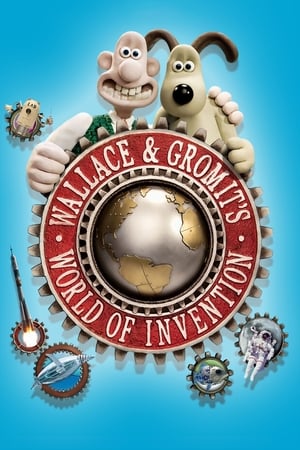
In the series, "Wallace will take a light hearted and humorous look at the real-life inventors, contraptions, gadgets and inventions, with the silent help of Gromit. The series aims to inspire a whole new generation of innovative minds by showing them real, but mind-boggling, machines and inventions from around the world that have influenced his illustrious inventing career" (the BBC press statement). Peter Sallis reprised his role as the voice of Wallace. The filmed inserts are mostly narrated by Ashley Jensen, with one in each episode presented in-vision by Jem Stansfield. John Sparkes also voices a portion in the unseen character of archivist Goronwy.
NOVA scienceNOW is a News magazine version of the long-running and venerable PBS science program Nova. Premiering on January 25, 2005, the series was originally hosted by Robert Krulwich, who described it as an experiment in coverage of "breaking science, science that's right out of the lab, science that sometimes bumps up against politics, art, culture". At the beginning of season two, Neil deGrasse Tyson replaced Krulwich as the show's host. Tyson announced he would leave the show and was replaced by David Pogue beginning season 6.
Using state-of-the-art technologies, Richard Hammond goes beyond the limits of the naked eye and explores the hidden secrets of the invisible world around us.