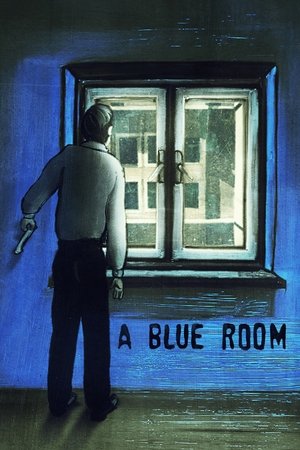
With input from actor and writer Jan Hlobil, director and cinematographer Rene Smaal presents a film in the true surrealist tradition, in the sense that only 'found' elements were used, and that it defies interpretation based on ordinary cause-and-effect time sequence.
A young woman who lives with her uncle begins to dream about a monster that lurks in the shadows of the night.
Frankenstein, a young medical student, trying to create the perfect human being, instead creates a misshapen monster. Made ill by what he has done, Frankenstein is comforted by his fiancée; but on his wedding night he is visited by the monster.
Using every known means of transportation, several savants from the Geographic Society undertake a journey through the Alps to the Sun which finishes under the sea.
The navy captain Avanti Planetaros is inspired by his astronomer-father to travel through outer space to reach other worlds. He becomes an aviator and, along with the young scientist Dr. Krafft, the driving force behind the construction of a space-ship. Despite oppostion from the mocking Professor Dubius, Planetaros gathers a crew of fearless men and takes off. During the long voyage, the crew becomes restless; a mutiny is narrowly avoided. Finally, they reach Mars and discover that the planet is inhabited by people who have reached a higher stage of development, free of diseases, sorrow, violence, sexual urges, and the fear of death. Avanti falls in love with Marya, daughter of the Prince of Wisdom, the head of the Martians. Marya shares his feelings and decides to return with him in order to bring the wisdom of the Martians to the backward Earthlings. (stumfilm.dk)
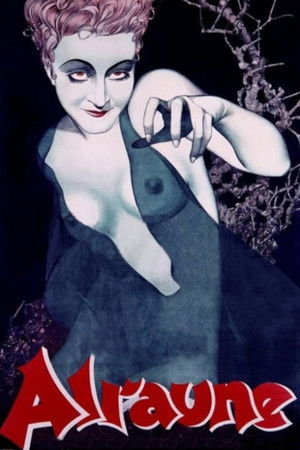
Hanns Heinz Ewers' grim science-fiction novel Alraune has already been filmed twice when this version was assembled in 1928. In another of his "mad doctor" roles, Paul Wegener plays Professor Brinken, sociopathic scientist who combines the genes of an executed murderer with those of a prostitute. The result is a beautiful young woman named Alraune (Brigitte Helm), who is incapable of feeling any real emotions -- least of all guilt or regret. Upon attaining adulthood, Alraune sets about to seduce and destroy every male who crosses her path. Ultimately, Professor Brinken is hoist on his own petard when he falls hopelessly in love with Alraune himself. Alraune was remade in 1930, with Brigitte Helm repeating her role, and again in 1951, with Hildegarde Knef as the "heroine" and Erich von Stroheim as her misguided mentor.
In 16th-century Prague, a rabbi creates the Golem - a giant creature made of clay. Using sorcery, he brings the creature to life in order to protect the Jews of Prague from persecution.
A young man travels to Mars in a rocket ship, where he leads a popular uprising against the ruling group with the support of Queen Aelita, who has fallen in love with him after watching him through a telescope.
Set off by a traumatic breakup, Paul Fisher (Poissonnier) spirals into a vicious underworld of sex, drugs and violence. Broke and clamoring for his next fix, Paul is lured into the clutches of pornographic film producer Ralph Beavers (Himself), where he is betrothed to none other than his own ex-girlfriend! Can Paul escape the malevolent forces that hunger for the flesh of his soul? Find out the mind-melting conclusion in this phantasmagoric journey into the heart of the unknown. Welcome to WASTERVILLE.
This mostly lost film is often confused with director Paul Wegener third and readily available interpretation of the legend; Der Golem, wie er in die Welt kam (1920). In this version of the golem legend, the golem, a clay statue brought to life by Rabbi Loew in 16th century Prague to save the Jews from the ongoing brutal persecution by the city's rulers, is found in the rubble of an old synagogue in the 20th century. Brought to life by an antique dealer, the golem is used as a menial servant. Eventually falling in love with the dealer's wife, it goes on a murderous rampage when its love for her goes unanswered.
God and Satan wager on the soul of a learned and prayerful alchemist as part of their eternal war over Earth.
The plot is the embodiment of everyday belief about the impact of a certain evil force on a person. The action develops in a peasant environment.
This film begins with the invocation of 'almighty god' at a river where several people are gathered. The child god Krishna rises out of the water astride the demon snake Kaliya. Then we see Yashoda as she rocks the sleeping Krishna's crib and imagines the god as Gopala. The next scene shows Kamsa fantasizing about Krishna threateningly duplicated many times around him. Kamsa then imagines himself dead as his severed head rises up and descends again. People of all castes pay obeisance to the deity with the title-card: 'may this humble offering be accepted by the Lord'.
A recalcitrant thief vies with a duplicitous Mongol ruler for the hand of a beautiful princess.
As a young couple stops and rests in a small village inn, the man is abducted by Death and is sequestered behind a huge doorless, windowless wall. The woman finds a mystic entrance and is met by Death, who tells her three separate stories set in exotic locales, all involving circumstances similar to hers.
A dying professor leaves his great-nephew a collection of documents pertaining to the Cthulhu Cult. The nephew begins to learn why the study of the cult so fascinated his grandfather. Bit-by-bit he begins piecing together the dread implications of his grandfather's inquiries, and soon he takes on investigating the Cthulhu cult as a crusade of his own.
One of the earliest cinematic adaptation of Chinese classic novel Journey to the West. When seeking for food alone, Tang Xuanzang was kept prisoner by seven spider monsters who took the form of seven beautiful women. The Monkey King and the other two of Xuanzang's disciples managed to rescue him with the help of Avalokitesvara Bodhisattva/Guanyin. They renounced the desire for lust and continued the quest for Buddhist Scriptures.
The surrealist film shows repetitive imagery involving a string fashioned in a bizarre, almost spiderweb-like pattern over the hands of several individuals, most notably an unnamed young woman and an elderly gentleman. The film also shows a shadowy darkness and people filmed at odd angles, an exposed human heart, and other occult symbols and ritualistic imagery which evokes an unsettling and dream-like aura. Considered an unfinished film.
Montéquio Cebolinha and Julieta Monicapuleto find themselves in a passionate love affair, but unfortunately, their families vehemently oppose their relationship. Amagali and Friar Lourenço Cascão, ever the allies, come to the aid of the young couple, determined to support them through the challenges. However, just when they thought things couldn't get more complicated, Prince Xaveco of Verona unexpectedly enters the picture, adding another layer of complexity to the already tangled situation.
This film resulted from the unfinished short film Puce Women. The film opens with a camera watching 1920s style flapper gowns being taken off a dress rack. The dresses are removed and danced off the rack to music. (The original soundtrack was Verdi opera music; in the 1960s, Anger re-released the film with a new psychedelic folk-rock soundtrack performed by Jonathan Halper.) A long-lashed woman, Yvonne Marquis, dresses in the purple puce gown and walks to her vanity to apply perfume. She lies on a chaise lounge which then begins to move around the room and eventually out to a patio. Borzois appear and she prepares to take them for a walk.