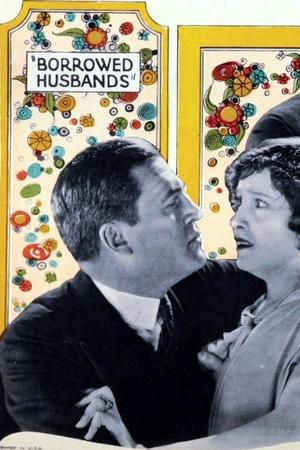
Released on July 3, 1927
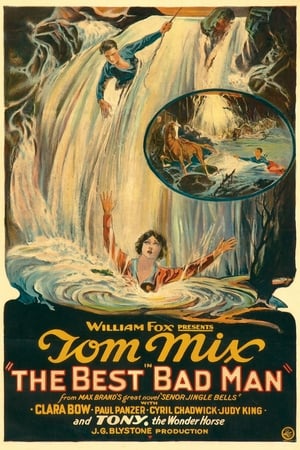
Upon hearing that his daughter Elizabeth, is coming from America to visit him in Paris, wealthy Willoughby Quimby, decides to give up dry martinis and women. However, Elizabeth seeks a wild time and ends up leaving France with her father's drinking buddy, Freddie, and Willoughby goes back to his dry martinis.
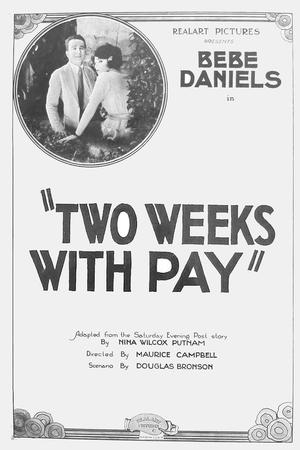
In this silent film, now considered lost, Doug Caswell falls for Irene, his wealthy father's mistress. It's up to Doug's stepmother Helen to put things right.
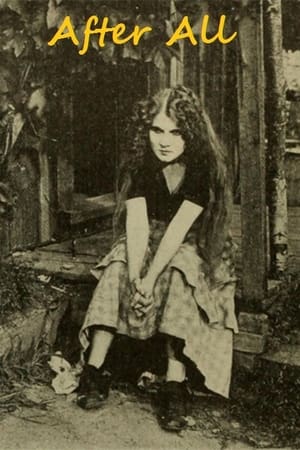
Japanese poet Akira living in Tokyo, loves American Ruth Vale, who was placed in the care of Akira's father when her missionary parents died. Ruth returns Akira's affections until she meets Edward, but the American proves an unfaithful husband. Three years later, Ruth is gravely ill while Edward amuses himself with his new lover, Adrienne Chester, but Akira comforts the dying woman with the promise that he will protect her little daughter Blossom.
Hajj, a rascally beggar on the periphery of the court of Baghdad, schemes to marry his daughter to royalty and to win the heart of the queen of the castle himself. This film is believed lost.
Not one but two of Charlie Chaplin impersonators, Harry Mann and Monty Banks, a film directed by Charley Chase still under the name of Charles Parrott. They go driving around town experiencing various car theft problems.
Forced to abandon his ancestral castle, William Tudor accompanies his granddaughter Irene to London, while millionaire John Kershaw buys the castle for his son, "Kit." Irene joins the Gaiety Theatre company, hoping that her lover, Owen, who has gone to Africa, will return and purchase the castle from the Kershaws.
English hellraiser Richard Farrington is sent by his wealthy titled parents for a visit to his aunt and uncle in Long Island, New York. On the ocean voyage, Richard meets Betty Winthrop, the ward of the wealthy Van Allen family. Introducing himself he mistakenly gives her the card of John Smithers, a conman who cheated him at cards in London. He follows Betty to the Van Allen estate, where he hears her declare that she would rather marry an American criminal than a weakling English aristocrat. Determined to win her over, he pretends to be Smithers, but things don't turn out exactly the way he planned.
Press agent Jack Bartling persuades a local Suffragette leader, Mrs. Eubanks, whose husband is a Senator and soap manufacturer, to hire him for publicity. He falls for her daughter Nell and through various schemes and a bit of subterfuge Jack convinces both parents he’s the right guy for their daughter.
Tom, a young man in a small town, wants to marry his sweetheart Jane, but Jane's father won't allow it until Tom proves he can support her. Tom heads to New York City to make his fortune and prove to Jane's father that he has what it takes, but he meets and falls in love with Amy, a chorus girl who already has a wealthy suitor. Complications ensue.
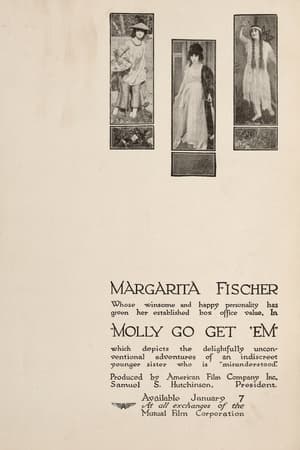
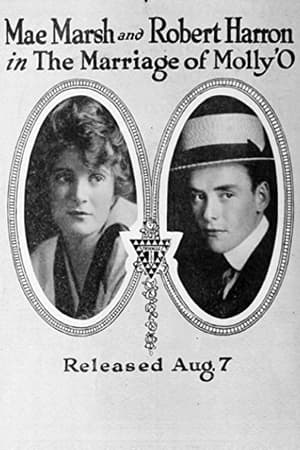
Peggy Raymond, a country girl, comes to New York with plans for a career in art and is taken by mistake to a Fifth Avenue address where she meets Dick Merwin, the scion of a wealthy family, whom she mistakes for her cousin. Later, in Brooklyn, she finds that her relatives have moved, and Mabel Hines takes her in and gets her a job. By necessity, Peg is forced to demonstrate fat-reducing rollers in a shop window, where she is unfavorably viewed by Mrs. Schuyler and her husband. She is admired by Sam Billings, a wealthy old bachelor, and becomes involved with Maddox, who affects an interest in her paintings. But through a series of reversals and complications, Peg is made to realize that Dick is the worthier man.
The story of two feuding Irish immigrant families living in a tenement.
Fannie joins Johnny to perform a music-hall act which becomes a success, until two Broadway producers catch the act and offer Fannie a job on their latest show; however, they have no place for Johnny, so Fannie turns down the offer. (Film considered lost.)
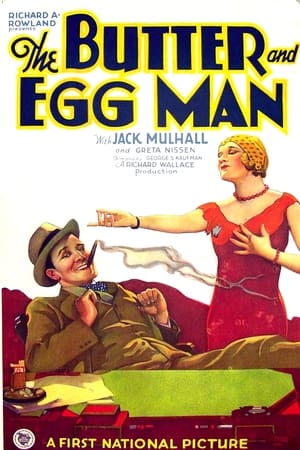
William Bradberry, an absent-minded Egyptologist, turns from a henpecked husband to a dominating one who, unknown to his daughter Betty and wife, writes theatre musical comedy on the side. And saves his daughter from the unsavory millionaire, Victor Smith she almost marries before she marries the decent man Tommy Dawson. A lost film.
Smith's chum is a very poor Baron. Smith and the Baron are invited to a ball, and the Baron, not having evening clothes of his own, "borrows" Smith's dress suit. He is having the time of his life when Smith arrives, thoroughly angry, and taking the Baron in a room takes the clothes away from him. The Baron is in a terrible predicament, dodging around from room to room, as people intrude upon his hiding places. He tries to hide his face with a handkerchief, and a lady catches a glimpse of him as he dives under a bed. She screams in terror, thinking he is a mad man, and then the poor Baron is chased all over the house. Someone telephones for the police and they assist in the capture and lead him away.
Bertha Sloan loses her job as a sewing-machine girl and subsequently is employed as telephone girl with a lingerie manufacturing company. She soon falls in love with the assistant shipping clerk, Roy Davis, and is promoted to chief model for the firm, owing to the patronage of Morton, the wealthy and wicked manager. Bertha is about to take a position in Paris as designer when Morton lures her to his home.
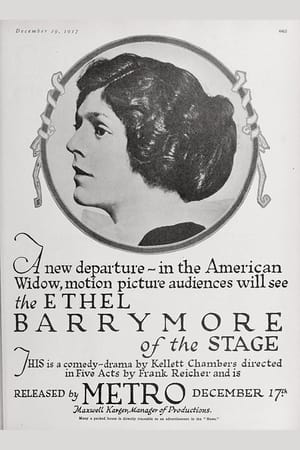
The Misleading Widow is a 1919 silent film comedy starring Billie Burke as Betty Taradine. It was based on the 1917 stage play Billeted by F. Tennyson Jesse and H.M. Harwood. The film was produced by Famous Players-Lasky and distributed through Paramount Pictures. It appears to be a lost film.
The life and complex relationships of ambitious college professor Walter Hubbard and the titular character, Elizabeth Owen, exploring the deeply intertwined personal and professional conflicts he faces, and how Elizabeth's presence and their history together reshape his trajectory.
In India, a princess disguises herself as a commoner to escape an arranged marriage.
As early as 1919, Russian Communists (then known as Bolsheviks) were convenient movie villains. This heavy-handed comedy uses the Russian revolution as an excuse for a series of slapstick set pieces.