In a futuristic city sharply divided between the rich and the poor, the son of the city's mastermind meets a prophet who predicts the coming of a savior to mediate their differences.
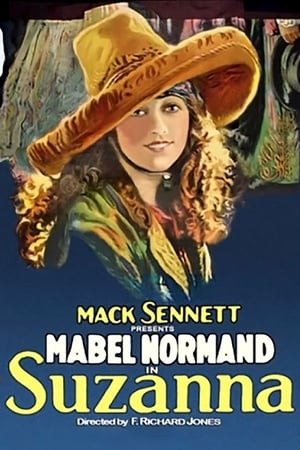
The daughter of an American diplomat is forced to spy for Mexican revolutionaries.
A newly adopted girl is doted on by her adopted father but faces indifference from her adopted mother.
A depressed man grows to love life just as his fortune teller's predictions become dire.
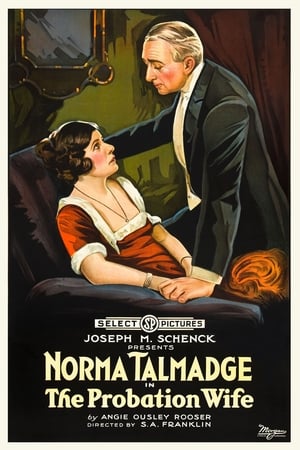
Duplicitous Patricia Chase schemes to break up the new marriage of Margery and Wallace Graham because she yearns for Wallace despite her marriage to another. She nearly succeeds but the revelation of a secret thwarts her at the last moment and she gets her just desserts shortly after.
His Eyes
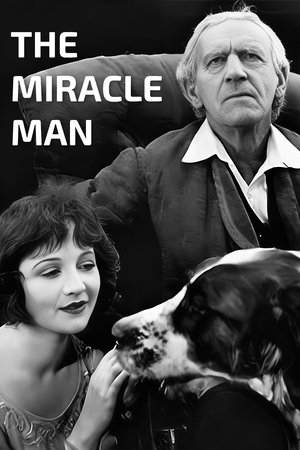
William H. Thompson plays a likeable old lighthouse keeper who must contend with his less likeable fellow villagers. One of Thompson's acts of kindness is to bless the "scandalous" romance between hero and heroine.
Just as Galeen and Wegener's Der Golem (1915) can be seen as a testament to early German film artistry, The Story of the Kelly Gang (1906) symbolizes both the birth of the Australian film industry and the emergence of an Australian cinema identity. Even more significantly, it heralds the emergence of the feature film format. However, only fragments of the original production of more than one hour are known to exist, preserved at the National Film and Sound Archive, Canberra; Efforts at reconstruction have made the film available to modern audiences.
Behind The Doors Of The Salon
The Co-respondent
Santussa, an orphan who becomes separated from her nurse en route to America to live with her grandfather, is cared for by gangsters who hide their stolen jewels in her ragdoll. In New York, Big Mike, finding Santussa a nuisance, dumps her and the doll in a trash can, where a newsboy finds her. After several adventures, Santussa finds her grandfather, the jewels are handed over to customs officials, and the gang of crooks is reformed.
The authors are unknown. The movie is not fully preserved, without inscriptions.
The Hawk's Nest
Fathers and Sons
When Dorothy wants to marry Bob (Robert Agnew), her mother, Mildred, forbids the match. Dorothy angrily asserts that Mildred might reconsider if her own mother had forbid her marriage. The rest of the film is a flashback, as Mildred recalls her own youth, when her dictatorial mother did forbid her to marry Lyman. Lyman enlisted with Teddy Roosevelt's Rough Riders to fight in the Spanish-American War, but was killed in battle.
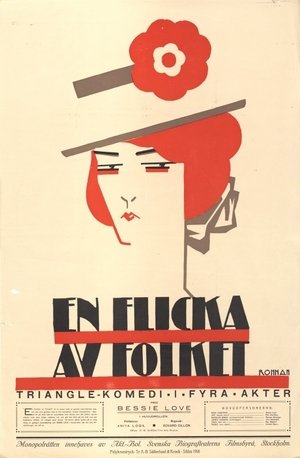
A spoiled rich girl from England encounters a wonderful young man who, unfortunately, has no money. Will love or money win out?
A 1922 film directed by Frank Lloyd.
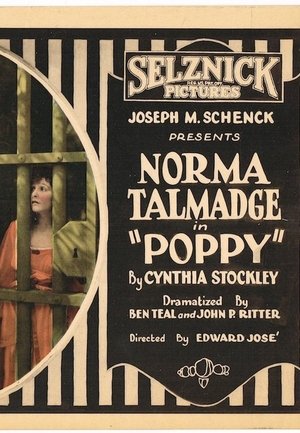
A 1917 film directed by Edward José
A young girl, Rose Eastmen lives with her lazy Uncle, who works as a janitor in a publishing house. Lacking education, both Rose and her Uncle are susceptible to the socialist ideas of writer Rudolph Creig. One day Rose encounters Jack Steven's the wealthy son of the publishing house, working on his car. She believes he is a common laborer, and begins seeing him. Through her exposure to Jack, Rose begins to realize the rich are not such an abominable people. Rudolph has also reached this conclusion after learning Steven's has published his book. Now with a hefty royalty check and success, Rudolph is able to marry Rose.
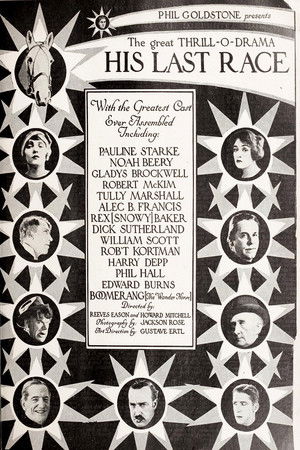
Milt Kimberlin is a down-on-his luck horse owner, but Rosalie, a cabaret performer (the lively and engaging Clara Bow), doesn't care -- she turns down the fancy jewelry offered by oily Frank Gorman for a wedding ring from Kimberlin. Even though his finances never improve, Rosalie sticks by her husband only to sicken and die in a garret. Kimberlin's luck changes almost overnight and he becomes incredibly wealthy.