Věčný Faust
"Die tote Stadt" is a psychologically layered drama with Hitchcock-like features, about Paul who, after the loss of his beloved Marie, slowly but surely becomes entangled in a dream world of obsessions and delusions. This impressive opera is a passionate as well as a surrealistic plea for mourning. "He who cannot live with death has no life."
A young girl overcomes her disadvantaged upbringing in the slums of Uganda to become a Chess master.
Opera's most popular double bill, fondly known as Cav and Pag, conducted by Herbert von Karajan. In 'Cavalleria rusticana', Turiddu returns from military service to find that his fiancée Lola had married the carter Alfio while he was away. In revenge, Turiddu seduces Santuzza, a young woman in the village. In 'Pagliacci', the drama unfolds as Canio (Pagliaccio) struggles with rage, despair, and desire on learning of his wife Nedda's intended infidelity with Silvio. Canio's tragic conflict increasingly mirrors the comedy of Pagliaccio.
Based on a true story from 1998, five Latino and Black teenagers from the toughest underserved ghetto in Miami fight their way into the National Chess Championship under the guidance of their unconventional but inspirational teacher.
The historic, original, live airing of what would become an annual Christmas tradition throughout the 1950s, this opera tells the story of Amahl, a crippled shepherd boy, and his destitute mother, who provide temporary shelter to three men who are following a star to the newly-born Christ child.
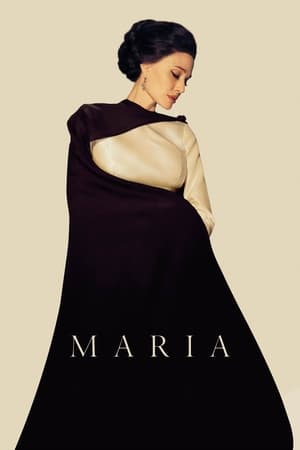
Maria Callas, the world's greatest opera singer, lives the last days of her life in 1970s Paris, as she confronts her identity and life.
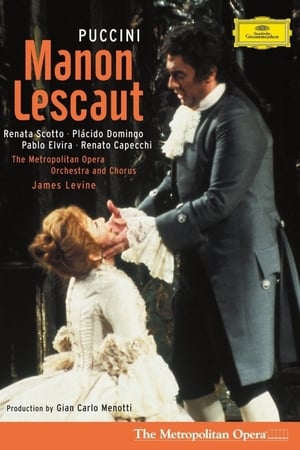
Star soprano Anna Netrebko scored a triumph in Laurent Pelly’s acclaimed 2012 production, singing the title heroine for the first time at the Met. Manon’s story—from innocent country girl to celebrated courtesan to destitute prisoner—is one of the great tragic tales in literature and music, and this performance brings out all of its colors, as seen through Massenet’s masterful score, from the comedic beginning to the heart-wrenching finale. Piotr Bezcala is des Grieux, Manon’s lover, who decides to become a priest when she leaves him, but ultimately is reunited with her, only to lose her again. Paulo Szot sings Lescaut, and Fabio Luisi conducts the Met Orchestra and Chorus.
A drama based on the life of 18th century Italian lyricist Lorenzo da Ponte, who collaborated with Mozart on his "Don Giovanni" opera.
Internationally acclaimed Chinese film-maker Chen Kaige delivers an opulent staging of the fairy-tale story of Chinese Princess Turandot, who will only marry a prince capable of solving her riddles. With sumptuous costumes and palace sets designed in China, Kaige's production adds a compellingly authentic accent to Puccini's exotic orchestral palette. Zubin Metha and his brilliant Orquestra de la Comunitet Valenciana offer "genuine foreworks of sound" (Wiener Zeitung), Maria Guleghina triumphs as Turandot. Recorded in 2008 at the Palau de les Arts in Valencia. Zubin Mehta (conductor).
La Sonnambula is an idillic, classical and intense melodramma with an extremely fine, lyrical musicality and tense with pure "canto", suspended between Arcadia and Romanticism. It is a combination of tender and melancholic sentiments and of tragic and moving passion, in a natural uncontaminated and innocent atmosphere and humanity which clearly represent the artistic experience of the composer. The charming staging by Hugo de Ana, at the Teatro Lirico di Cagliari goes back to January 2007. Through fascinating tableaux vivants, references to 17th century Romantic painting and refined visual projections, it is a tribute to Luchino Visconti. Visconti produced the memorabile performance of Sonnambula in March at the Scala di Milano with the magnificant Maria Callas.
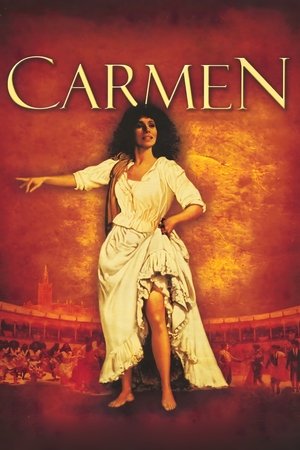
U-CARMEN is a feature film based on Georges Bizet's 19th-century opera that was filmed on location in a modern South African township setting. The energy, compassion, and heat of township life in all its elements create a constantly visually interesting and dynamic background for the unfolding of the story, which owes part of its huge popularity to the thrilling combination of a violent gangster tale with a passionate, almost supernatural love story. As it unfolds, it explores issues of fame and wealth, the position of a strong and independently minded woman in a very masculine society and, perhaps most importantly, the incomprehensible attraction between abuser and victim. Bizet's opera, based on Prosper Merimée's novel, premiered in Paris on March 3, 1875. Set in a poor area of Seville, the story of the magnetic woman who seduces, loves, and ultimately destroys her lover and herself...
In the year 1856, Nawab Wajid Ali Shah is the King of Awadh, one of the last independent kingdoms of India. The British intend to control this rich land and send General Outram to clear way for an annexation. Pressure is mounting amidst intrigue and political maneuvers, but the Nawab whiles away his time in pursuit of pleasure and religious practice. The court is of no help either — noblemen Mir and Mirza ignore all duties and spend their days playing endless games of chess.
Celeste is a renowned opera diva who retired early for the man she loved to live on a crumbling and beautiful estate in the heart of a rainforest in Far North Queensland. Ten years after the tragic death of her husband, Mateos, in a boating accident, Celeste is set to return to the stage for her final performance. Her husband’s son Jack, still haunted by the past, arrives amidst the preparations for the performance and finds Celeste is as he remembered – beautiful, intoxicating and dangerous. Celeste wants Jack to stay at the estate, but needs him to perform one last request.
"Despite the multitude of characters and situations, the plot is simple: the eternal flow of life. It is based on Les contes fantastiques d’Hoffmann, a play by Jules Barbier and Michel Carré, who were inspired by some of the stories of the German E.T.A. Hoffmann. On a drunken night in the city, Hoffmann tells how he courted and lost three girls, his impossible loves: Olympia, a mechanical doll that only he believes to be truly human; Giulietta, the courtesan who steals his reflection in a mirror; and Antonia, a young woman who sings until she literally dies." Venue & Opera Company: Teatro Regio di Parma Recorded: 1988 Singers: Alredo Kraus, Ruth Welting, Jonathan Omilian, Barbara Hendricks, Elena Zilio, Nicola Gjiuselev, Bruno Buulgarelli, Francis Egerton, Aldo Bottion Orchestra: Orchestra Sinfonica dell'Emilia-Romagna "Arturo Toscanini" Chorus: Coro del Teatro Regio di Parma Chorus Master: Adolfo Tanhzi Stage Director: Beppe de Tomasi
A reporter tries to stop the crash of an aircraft after uncovering an airline's plot to save their business by sabotaging Concorde flights and have them decommissioned.
In 1935, renowned Portuguese neurologist Egas Moniz visits psychiatrist Sobral Cid, trying to convince him to use his patients as subjects for an experimental treatment: frontal leukotomy. The film is a film adaptation of a scene from the play Brainland, which explores three key episodes in the history of 20th-century neuroscience. Each episode addresses dilemmas related to clinical ethics.
A ten-year-old girl meets famed opera singer Enrico Caruso on a train between Boston and New York. She admonishes him for his extravagant lifestyle, but she is softened up somewhat when Caruso begins to sing arias from her favorite operas.
Violetta, a courtesan much wooed by Parisian society, organizes a grand party that is attended, amongst others, by the young Alfredo Germont. He confesses his feelings to Violetta, who is already suffering from consumption. She vacillates between genuine affection and a realistic assessment of her situation as a "fallen woman", which precludes any lasting relationship with a man. The Willy Decker production of La Traviata, recorded live at the Salzburger Festspiele in August, 2005. Anna Netrebko stars as Violetta Valéry, with Rolando Villazón as Alfredo Germont and Thomas Hampson as Giorgio Germont. Carlo Rizzi conducts the Wiener Philharmoniker.
Set in 16th-century France and Spain, Don Carlos tells of the political and amorous rivalry between King Philip II and his son, Don Carlos, over Elisabeth de Valois. Krzysztof Warlikowski strips down a tragedy haunted by ghosts, and places the intimate at the heart of an imaginary fresco truer than history itself. Along with Philippe Jordan, he reveals to the public the very first version of this great five-act opera: the version modified by Verdi himself for the work’s first performance in 1867.