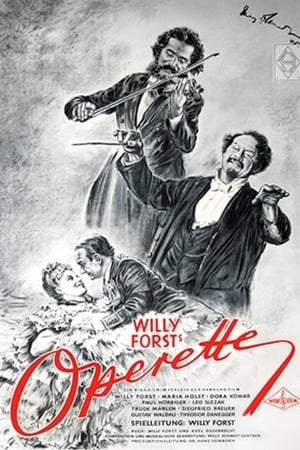
A musician is offered a job in Vienna as stage director, but his disagreements with the aristocratic opera manager end in abrupt firing in spite of a mutual attraction. He's quickly engaged by another theatre and becomes famous for his lavish stage productions and fine acting, which begins their golden age with Suppé and Strauss.
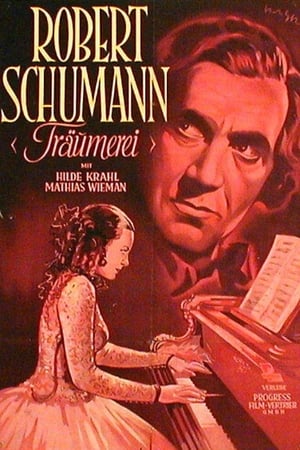
A musical film based on biographical facts about Clara Wieck's love for composer Robert Schumann (1810-1856), her marriage against her will, Schumann's triumph, and his tragic end due to mental illness. The film is beautiful and entertaining, full of noble spirit and beautiful words about art and love, which only conflict in a theoretical context; not least thanks to its solid cast, this film is quite serious and far from kitsch. Completed in 1944, during World War II, the film was rejected by the Nazi leadership, but was eventually released and enjoyed success with an audience already weary of war.
The young ice skating talent, Liesl, lands a part in a new Revue at the Palast Theatre simply because she is confused with someone else. In reality, the roll was to be awarded to Lu Panther, the untalented girlfriend of the theatre's owner, Wildner. After a series of accidents and little disasters, Wildner shuts down the theatre before the Revue can take place. But the Revue's director, Ernst Eder, decides shortly thereafter to present the Revue on an ice skating rink belonging to Liesl's uncle. After a successful run, at first at the Wiener Prater, the performers move on to Spain, Hungary, and a night club with a Jazz orchestra. The Revue becomes a huge success ... and, of course, Ernst and Liesl end up together, too.
A traditional chinese story about a girl, Zhu Yingtai, daughter of the noble Mr. Zhu, who goes to Hangzhou to study, dressed as a boy. There, she meets a student, Liang Shanbo, with whom she becomes good friends. They go to school together for the following years, and Zhu gradually falls in love with Liang.
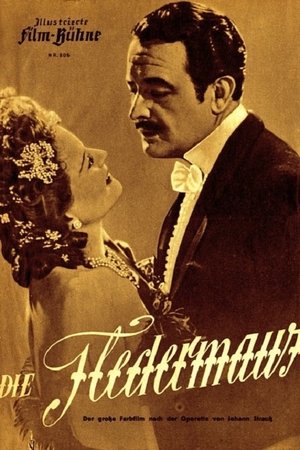
Theater director Falke, dressed as a bat, ends up in prison after a merry carnival night. Director Frank only releases him after some time. Falke decides to take revenge on his friend Gabriel von Eisenstein, to whom he owes the whole affair. The annual masked ball at Prince Orlofsky's provides the opportunity. Falke stages a game of mistaken identity in which Eisenstein does not recognize his own wife and courts her, while maid Adele appears as the countess. Eisenstein is duped, Falke has taken his revenge.
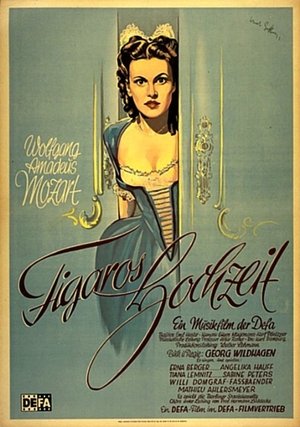
Shortly after WWII, the DEFA Studios produced a series of operas and operettas which belonged to the classical German musical heritage. This enchanting film, the very first opera production of DEFA, stands out because of its lavish decor and costumes, its outstanding actors and their masterful voices of that time.
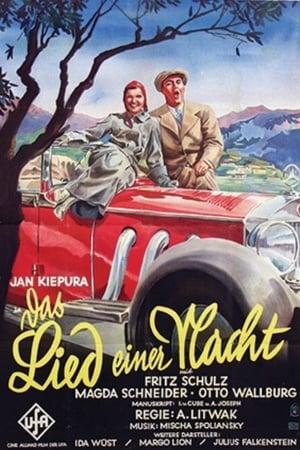
He was known as Anatole Litvak during his Hollywood directorial career, but he was still Anatole Litwak when he helmed the German musical Das Lied Einer Nacht (The Song of Night). Famed Polish tenor Jan Kiepura stars as famed Italian tenor Ferraro. Escaping from his tyrannical manager, Ferraro switches identities with a young tourist (Fritz Schulz) and goes off on an unscheduled Swiss holiday. Still travelling incognito, our hero falls in love with a winsome mountain girl (Magda Schneider). Alas, both his romance -- and his freedom -- are placed in jeopardy when it turns out that the charming young fellow with whom Ferraro traded identities was actually a notorious swindler. Anatole Litvak also directed the English-language version of Das Lied Einer Nacht, Be Mine Tonight
Vera Meiners' life was sweet but unfortunately for her, it was not to last. Her husband, Jan, left her after she met a former lover in a harmless friendly meeting. Forced to resume her disrupted medical career, she worked in a Swiss clinic but, without the knowledge of the chief surgeon, Vera ordered a risky operation to be performed and was thereafter fired. Penniless, she then works in Spanish nightclubs in order to provide for herself and her child. After many years, she runs into her friend Frank again in one of these nightclubs...
Non-musical account of Puccini's opera: Tosca and Cavaradossi are in love, but the tyrant Scarpia desires Tosca and oppresses Cavaradossi who is fighting for freedom.
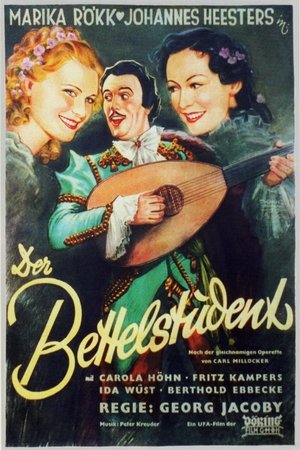
To take a revenge on countess Laura, who slapped him at his proposal, the Governor of the occupied Poland gets her fall in love with a poor student, and exposes him during wedding banquet.
René and his two artist friends lead a meager but careless life in a Parisian small apartment, their main worry being to avoid the housekeeper. Whenever they get some money they call more friends in and celebrate. This is how he meets beautiful but fragile Denise, who wants to be a singer as himself, and they fall in love. Yet when she finds out her real condition she takes a drastic decision which will determine their fates. La Bohème arias, and more.
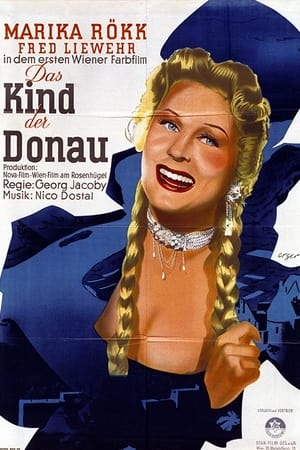
Marika is a cheerful girl who lives on the Danube aboard an old barge she inherited from her father. She works as a waitress in her aunt's inn, entertaining the guests with singing and dancing. Her greatest dream is to save enough money to repair the old barge and sail down the Danube. One day, she meets three young artists, Georg, Oskar, and Christoph, who all fall in love with her. Together, they put on an open-air revue and raise the necessary money. And with Georg, Marika is lucky in love.
Prince Klemens von Metternich orders Friedrich Gentz, one of his aides, to keep the Duke of Reichstadt---Napoleon Francois Joseph Charles---son of Napoleon and heir to the French throne, from thinking about French politics. Gentz enlists the help of ballerina Fanny Elsser, all the rage in several European capitals, to keep the Duke distracted.
Italian filmmaker Carmine Gallone was still in his "operetta" mode when he helmed 1938's Il Sogno di Butterfly (Dream of the Butterfly) Maria Cebotari plays opera diva Rosa Belloni, currently starring in a production of Puccini's Madama Butterfly. The plot thickens when Rosa's backstage life begins to mirror the travails of the character she is portraying. The climax comes when Harry Peters (Fosco Giachetti), the American father of Rosa's illegitimate child, returns after four years with his new wife in tow, leading inexorably to a doleful ending both on- and offstage. Critics complained about the substandard photography in Il Sogno di Butterfly, but this might have been due to poor laboratory work.
Carmen is a French-Italian musical drama film directed by Christian-Jaque and starring Viviane Romance, Jean Marais, and Lucien Coëdel. It is a version of the famous opera. It was filmed in two versions, French and Italian, with the same screen cast but some different crew, and with Italian voices dubbed in on the Italian version, which have been munged together at IMDb. A third version, with English dubbed under the direction of British actor Noel Howlett, was made subsequently using one of the two (French or Italian) originals for the visual source.
Mickey is trying to lead a concert of The William Tell Overture, but he's continually disrupted by ice cream vendor Donald, who uses a seemingly endless supply of flutes to play Turkey in the Straw instead. After Donald gives up, a bee comes along and causes his own havoc. The band then reaches the Storm sequence, and the weather also starts to pick up; a tornado comes along, but they keep playing.
A group of union members, impressed by the First World Festival of Democratic Youth, held in Prague in 1947, decide to found a dance troupe. However, they are looking for someone who can teach them everything they need...
In a small Japanese town, Ko-Ko is appointed to the unenviable position of executioner. Knowing he must successfully perform before the appearance of the Mikado in a month's time, Ko-Ko finds a suitable victim in Nanki-Poo, who is distraught over his unrequited love for the maiden Yum-Yum. Nanki-Poo agrees to sacrifice his life if he is allowed to spend his remaining days with Yum-Yum, who is betrothed to Ko-Ko.
Night in an old mill is dramatically depicted in this Oscar-winning short in which the frightened occupants, including birds, timid mice, owls, and other creatures try to stay safe and dry as a storm approaches. As the thunderstorm worsens, the mill wheel begins to turn and the whole mill threatens to blow apart until at last the storm subsides.
Set during the German occupation of Warsaw during WWII, this musical tells the story of several inhabitants of the same tenement house.