Two female Army agents go undercover at a Nazi prison camp to get information from a scientist being held there.
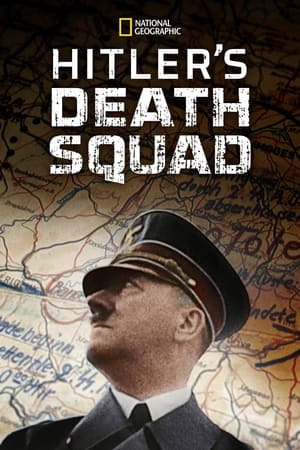
How did Nazi Germany, from limited natural resources, mass unemployment, little money and a damaged industry, manage to unfurl the cataclysm of World War Two and come to occupy a large part of the European continent? Based on recent historical works of and interviews with Adam Tooze, Richard Overy, Frank Bajohr and Marie-Bénédicte Vincent, and drawing on rare archival material.
Power and Paranoia of the Third Reich
He is considered to be one of the greatest German film stars, Hans Albers, known as "Der blonde Hans", a man made for the cinema. He was an actor, singer, idol of the Germans - and darling of the Nazis. Nevertheless, he could not protect his great love, the Jewess Hansi Burg. In 1938 she had to flee to London from anti-Semitism in Germany. But Albers himself stayed in Germany and continued to film, driven by a desire for a career and the call of money. In 1946, one year after the end of the Second World War, they meet again: Hansi Burg returns to the land of the murderers of her parents in the uniform of the British Army and visits Hans Albers in his villa on Lake Starnberg. He lives there with another woman. The rival has to go, then there is a tense debate. For a day and a night, the blonde Hans has to face uncomfortable questions and even more uncomfortable truths.
Nazi hunter Ezra Lieberman discovers a sinister and bizarre plot, masterminded by Dr. Josef Mengele, to rekindle the Third Reich.
Auschwitz, la machine de mort nazie
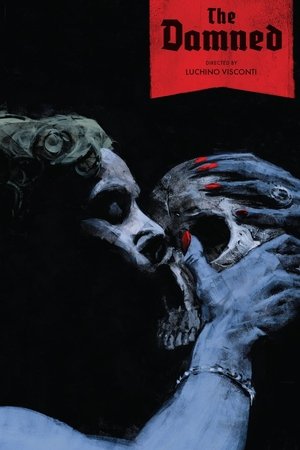
In the early days of Nazi Germany, a powerful noble family must adjust to life under the new dictatorship regime.
Comprised of video shot during the Nazi regime, including propaganda, newsreels, broadcasts and even some of Eva Braun's colorized personal home movies, we explore the way in which the Third Reich infiltrated the lives of the German population, from 1933 to 1945.
Germany, 1945. Soldier Willi Herold, a deserter of the German army, stumbles into a uniform of Nazi captain abandoned during the last and desperate weeks of the Third Reich. Newly emboldened by the allure of a suit that he has stolen only to stay warm, Willi discovers that many Germans will follow the leader, whoever he is.
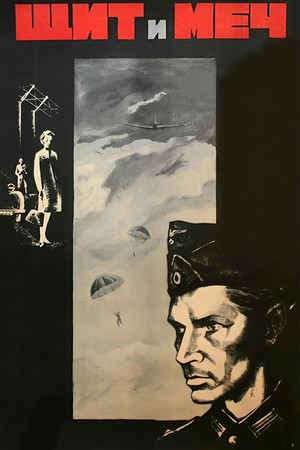
The year 1944... The year of the victorious turning point in the WWII, but the Baltic theater of naval battles is still quiet. While performing a combat mission, torpedo boat commander Boris Shubin accidentally discovers a secret fairway of an unmarked German submarine. Unforeseen chance throws him on the "Flying Dutchman" and gives him the opportunity to open the veil of the strictest secrecy of the Third Reich, which surrounds her....
When Adolf Hitler reawakens at the site of his former bunker in present-day Berlin, he is mistaken for a comedian and quickly becomes a media phenomenon.
During the Nuremberg Trials, the victors of the Second World War judge those responsible for the Third Reich.
On 30 April 1945, dictator Adolf Hitler, his wife Eva Braun, and prominent members of the Third Reich live out their final hour in the Führerbunker.
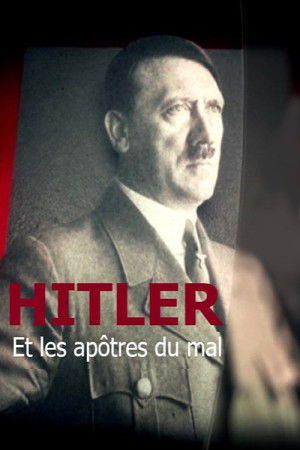
This portrait that goes against the grain depicts the Führer as a lazy, isolated leader, cut off from reality, incapable of governing without his "apostles". They are Hitler's essential ministers, advisers, rivals, courtiers. They hate each other, and the Führer puts them in competition, often to get the worst out of them. The portraits of Hermann Goering, Heinrich Himmler, Joseph Goebbels, Albert Speer but also Rudolf Hoess, the commandant of the Auschwitz-Birkenau camp, and Doctor Joseph Mengele trace the rivalries, hatreds and predations that punctuate the entire frightening epic of Nazism. This documentary is composed of a selection of archive images and testimonies from descendants and specialists of this period.
Now the subjects of a despotic chief, far from having any favor to expect from him, as both themselves and all they have are his property, or at least are considered by him as such, are obliged to receive as a favor what he relinquishes to them of their own property. He does them justice when he strips them. He treats them with mercy when he suffers them to live. In a beautiful house, during a beautiful day, next to a library with no books, a table is set for the last supper of its inhabitants.
After the end of World War II, a young partisan falls in love with a German secretary who is captured and imprisoned by partisans. He decides to free her and escape with her.
Discovering Paris under the German occupation through the story of an SS soldier and more generally of Wehrmacht soldiers allows us to follow the daily life on the German side. These soldiers enjoyed privileged status, during their stay, they were led to believe that they belong to a social elite, a status unreachable back in Germany during peacetime. And who better than a German who has led such lifestyle to serve as a common thread and tell this story?
This is the story of an incredible rise to power, the most comprehensive documentary on Hermann Goering ever made. He was a man of many faces: vain, ambitious, more brutal than any other of Hitler's minions, yet the most popular Nazi official of all, at times even more popular than Hitler himself. He embodied the jovial side of the Third Reich. Yet the same man who organised dissolute bacchanals also founded the Gestapo, set up the first concentration camps, and had his own comrades murdered in the purge of 1934. These unique personal records form the largest and most important single film find from the Nazi era in past years.
Before Dawn charts the years of exile in the life of famous Jewish Austrian writer Stefan Zweig, his inner struggle for the "right attitude" towards the events in war torn Europe and his search for a new home.
Johann „Ruky“ Trollmann is a successful boxer. As the Nazis gain power in 1933, he ends up in a concentration camp where he is forced to train SS soldiers.