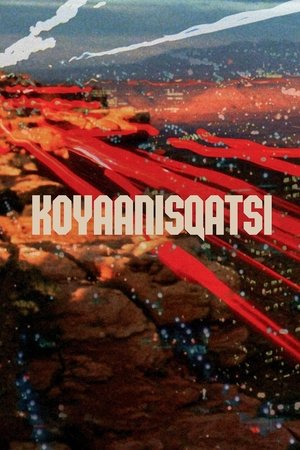
What happens when an earth-splitting disaster destroys the home world of a lone living skeleton? As long as he has his most valuable treasure, he doesn't worry about anything else. But can he hold onto his treasure in such a cataclysm?
Waiting for his wife to come home from an expedition in the freezing wasteland, a man loses his sanity in a subterranean nuclear bunker.
A glimpse into the raw and simple power of nature through encounters with farm animals: the eponymous Gunda, a mother pig; two cows, and a one-legged chicken.
A documentary of insect life in meadows and ponds, using incredible close-ups, slow motion, and time-lapse photography. It includes bees collecting nectar, ladybugs eating mites, snails mating, spiders wrapping their catch, a scarab beetle relentlessly pushing its ball of dung uphill, endless lines of caterpillars, an underwater spider creating an air bubble to live in, and a mosquito hatching.
X-ray images were invented in 1895, the same year in which the Lumière brothers presented their respective invention in what today is considered to be the first cinema screening. Thus, both cinema and radiography fall within the scopic regime inaugurated by modernity. The use of X-rays on two sculptures from the Bilbao Fine Arts Museum generates images that reveal certain elements of them that would otherwise be invisible to our eyes. These images, despite being generally created for technical or scientific purposes, seem to produce a certain form of 'photogénie': they lend the radiographed objects a new appearance that lies somewhere between the material and the ethereal, endowing them with a vaporous and spectral quality. It is not by chance that physics and phantasmagoria share the term 'spectrum' in their vocabulary.
Takes us to locations all around the US and shows us the heavy toll that modern technology is having on humans and the earth. The visual tone poem contains neither dialogue nor a vocalized narration: its tone is set by the juxtaposition of images and the exceptional music by Philip Glass.
The bodies of women lying on the ground weave relationships around them, they breastfeed, they connect with the ground ... Carla Simón's first short, shot on 16 mm in the Californian forests. An experimental exercise that connects with the cinematographic avant-gardes of the early twentieth century.
A tormented father witnesses his young son die when caught in a gang's crossfire on Christmas Eve. While recovering from a wound that costs him his voice, he makes vengeance his life's mission and embarks on a punishing training regimen in order to avenge his son's death.
The aristocratic White Mice and the rustic Creatures Who Dwell Under the Oak battle over the doll of their hearts' desire.
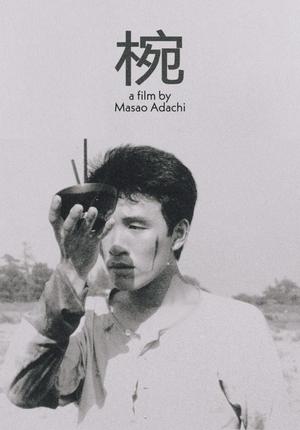
Overripe with psychosexual poetry and stark, oneiric rituals, Adachi's filmmaking debut, made while he was still an undergraduate, counts among the more resonant accomplishments of the now famous Nihon University Film Club. Adachi's obvious fascination with the wide-eyed watchfulness of childhood and the uncanny is an expression of the important surrealist strand running throughout the post-WWII Japanese avant-garde. - Harvard Film Archive
A bride is apparently on the run from an assassin, when she stumbles into a world she hasn`t considered.
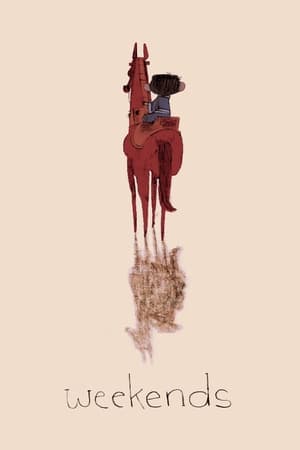
Set in 1980s Toronto, a young boy shuffles between the homes of his recently divorced parents.
Reila
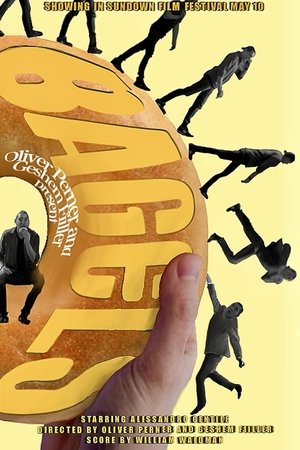
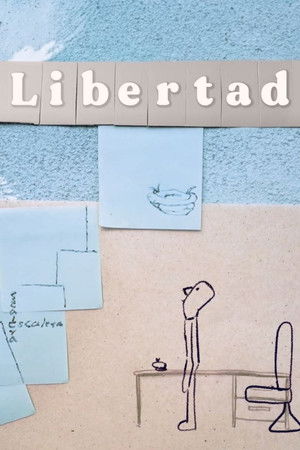
A man tries to eat a bagel, but the world is against him.
An exploration of technologically developing nations and the effect the transition to Western-style modernization has had on them.
Number Two’ is an audio visual work which materializes the definite possibilities of sight and the existence of light in space with the drama in between image and sound as a reaction . It treats the surface of the film itself as a digital artefact that forms an image with a human intervention .It can be seen as an enlargement of a moment in time where form and space breaks inside an indefinite reality .
Feeling Happiness
A little man tries to save a bird that fell from its nest. A stop-motion adventure drawn and animated on paper.
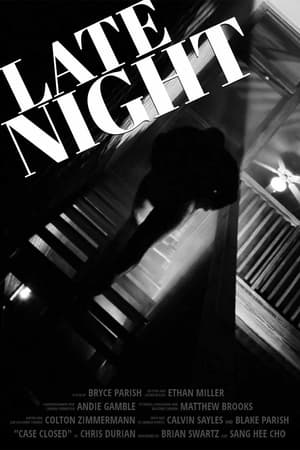
LATE NIGHT (2018) is a contemporary neo-noir short film depicting a single night and morning in the life of a first-time contract killer. With virtually no dialogue, it aims to visually illustrate and probe themes of conscience, greed, guilt, and the interplay between fate and circumstance.
The protagonist visits Uji and tours the town, which has been shaped by the accumulation of history and culture from various eras, including the Heian period.