The growing ambition of Julius Caesar is a source of major concern to his close friend Brutus. Cassius persuades him to participate in his plot to assassinate Caesar but both have sorely underestimated Mark Antony.
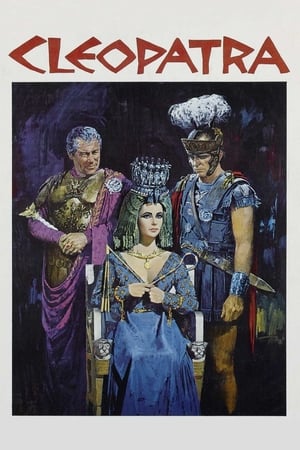
Determined to hold on to the throne, Cleopatra seduces the Roman emperor Julius Caesar. When Caesar is murdered, she redirects her attentions to his general, Marc Antony, who vows to take power—but Caesar’s successor has other plans.
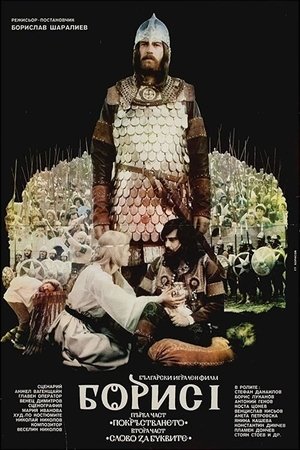
Part one of this two-part epic follows the life and deeds of Boris I – a strong historic personality, which completes his mission to the full and at the end of his life receives holy orders.
Two families, abolitionist Northerners the Stonemans and Southern landowners the Camerons, intertwine. When Confederate colonel Ben Cameron is captured in battle, nurse Elsie Stoneman petitions for his pardon. In Reconstruction-era South Carolina, Cameron founds the Ku Klux Klan, battling Elsie's congressman father and his African-American protégé, Silas Lynch.
After the Hungarian army was annihilated by the Mongols at the battle of Mohi, only the castle of Esztergom stood in the Mongolians' way of invading the rest of Europe. Batu Khan, the grandson of Genghis Khan, reaches the walls of Esztergom with his invincible troops. The castle's defenders, led by Eusebius, the canon of Esztergom, and a Spanish mercenary, Captain Simon, are preparing for the final battle. The sudden arrival of Cardinal Cesareani, the Papal Legate, coinciding with the Mongol Lunar New Year celebrations and the mystical practices of Eusebius, combine to offer the defenders a small glimmer of hope.
At the dawn of the modern era, Portuguese explorer Ferdinand Magellan leads an expedition under the Spanish crown in search of the first westward route to the Spice Islands. He embarks on a perilous journey across the uncharted Pacific, where his fleet faces starvation, mutiny, and the psychological toll of endless seas. Upon reaching the shores of Cebu, Magellan is pulled into a fatal conflict with the natives by his drive to spread Catholicism, culminating in his tragic doom.
The end of Trajan's Dacian Wars (106 AD), when south western Dacia was transformed into a Roman province: Roman Dacia.
In late 19th-century Sicily, the noble Uzeda family—whose lineage dates back to the ancient viceroys that ruled those lands—fights to preserve its waning power in the face of the newly unified Italian regime.
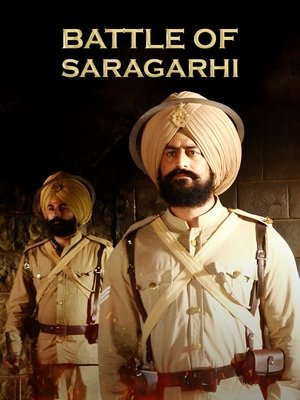
Amidst the 1971 Indo-Pak war, a company of 120 Indian soldiers stationed at the border region of Longewala in Rajasthan must defend their post through the night against two thousand Pakistani troops armed with tanks. Based on the true events of the Battle of Longewala.
Shivaji's death sparks the Maratha-Mughal conflict. His son Sambhaji leads resistance against Aurangzeb's forces. Amid battles and intrigue, both sides face challenges in a struggle for power.
A Roman soldier becomes torn between his love for a Christian woman and his loyalty to Emperor Nero.
A biopic of Napoleon Bonaparte, tracing the Corsican's career from his schooldays (where a snowball fight is staged like a military campaign) to his flight from Corsica, through the French Revolution (where a real storm is intercut with a political storm) and the Terror, culminating in his triumphant invasion of Italy in 1797.
Through four nonlinear but interconnected Finno-Ugric storylines, approximately 7,500 years ago, traces of the Kaalo meteorite – that struck the Estonian island of Saarema – left a profound mark on the peoples living along the Baltic Sea, shaping local myths and legends.
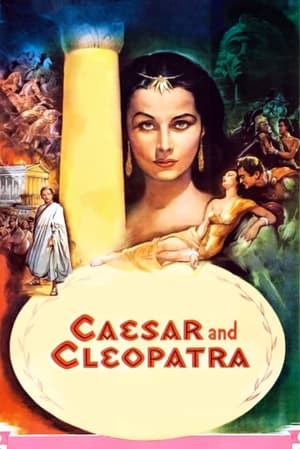
The aging Julius Caesar finds himself intrigued by the young Egyptian queen Cleopatra.
Disgusted with the policies of King Charles I, Oliver Cromwell plans to take his family to the New World. But on the eve of their departure, Cromwell is drawn into the tangled web of religion and politics that will result in the English Civil War.
Resistance leader Omar Mukhtar opposes Italian colonization before World War II. The brutal guerrilla war against Italian General Rodolfo Graziani and the Fascist forces of Benito Mussolini highlights the struggle for Libyan independence and the harsh tactics utilised by the colonisers.
The love story of young Countess Natasha Rostova and Count Pierre Bezukhov is interwoven with the Great Patriotic War of 1812 against Napoleon's invading army.
The queen of Egypt barges the Nile and flirts with Mark Antony and Julius Caesar.
n 1664, Sri Guru Tegh Bahadur Ji was anointed as the Ninth Light of Guru Nanak. At that time, Emperor Aurangzeb’s rule cast a shadow across India — his mission was to turn the land into Dar-ul-Islam. When the oppressed Brahmins, led by Pandit Kripa Ram, came to the Guru seeking protection, he was deeply moved by their suffering. In an act of divine grace Sri Guru Tegh Bahadur Ji chose to stand as their voice — not with armies or weapons, but with truth. He journeyed to Delhi, accompanied by his beloved disciples, Bhai Mati Das, Bhai Dayal Das, and Bhai Sati Das. What followed was not merely a confrontation but a defining moment in India’s moral history — the supreme sacrifice that echoes through eternity A timeless symbol to dharma, truth, the courage the defence of religious feedon and human rights.
Upon becoming Prince Regent, the bellicose Lord Biu of Wu sends commander-general Si Ching-wan to rage wars between the Zhao and Chen Kingdoms. A small state that is long on literary excellence but short on military might, Chen is defenceless against the invading forces. The compassionate general answers the pleading of the Chen princess, Fung-ming, to sign a treaty of peace. In his speech to the lord, Deputy General Lau Mo-yeung accuses Si of treason so as to lay claim to Chen. The lord dispatches the valiant fighter Lui Chen-sing to Chen on an assassination mission, but the assassin is vanquished. Si prevails on Lui of his patriotism. Lord Biu fights Chen. In a dire attempt to redeem Chen, Si surrenders to the Wu camp. Lui pretends to have blinded Si to extricate him. The duo ally with a band of chivalrous fighters to overturn the corrupt regime. Dispossessed of his throne, Biu commits suicide. Si returns to his land to serve as an aide to the young king and marry Fung-ming.