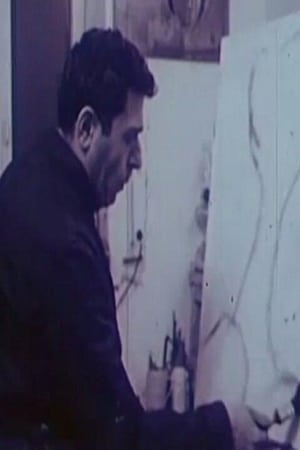
In a comparative study between different forms of calligraphy, the film traces parallels between modern Japanese painting and traditional Japanese writing.
Since Rosa was little, people used to say around town that her grandfather was a black dog. The legend, belonging to the Valley of Oaxaca, spoke of a man who had the ability to turn into a black dog and roam the streets at night. Through images of the town, interviews with the brothers and animated interventions, the documentary tells the story of the myth and its importance in the collective memory.
Florence is a contemplative study of light and shadows, textures and planes, that makes beautiful use of the tonal qualities of black and white film. (mubi.com)
Buster Brown creater R.F. Outcault sketches his creation. Part of the Buster Brown series for Edison film studio.
A 16 year old girl recalls the last moments of her summer vacation, spent with friends in the Laurentians north of Montreal. She reminisces about their talks on life, death, love, and God. Shot in direct cinema style, working from a script that left room for the teenagers to improvise and express their own thoughts, the film sought to capture the immediacy of the youths presence their bodies, their language, their environment.
Short documentary about the Belgian leather industry.
Two countries, two restaurants, one vision. At Gabriela Cámara's acclaimed Contramar in Mexico City, the welcoming, uniformed waiters are as beloved by diners as the menu featuring fresh, local seafood caught within 24 hours. The entire staff sees themselves as part of an extended family. Meanwhile at Cala in San Francisco, Cámara hires staff from different backgrounds and cultures, including ex-felons and ex-addicts, who view the work as an important opportunity to grow as individuals. A Tale of Two Kitchens explores the ways in which a restaurant can serve as a place of both dignity and community.
The vertiginous progress of modernity has caused the spaces that humanity previously inhabited, now remain forgotten.
This short film focuses on the job of the Hollywood screenwriter.
After the capture of Shanghai, Japanese soldiers make a trip to Suzhou.
Internet comedian Carl Déman from the humor group JLC lived a life that looked glorious. But beneath the surface was a terrible gambling addiction that almost cost him his life. In 2019, he and other gambling addicts struggle to stay afloat in a contemporary age marinated in gambling advertising. Carl wants to ask those who make the advertising how they think and wonders why the advertising profiles now also come from the world of culture and entertainment.
To the city come men, women, fruits, flowers, vegetables, goats and sheep – all ready for consumption. It is the process of consumption/exploitation that forms the core of the film.
An isolated village in the Lithuanian countryside. Seated in her house, an elderly woman recites an old folk story. Then she climbs up the tall ladder that takes her to the rooftop of the church.
Elem Klimov's tribute to his late wife, director Larisa Shepitko, killed in a car accident a year earlier. Features excerpts from all of her films, and archival audio of her discussing life and art.
João Pedro Rodrigues answers the question from the title with an autobiographical short-film.
This is a conversation starter first, a video second.
Some months after the fall of the Berlin wall, during the time of federal elections in Germany in 1990, Chris Marker shot this passionate documentary, reflecting the state of the place and its spirit with remarkable acuity.
A building in Israeli Hebron, which has been deserted by its Palestinian occupants, is called 'The Mute's House' by the Israeli soldiers stationed there and by the tour guides who pass by daily. The building's only occupants are a deaf woman, Sahar, and her 8-year-old son, Yousef. The family's unique story, in the midst of the Israeli-Palestinian conflict, unfolds through the eyes of the young and charismatic Yousef, as he goes through his daily routine on both sides of the torn city.
Filmmaker Alain Resnais documents the atrocities behind the walls of Hitler's concentration camps.
Orson Welles acted in Brazilian culture and music by deeply researching Brazil's historical geology, consciously completing a legendary cultural mission. Although being turned down by Hollywood producers, he developed a triumphantly accomplished mission in the language domain - three friends of Welles' testified his love for cinema, his passion for Brazilian music and people and his obstinate endurance against formidable pressures coming from inside and outside Hollywood regarding his unfinished "It's All True".