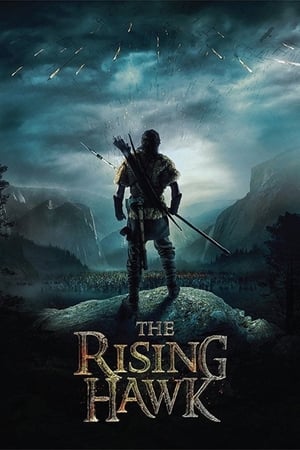
During the 13th century, a small village fights for freedom in the frontier landscape of the Carpathian Mountains against Mongolian invaders.
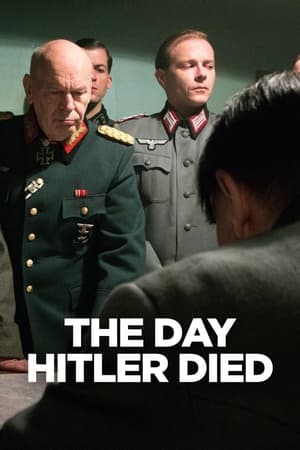
The story of Hitler’s final hours told by people who were there. This special features exclusive forgotten interviews, believed lost for 65 years, with members of Hitler’s inner circle who were trapped with him in his bunker as the Russians fought to take Berlin. These unique interviews from figures such as the leader of the Hitler Youth Artur Axmann and Hitler’s secretary Traudl Junge, have never before been seen outside Germany. Using rarely seen archive footage and dramatic reconstruction, this special tells the story of Adolf Hitler’s final days in his Berlin bunker.
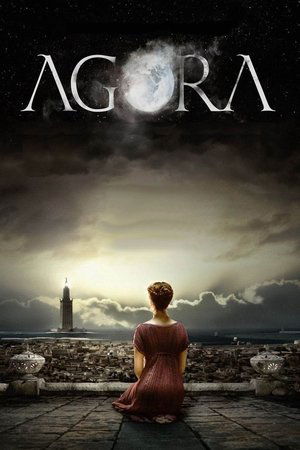
A historical drama set in Roman Egypt, concerning philosopher Hypatia of Alexandria and her relationship with her slave Davus, who is torn between his love for her and the possibility of gaining his freedom by joining the rising tide of Christianity.
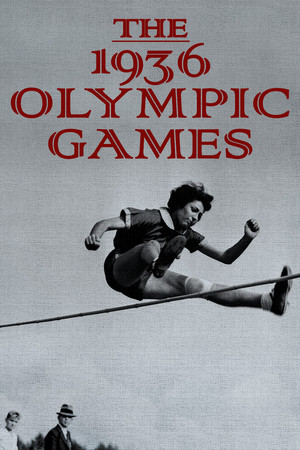
On the 1st August 1936, 100,000 spectators watched as Hitler and the Olympic delegates arrived at the Olympic opening ceremony in Berlin. The Olympic flags hung cheerfully side-by-side banners bearing the Nazi swastika. With the help of specialists and images from Léni Riefenstahl’s 1938 film, ‘Olympia’, we see what really went on behind the scenes and investigate the secret negotiations and compromises made by the International Olympic Committee to bring the Olympics to Berlin.
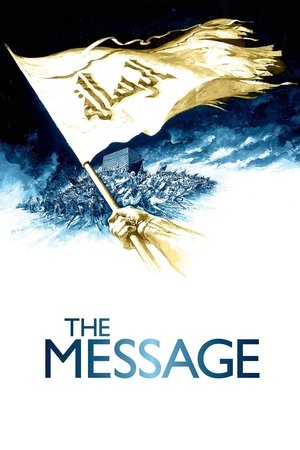
In sixth-century Mecca, Prophet Muhammad receives his first revelation from God as a messenger. Three years later, he's not alone in his quest and publicly declares his prophecy. Muhammad is fought by Abu Sufian and his wife Hind, rulers of Mecca. Muhammad's followers are hunted and tortured but he continues his calling.
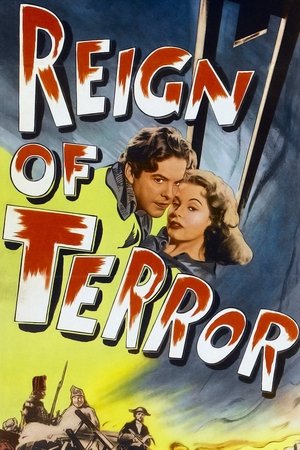
The French Revolution, 1794. The Marquis de Lafayette asks Charles D'Aubigny to infiltrate the Jacobin Party to overthrow Maximilian Robespierre, who, after gaining supreme power and establishing a reign of terror ruled by death, now intends to become the dictator of France.
In this hour-long documentary, Oxford academic Janina Ramirez tours the country in search of Anglo-Saxon art treasures. Her basic thesis - and it is a plausible one - is that we should not look upon their era as a "dark age" as compared, for example, to Roman times, but rather celebrate it as an age in which creativity flowered, especially in terms of artistic design as well as symbolism. She shows plenty of good examples, ranging from the Franks Casket to the Staffordshire Hoard, and the Lindisfarne Gospels.
Discover the untold stories of D-Day from the men, women and children who lived through German occupation and Allied liberation of Normandy, France. Powerful and deeply personal, THE GIRL WHO WORE FREEDOM tells the stories of an America that lived its values, instilling pride in a country that's in danger of becoming a relic of the past.
Disciplined Italian composer Antonio Salieri becomes consumed by jealousy and resentment towards the hedonistic and remarkably talented young Salzburger composer Wolfgang Amadeus Mozart.
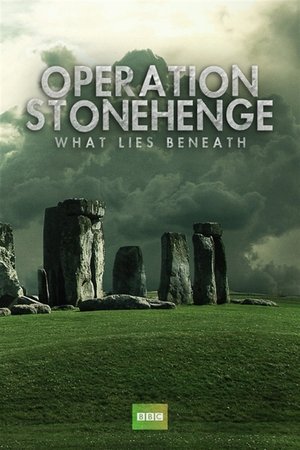
Stonehenge is an icon of prehistoric British culture, an enigma that has seduced archaeologists and tourists for centuries. Why is it here? What is its significance? And which forces inspired its creators? Now a group of international archaeologists led by the University of Birmingham and the Ludwig Boltzman Institute in Vienna believe that a new state-of-the-art approach is the key to unlocking Stonehenge's secrets. For four years the team have surveyed and mapped every monument, both visible and invisible, across ten square kilometres of the sacred landscape to create the most complete digital picture of Stonehenge and the surrounding area over millennia. Operation Stonehenge takes the viewer on a prehistoric journey from 8000BC to 2500BC as the scientists uncover the very origins of Stonehenge, learning why this landscape is sacred, preserved and has been revered by following generations.
Neil Oliver and Tony Pollard set out to solve one of the biggest puzzles in battlefield archaeology. 700 years ago, Robert the Bruce's overwhelming victory over the English at the Battle of Bannockburn helped seal Scotland's future as an independent kingdom, although the actual location remains a mystery. With the help of leading battlefield archaeologists, stuntmen, computer-generated graphics and some digging, Neil and Tony go in search of both the real and imagined Battle of Bannockburn.
Based on the 1836 standoff between a group of Texan and Tejano men, led by Davy Crockett and Jim Bowie, and Mexican dictator Santa Anna's forces at the Alamo in San Antonio, Texas.
Europe in second half of 16th century was very rough place to live. Peasants of Slovenia and Croatia had even rougher times because of the constant threat of Turk raids and being taxed to death in order to provide defence against the Turks. But, the worst things were arrogant local feudal lords led by Franjo Tahi who were oppresing the common folk. All that led to the great peasant revolt of 1573. The movie is made for the 400th anniversary of the event.
Dr Janina Ramirez travels across glaciers and through the lava fields of Iceland to find out about one of the most compelling of the great Viking stories - the Laxdaela Saga. This hour-long film explores how the unique literary achievements of the Saga writers were possible at a time of such immense cultural, political and religious upheaval.
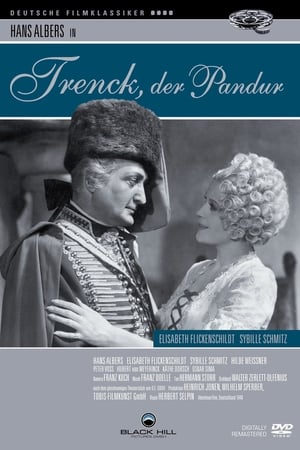
Film about the fictitious adventures of Franz Freiherr von Trenck, who lived during the times of empress Maria Theresia of Austria garnished with espionage and twisted love affairs.
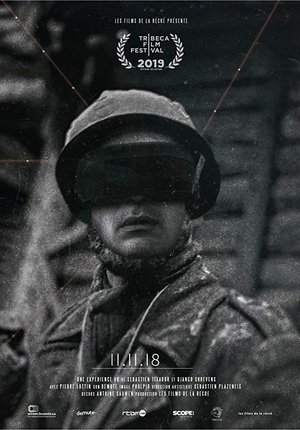
11 November 1918, a few minutes preceding the suspension of fighting, you embody a corporal who has to face a series of decisions.
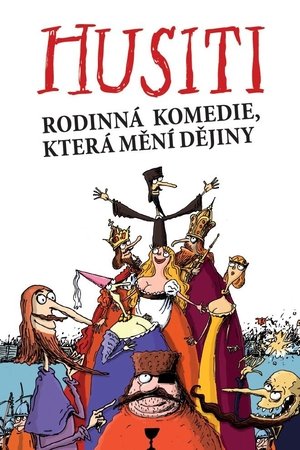
What if the events in a key era in our history were actually completely different than what our history textbooks try to tell us? What if Master Jan Hus didn't even get warm in Constance, let alone burn up? What if Jan Zizka had more than one healthy eye? This animated comedy from director Pavel Koutský playfully breaks the myths about the Hussite era as the pedestal of history is occupied not by preachers and military leaders but by two unbelievable scatterbrains, who become the heroes of their time against their will.
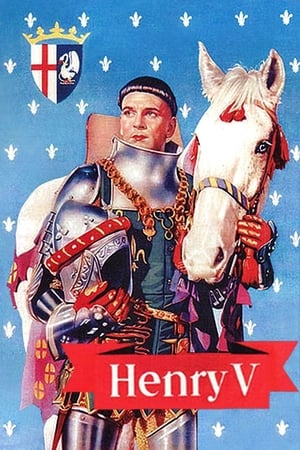
In 1415, in the midst of the Hundred Years' War, the young King Henry V of England embarks on the conquest of France.
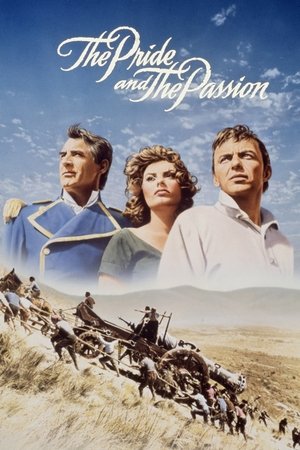
During the Napoleonic Wars, when the French have occupied Spain, some Spanish guerrilla soldiers are going to move a big cannon across Spain in order to help the British defeat the French. A British officer is there to accompany the Spanish and along the way, he falls in love with the leader's girl.
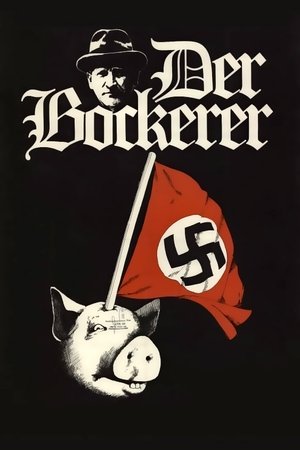
A politically naive Viennese butcher manages to survive the Nazi occupation of Austria and the second world war.