I meet Herbert in the same week I get diagnosed with cancer. We fall madly in love and plan to stay together for the rest of our lives. Three months later, he is dead. Herbert was a BASE Jumper. Leaping off a cliff with nothing but a parachute, he loses his balance, slams into the rock face and falls to his death. His loss in the midst of my chemotherapy completely throws me. Why does he gamble his life away, while I fight for mine? Desperate for answers, I return to Lauterbrunnen, the scene of the accident where Andreas, his best friend and coach, introduces me to the world of BASE. The jumpers teach me not only about the sport, but about facing fears, harnessing and controlling them. To make the most of the life we get. In the Swiss Death Valley I slowly find my way back to life.
Bob Ross brought joy to millions as the world's most famous art instructor. But a battle for his business empire cast a shadow over his happy trees.
Craig Ouellette films his mother through the highs and lows as she battles brain cancer.
Humans are story-telling creatures. By thinking, we all unconsciously "author" a self-story in our heads. Most often, the characters and plot of our story is framed by negative experiences from childhood. These painful "stories" then determine our emotions, leading to unhealthy stress, and changes in body chemistry. This is how a person's self-story can turn into a stress-related illness.
In 1980, Terry Fox continued his fight against bone cancer with the pursuit of a singular, motivating vision: to run across Canada. Three years after having his right leg amputated six inches above the knee after being diagnosed with osteosarcoma, Fox set out to cover more than a marathon’s distance each day until he reached the shores of Victoria, British Columbia. Anonymous at the start of his journey, Fox steadily captured the heart of a nation with his Marathon of Hope. However the 21-year old BC native's goal was not fame, but to spread awareness and raise funds for cancer research. After 143 days and two-thirds of the way across Canada, with the eyes of a country watching, Fox’s journey came to an abrupt end when newly discovered tumors took over his body
John Cazale was in only five films – The Godfather, The Conversation, The Godfather: Part II, Dog Day Afternoon and The Deer Hunter – each was nominated for Best Picture. Yet today most people don't even know his name. I KNEW IT WAS YOU is a fresh tour through movies that defined a generation.
In August 2007, after some medical studies, I was diagnosed with bone cancer. This movie is based on my memories of those days.
Based on the autobiographical notes by Leonhard Lentz the film tells the story of a man who was diagnosed with throat cancer. Besides the progress of the desease this film also focuses on the emotions and insights of the protagonist while being in therapy.
Jeff Witzeman goes on a quest to find out why his wife was cured of her cancer in 30 days, naturally, in Germany, after American doctors wanted to pull an organ out, chemo and radiate her, and basically send her off to die. What he found will change cancer treatment forever.
A documentary that records the daily life of a mother with a limited life expectancy and a grandmother, directed by the daughter, Haruyo Kato.
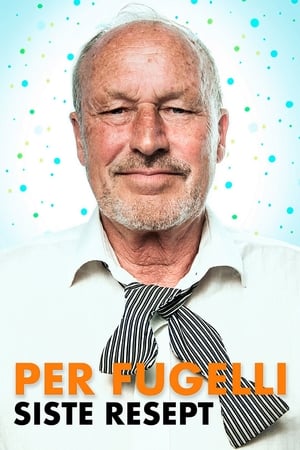
A final meeting with the life affirming Per Fugelli, who wasn't afraid to speak out on behalf of the weak. A man called the wisest man in Norway died in September 2017. This is his legacy.
Inside the dramatic search for a cure to ME/CFS (Myalgic Encephalomyelitis/Chronic Fatigue Syndrome). 17 million people around the world suffer from what ME/CFS has been known as a mystery illness, delegated to the psychological realm, until now. A scientist in the only neuro immune institute in the world may have come up with the answer. An important human drama, plays out on the quest for the truth.
Cancer is the only disease that has been defeated dozens of times without anyone knowing it. In the last 100 years, doctors, scientists, and researchers have developed diverse and effective solutions against cancer only to be thwarted by the political and propaganda power of the drug-dominated medical profession. This is the story of Essiac, Hoxsey, Laetrile, Shark Cartilage, Mistletoe, and Bicarbonate of Soda all put together in a stunning overview that leaves no doubt that inexpensive cures for cancer do exist but are systematically blocked by Big Pharma because they come from nature and cannot be patented. Highly informative.
A mysterious outbreak of tic disorders among young people leads Dr Robert Bartholomew to question whether social media is making us sick. Doctors have recently identified a concerning trend among young people: tic disorders potentially spread via TikTok videos. For sociologist Dr Robert Bartholomew, an expert in mass psychogenic illness, the trend isn’t surprising, but the potential consequences are alarming. Could the global scope of social media mean we are on the precipice of the world’s largest outbreak of psychogenic illness?
A shocking political exposé, and an intimate ethnographic portrait of Pacific Islanders struggling for survival, dignity, and justice after decades of top-secret human radiation experiments conducted on them by the U.S. government.
It was the spring of 2010 when I discovered that I was ill with leukemia. I was 29 years old and had never been in a hospital before. The fear, the chemotherapy, the waiting. After six months, everything seemed to be getting better, and a year and a half later, my first daughter, Nora, was born. So, three years later, I decided to return to the ward where everything had begun, to try to make sense of what had happened to me. Inside those rooms, I met Sabrina, who was going through what I had experienced. "Leucemia" is the story of our meeting, our journey together, and our shared experiences. It is the story of our friendship and our leukemia. (The author)
The extraordinary moving story of Toni Crews, a young mum with a rare terminal cancer who charted her illness online before donating her body for medical research and public dissection.
Through our subject Adam, we reveal the incredible changes and forces that take all humankind from Cradle to Grave.
Lotte (18) and Roos (16) are sisters and both have Usher syndrome. That means they will soon become deaf and blind. It is not known how fast that will go, but they already see and hear a lot worse than their peers. How do these two high-spirited girls deal with their development into adulthood, while the time bomb of deafness and blindness ticks inexorably? They are not deterred from getting the most out of life: Lotte is studying to become a photographer and Roos is passing her final exams. At the same time, they also want to do a few things before it is too late, such as seeing the Northern Lights with their own eyes. Director Kim Smeekes followed Lotte and Roos for the film for two years.
This moving film for Stand Up To Cancer follows The Wanted's Tom Parker as he and his family learn to live with Tom's brain tumour diagnosis and Tom arranges a star-studded charity concert.