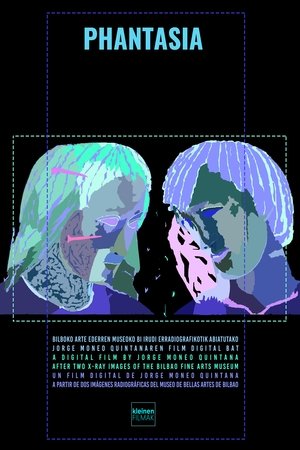
X-ray images were invented in 1895, the same year in which the Lumière brothers presented their respective invention in what today is considered to be the first cinema screening. Thus, both cinema and radiography fall within the scopic regime inaugurated by modernity. The use of X-rays on two sculptures from the Bilbao Fine Arts Museum generates images that reveal certain elements of them that would otherwise be invisible to our eyes. These images, despite being generally created for technical or scientific purposes, seem to produce a certain form of 'photogénie': they lend the radiographed objects a new appearance that lies somewhere between the material and the ethereal, endowing them with a vaporous and spectral quality. It is not by chance that physics and phantasmagoria share the term 'spectrum' in their vocabulary.
A thinking about light and how it surrounds our lives.
A condensation of a handful of sunsets with various visual moods. Red and blue as opposites that still find a way to cohere. Concrete silhouettes over an ever-changing, expanding canvas. Every movement is collective, molecular. Over an invisible horizon, a chance presents itself to meditate on the “speed” of water (and the sea) and also for a more fluid kind of editing.
Ellie Epp’s 12-shot study of a soon-to-be-demolished public bath in London, which “maps another way out of structural film toward a cinema of delicate implication".
A short structural film that questions the reality we live in under capitalism through various images of Paris, Edinburgh, and Disneyland.
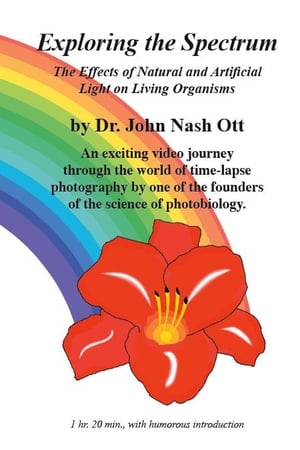
An exciting video journey through the world of time-lapse photography by one of the founders of the science of photobiology, Dr. John Nash Ott. Do fluorescent lights cause cancer and childhood learning and behavior disorders? Can long-term exposure to low-level radiation as from TV sets, computers, fluorescent lights, and similar devices harm you? Does living behind window glass and with glasses covering our eyes over years affect our health? Is natural sunlight and trace ultra-violet radiation really harmful? Or is it necessary and beneficial? How do cells, plants, and animals respond to constant exposure to different light color frequencies? These and similar questions were the subjects of Dr. Ott's pioneering investigations in the field of photobiology, using the methods of time-lapse photography.
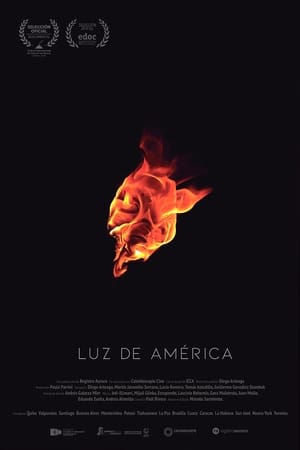
From the light that falls on the backyard of his house on the day of the equinox without shadow in Quito, and inspired by the "Theory of colors" of Goethe, the director takes us to several cities in America to reflect on the influence that the light has in the understanding of our surroundings.
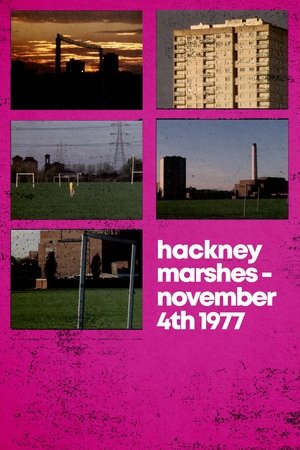
An improvisation recorded over the course of one day, starting at dawn and finishing after dusk. The film was edited in camera and shot from one camera position in the middle of one of the 112 football pitches that cover Hackney Marsh, a location chosen because of the similarities between the surrounding buildings and objects (identical blocks of flats, goalposts etc.). By cutting between precisely matched framings of similar objects, illusions of movement were produced, disrupting representational readings of the landscape. Unforeseen events occurring in the vicinity were also recorded, determining to some extent the subsequent filming. Through selection of shots and changes in cutting pace and speed of camera movement, the film fluctuates between record and abstraction.
A homogeneous structure of wind and light across tree branches in the South region of Isère
A silent dance documenting a brief visit to Minneapolis in the fall of 2022. A reflection on the sleeping city's tumultuous recent history through a recollected interaction and a plea for continued disturbance. Twin City Twist was shot on Kodak Tri-X reversal super 8 film with kaleidoscopic lenses. The film was scanned and edited digitally.
A glimpse into a visual representation of memory; A Christmas-time series of meals, coffees, and movies, with friends, lovers, and housemates. Faced with the compounding of faces and places, each moment begins to collide with one another: voices are muddled, and faces are broken. How is memory created? How are they separated from one another?
Two hands over a light.
Two women in a living room: smoking, playing cards, listening to the radio. As often in Dwoskin’s films, the use of masks, make-up and costumes allows the characters to playfully transform themselves. Shot in colour film, C-film exuberates swinging London energy. In the second part of the film, the women appear to be watching the rushes of the film on an editing table. ”We are making a movie” we hear them say. As Dwoskin points out, “C-film asks how much is acting acted”, an ongoing question in Dwoskin’s cinema. Produced by Alan Power, with Esther Anderson & Sally Geeson.
Reila
This audio-visual tone poem uses the language of filmmaking to offer a first-hand evocation of the turbulent psychological effects one can experience due to prolonged lack of sunlight.
A glimpse over the Diguillín River through the mechanical eye of an old digital camera. Light’s trail presents itself fortuitously over the reflection of the sun on the water, tracing infinite threads of concrete luminous information.
The port of a Mediterranean coastal city, which had once been the symbol of prosperity and the epicenter of life in the region, is now only the reflection of a decaying present. Static and empty shots reveal glimpses of a brilliant past, only interrupted by the intermittent sound of the construction of a residential apartment building that stands menacingly a few meters from the dock, presaging an even darker future.
Light is a fascinating phenomenon. Without light, there would be no cinema, no film – and no life. So light is at the origin of everything, and yet it remains invisible to the eye until it hits matter. This moment is – quite literally – the starting point of Thomas Riedelsheimer’s latest work, for the springtime spectacle of rainbow shreds in the cinematographer and documentary filmmaker’s flat became the starting point of a search for the origin of the images we form of this world. For this quest he dived deep into two spheres that seem to follow different laws but always strive to fathom the magical: physics and art.
Filmed mostly on a Mini DV camera Gavin has thought of a quick way to become successful and be the master of the world but he has to wait for it all to fall into place… he has to wait for the postman to start production documenting the process of being master of the world.
“This film was a gift to me. I make no claims for it, nor do I offer any apologies. It comes from work on The Thoughts That Once We Had. There was one shot we had to cut whose loss I particularly regretted. It was a shot of a train pulling into Tokyo Station from Ozu’s The Only Son (1936). So I decided to make a film around this shot, an anthology of train arrivals. It comprises 26 scenes or shots from movies, 1904-2015. It has a simple serial structure: each black & white sequence in the first half rhymes with a color sequence in the second half. Thus the first shot and the final shot show trains arriving at stations in Japan from a low camera height. In the first shot (The Only Son), the train moves toward the right; in the last shot, it moves toward the left. A bullet train has replaced a steam locomotive. So after all these years, I’ve made another structural film, although that was not my original intention.”