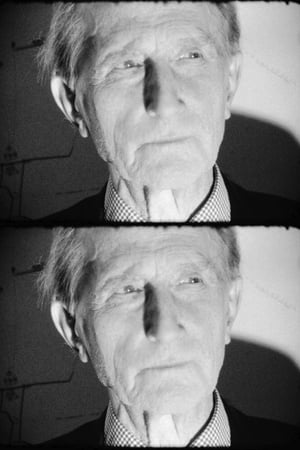
Marcel Duchamp alternates between scrutinizing the camera, and smiling and nodding in response to what seems to be a large crowd of off-screen admirers trying to get his attention. Occasionally he puts his fingers to his lips, indicating that he is not supposed to talk.
Dodging Raindrops – A Separate Reality is an episodic experimental film, in which documentary and staged scenes intertwine in a mythic-apocalyptic narrative. The film begins in Los Angeles und retraces the field trips into the Southwest assumed to have been taken by the controversial anthropologist Carlos Castaneda, a founder of the New Age movement. Taking up the anthropological concept of othering, the film casts its subjects as others inhabiting another side, another reality and another opposite. In doing so, Dodging Raindrops – A Separate Reality weaves a web of ostensible truths and untruths, of legends and utopias, of historic incidents and visions.
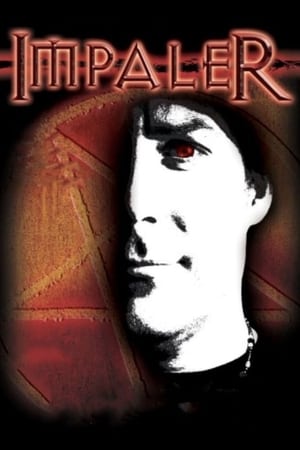
Jonathon "The Impaler" Sharkey threw himself into the race for Minnesota governor on January 13, 2006. His "coming out" to the media as a Hecate Witch, Satanic Dark Priest and Sanguinary Vampire grabbed international attention, and his candidacy marked the beginning of the largest amount of media coverage ever given to an unknown third party candidate running for governor in American history.
A piano player is able to perform a Chopin piece backwards and Galeta will film it backwards and forwards creating four different variations of a movement bound to time.
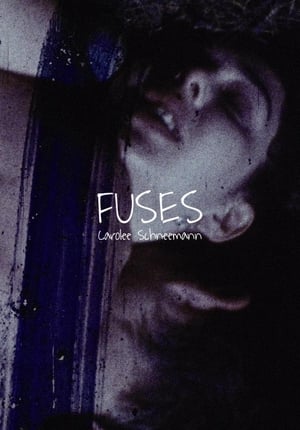
An experimental short in which a couple engaged in lovemaking is superimposed over ocean and beach scenes.
"Now Eat My Script is a precipice, a fluid solution in which some spectral noises of the self float adrift. Narration takes the role of a pregnant writer who continuously affirms her hunger and clumsiness towards language and history. Her body is crossed over by both the years to come and the stories that have been buried. As a would-be pirate, she navigates through the tumult of familiar waters."
A British WWII propaganda short warning citizens that Nazi sympathizers could be listening to their everyday conversations to discover important information about the war effort.
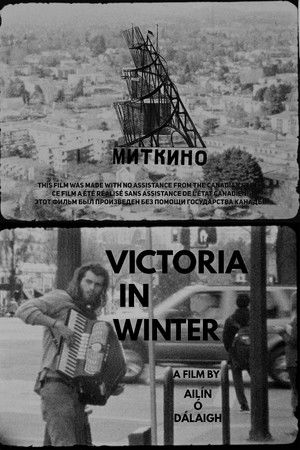
A documentary in réalité style harkening back to the early years of cinema. Composed of scenes around Victoria, BC during February 2019.
Footage from summer of 2018 that explores the passing of time regarding the little things in life.
A woman walks, loves, eats and washes herself, dances. It all takes place in a bedroom. At times flashbacks, or visualizations of previous or following scenes. Unless her life in the bedroom becomes an obsession, she lives through the other scenes.
Homeo is a mental construction made from visual reality, just as music is made from auditive reality. I put in this film no personal intentions. All my intentions are personal. I’ve made this film thinking of what the audience would have liked to see, not something specific that I wanted to say: what the film depicts is above all reality, not fiction. Homeo is, for me, the search for an autonomous cinematographic language, which doesn't owe anything to traditional narrative, or maybe everything. Cinema is, above all, part of a way of life which will become more and more self-assured in the years and century to come. We are part of this change, and that’s why I tried in Homeo to establish a series of perpetual changes, in constant evolution or regress, which tries, above all, to focus on things.
One of the very few films made by Etienne O'Leary, all of which emerged from the French underground circa 1968 and can be very loosely designated 'diary films.' Like the contemporaneous films by O'Leary's more famous friend Pierre Clementi, they trippily document the drug-drenched hedonism of that era's dandies. O'Leary worked with an intoxicating style that foregrounded rapid and even subliminal cutting, dense layering of superimposed images and a spontaneous notebook type shooting style. Yet even if much of O'Leary's material was initially 'diaristic,' depicting the friends, lovers, and places that he encountered in his private life, the metamorphoses it underwent during editing transformed it into a series of ambiguously fictionalized, sometimes darkly sexual fantasias. - Experimental Film Club
Calangros: Um faroeste sobre o terceiro mundo
A tale of 2 passages within the Spirit house. This is the first in a series that looks at the places we find our spiritual presence augmented, inflamed, or simply acknowledged.
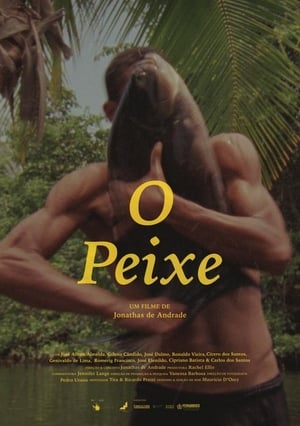
"A fisherman, dark-skinned and shirtless, sits in a boat on a quiet river and, before long, catches a fish. The fish gasps for air and the fisherman holds it to his chest until it dies. This sequence—performed by a series of fishermen, of various ages and using various styles of capture—is the spine of the work, interrupted by passages of quiet natural beauty; one shot is a steady, stately pan through scores of trees and empty air behind." - Vinson Cunningham
Documentary on the interdependence of the world of the living and the dead, and 'the infernal influence on the thoughts and actions of living people.
An experimental film about life on earth as a cosmic experiment and the curiosity and naivete of reaching out to alien life.
As technology accelerates, our species' collective imagination of the future grows ever more kaleidoscopic. We are all haunted by temporal distortion, perhaps no more than when we attempt to remember what the future looked like to our younger selves. As the mist of time devours our memories, the future recedes; each of us burdened by the gaping mouth of entropy. Yet, emerging technology provides a glimmer of hope; transhumanism promises a future free from mortality, disease and pain. Does our salvation lie in digital simulacra? We're here to sell you the answer to that question, for the low, low price of four hundred and seventy seconds.
A watchman at an apartment complex in Assam, India, spends an ordinary evening. A surreal, expressionistic landscape unfolds.
It started with filming the tree. Something was released in that manner of filming seemingly farthest removed from the procedure of the early films. I first thought a simple ordering of this rich material might be enough, something related to BARN RUSHES [...] But the film only came into its form-life with the idea of linking this deep-rooted and far-outreaching tree material with that film on paranoia that had fascinated me for many years. –L. G.