Todo Dia é Dia de Feira
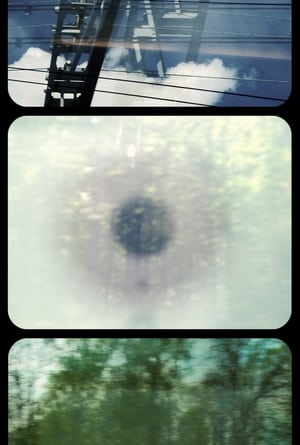
Travel films have an established format with their own conventions, history and baggage. It is a medium that has all too often sought to control, define and dictate perceptions of ”other” places. Comprised of footage shot while travelling on group excursions across Russia in 2019, An Uncountable Number of Threads is an attempt to draw out the ethical restrictions of a travelogue, while questioning how (and why) to make one. At times there is an awkward tourist-gaze, aware of its outsider position. But as a self-reflexive work that considers its own creation, it ultimately unravels, as the artist rationalises themselves out of a particular way of working, inviting the viewer into their uncertainty.
To popularize the idea of automobile travel, Ford Motor Company produced Ford Educational Weekly, a film magazine distributed free to theaters. One 1916 series featured "Visits to American Cities." In this episode, Los Angeles is featured at the very beginning of the boom created by oil, movies and aircraft. On the occasion of its centennial in 1953, Ford donated its film to the National Archives and Records Service; this copy derives from a fine grain master printed from the Archive's preservation negative. Music by Frederick Hodges.
A woman narrates the thoughts of a world traveler, meditations on time and memory expressed in words and images from places as far-flung as Japan, Guinea-Bissau, Iceland, and San Francisco.
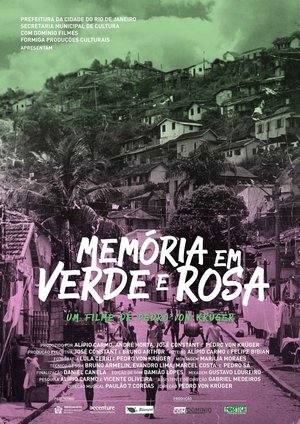
An unprecedented collection of pictures, characters and historical facts about the city of Rio de Janeiro, rescued by tv networks, documentary filmmakers and foreign journalists over the course of the 20th Century. The film reveals how Rio, its inhabitants and its cultural and natural attributes have been seen by foreigners. This is an opportunity to relive, through the eyes of a foreigner, social, political, technological and mundane events which Brazilians either did not manage to document audiovisually or whose works were lost.
When Tomoko finds some messages for a 'Mr Smith' on a lost mobile phone, she finds herself on an 'Alice in Wonderland' journey through Tokyo's boulevards and back alleys. From the tyranny of symmetry in soaring office blocks - to buildings that look like space-ships, this creative documentary shows us the city's soul.
Documentary depicts what happened in Rio de Janeiro on June 12th 2000, when bus 174 was taken by an armed young man, threatening to shoot all the passengers. Transmitted live on all Brazilian TV networks, this shocking and tragic-ending event became one of violence's most shocking portraits, and one of the scariest examples of police incompetence and abuse in recent years.
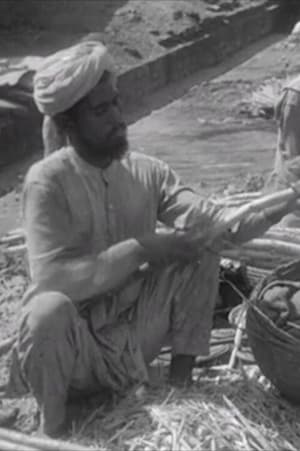
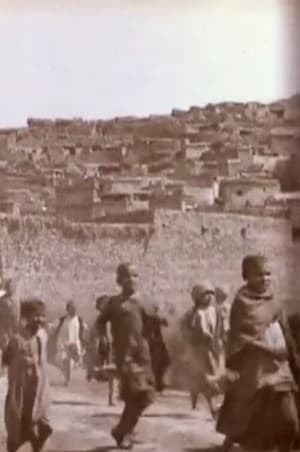
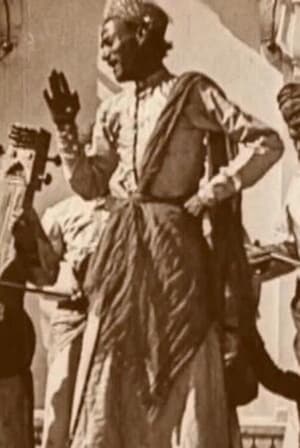
Early film of a crowded street scene in an unidentified Indian city.
The reception ebbs and flows as the unfamiliar landscape whirls by the window of a plane or train or car. Communication is delayed, fragmented, interrupted. Memories of a distant country.
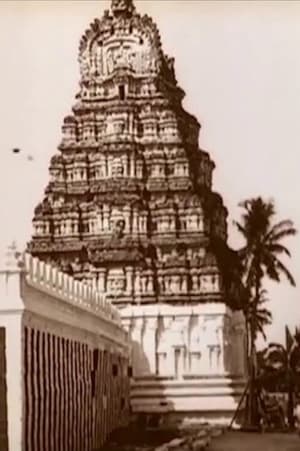
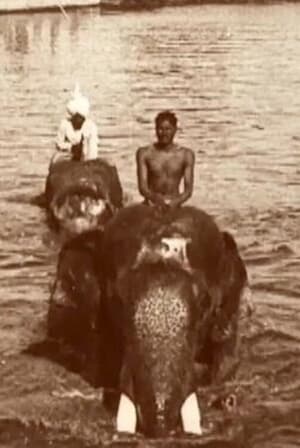
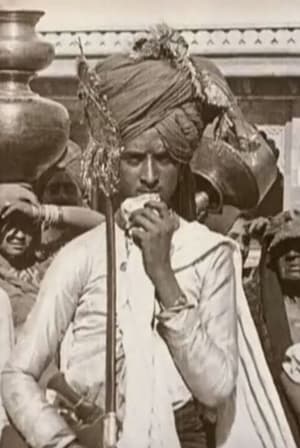
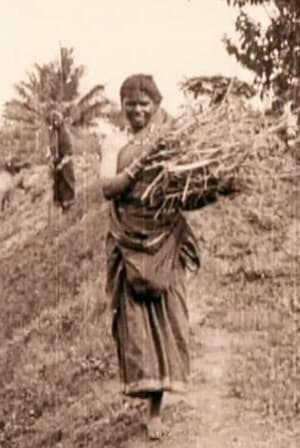
Botanical gardens in Bombay plus the highly decorative Jain Temple in Calcutta.
David Lloyd George tours Germany, escorted by Nazi government officials, while his chauffeurs lark about with an SS Officer. Lloyd George was pro-German from the mid-1920s, and met Adolf Hitler in 1936. However, by 1938 he had become a leading opponent of appeasement with Germany. This film is believed to have been shot by George Ryder, Lloyd George's chauffeur.
This documentary highlights the evolution of Brazil's Circo Voador venue from homespun artists' performance space to national cultural institution.
Baptismo de Terra
Bruce Brown's The Endless Summer is one of the first and most influential surf movies of all time. The film documents American surfers Mike Hynson and Robert August as they travel the world during California’s winter (which, back in 1965 was off-season for surfing) in search of the perfect wave and ultimately, an endless summer.
Bruce Lee expert John Little tracks down the actual locations of some of Bruce Lee's most iconic action scenes. Many of these sites remain largely unchanged nearly half a century later. At monasteries, ice factories, and on urban streets, Little explores the real life settings of Lee's legendary career. This film builds on Little's earlier film, Pursuit of the Dragon, to present a comprehensive view of Lee's work that will change the way you see the films.
Sports enthusiast Ernest is to cover 6,000 kilometers on his motorcycle in 15 days, crossing Austria, Italy, Switzerland, the Balkans and Czechoslovakia.
How Do You See Me? is a Brazilian documentary feature that entwines both experienced actors and beginners to explore the hardships and the happiness that are inherent to the job when detached from the glam and glitz of the gossip industry, creating a diverse and comprehensive mosaic of what it means to be an actor in Brazil, a country so full of contradictions. The film brings forward a reality that the masses usually don't get to know: the men and women moved by a deep passion for acting and touching people. With Julio Adrião, Matheus Nachtergaele, José Celso Martinez, Cássia Kis, Nanda Costa, Babu Santana, Luciano Vidigal and Letícia Sabatella, among others.
This Traveltalk series short visits Hungary's capital, Budapest.
This short film was made by filmmaker (later archivist) Liam Ó Laoghaire (aka Liam O’Leary) and was commissioned by the Cultural Relations Committee of the Irish Department of External Affairs. The film was designed to promote the city of Dublin to its inhabitants and to potential visitors from abroad. Brendan J. Stafford’s crisp black and white cinematography serves the city’s elegant architecture well while the narrator tells of the city’s cultural, literary and architectural history and its many venerable inhabitants. The elegant Georgian squares, the bustling markets, the tranquil parks and the sparkling nightlife present a city that is vibrant, cultured and steeped in history.
An exploration of Rodez Cathedral and its stained glass windows: praying figures and scientific imagery. A study on color, repetition and flickering consisting of 292 photographs.