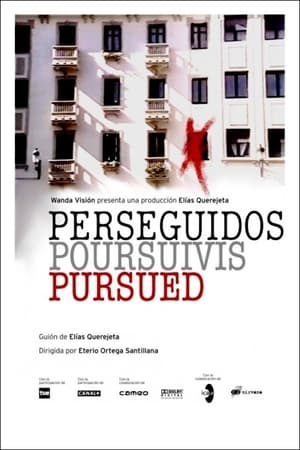
Spanish police killed four members of the Autonomous Anticapitalist Commandos in 1985. This documentary provides a narration of the murder that the State of Spain has tried to hide. There are several testimonies of family members, witnesses and experts.
An attempt to create a bridge between the different political positions that coexist, sometimes violently, in the Basque Country, in northern Spain.
Departing from peripheral details of some paintings of the Bilbao Fine Arts Museum, a female narrator unravels several stories related to the economic, social and psychological conditions of past and current artists.
In 1955, fascinated by the ingenious pigeon hunting with wooden paddles and nets, Orson Welles directed the documentary The Land of the Basques. Today, from a mountain hut on the border between Navarre and France, Gerardo Damboriena, a veteran pigeon hunter, reveals to us in basque the secrets of this more than 700-year-old tradition, now on the verge of extinction.
This documentary updates the life experiences of victims of ETA terrorist activity, twenty years after the multi-award-winning documentary Sin libertad (Without Freedom, 2001). With an experimental intent, it seeks to link the present and the future through five young journalism students in their twenties who have not experienced ETA terrorism and are responsible for interviewing the victims.
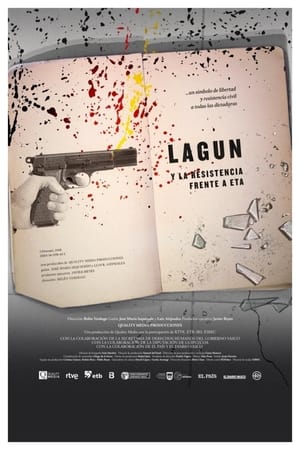
The turbulent story of the Lagun bookstore — located in San Sebastián, in the Basque Country, Spain — is a powerful tale of courage, resistance and struggle; first against the Franco dictatorship, then against the terrorist gang ETA and its numerous and sinister acolytes.
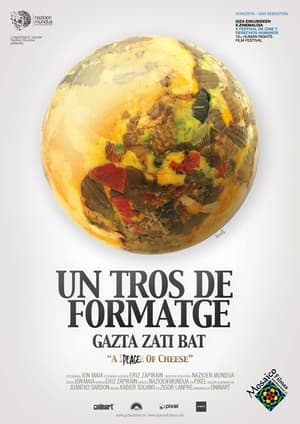
This story begins in a small town in Euskal Herria known worldwide for its cheese. The inhabitants of this town put aside the differences created by the recent armed conflict in Europe to carry out a mission: to choose what to be in the world. This adventure will take them to witness the historic events of two nations that will be news in Europe: Scotland and Euskal Herria. A great story written in small print. A documentary of the new era that makes us look to the future
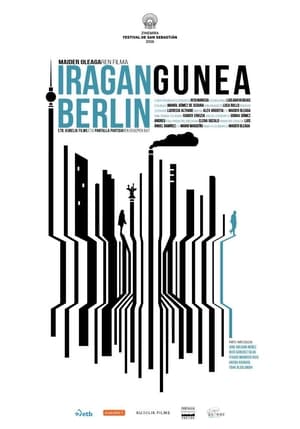
The film follows five people from different origins as they move anonymously around the streets of Berlin. Each of them with another life somewhere else, trying to ascertain where to go.
"Look for the part that's missing from this book; there, somewhere in your house it's kept. I've tried to walk as far as halfway between you and I; I can't carry on. The respect I bear for what's yours does not let me go any further", Joxean Artze.
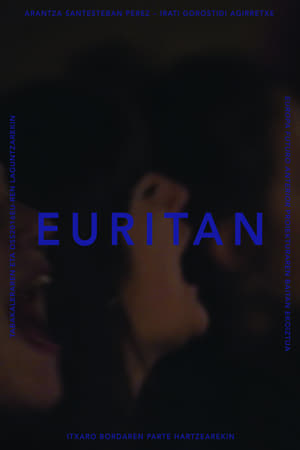
Euritan is a review of the narrative 'Klara eta biok', written by Itxaro Borda in 1985. Putting the author against the words of her past, it updates her view on the peripheral relationship around the Basque character.
In addition to making cigarettes, Lupe, Asun, Susi, Marivi, Clara, Pili and Maite lived, shared, learned, fought and celebrated many things in the warehouses that now house the Tabakalera cultural project. The cigarette makers called the factory “Smoke University” for all that they learnt within its walls. This documentary shows a (physical and vital) tour of the spaces of Tabakalera together with a critical dialogue between the past and the present of the building, which relies on previously collected and selected materials from the smoke archive, and the testimonies of a group of women who worked together.
Spain, 1997. The story of twelve days in July during which Basque society left indifference and fear behind and faced the threat of the terrorist group ETA.
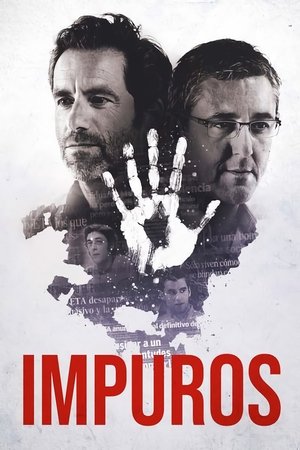
At just 17 years old, Eduardo Madina and Borja Semper decided to enter politics to defend freedom of thought in the Basque Country. This made them a target of the ETA terrorist group for almost two decades.
Donostia-San Sebastián, Basque Country, Spain, 2011. Maider, a filmmaker, moves to the very same flat where pedadogist Elbira Zipitria Irastorza (1906-1982) clandestinely established the first ikastola, a Basque school, under the harsh regime of dictator Francisco Franco. Despite of her pioneering work, developed throughout thirty years, her story is not well known, so Maider, intrigued, begins to research…
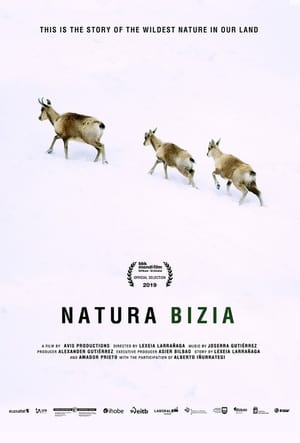
In the north of the Iberian Peninsula, we find two regions that will provide us with great moments. These are the Basque Country and Navarre, two territories that are home to a high percentage of Europe's biodiversity. At Natura Bizia, we will reveal the best-preserved corners, the most spectacular biodiversity, and animal fauna in its wildest state. Vertical cliffs, an endless sea, magical forests, and enormous limestone mountains will provide us with unforgettable experiences. We will swim among the largest cetaceans on the planet, enjoy the first steps of the brown bear after its winter hibernation, witness the daily struggle of wolves to conquer new territory, and fly alongside the most powerful of our eagles.
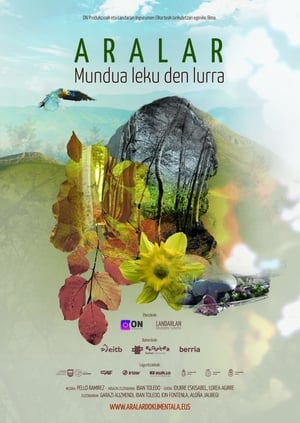
This film goes beyond being a window that shows the natural and cultural heritage of Aralar (situated in the heart of the Basque Country), it also makes the viewer reflect. The testimonies of the experts and the journey through a dreamlike world, not only make the value of this mountain range known but also make a clear call to conserve it.
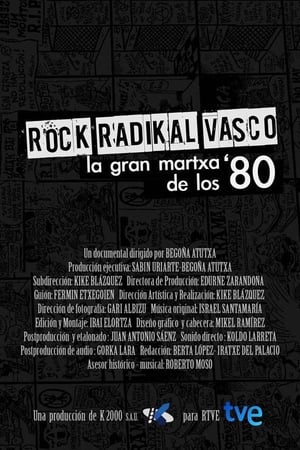
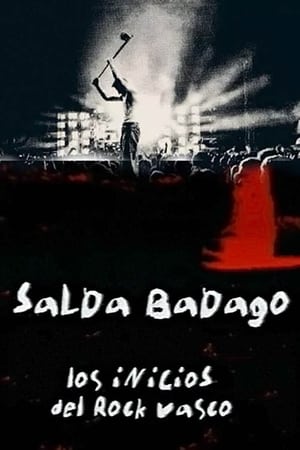
In this documentary, we travel to the main locations where the musical movement known as "Basque Radical Rock" exploded, emerging in the Basque Country and Navarre in the 1980s. It recalls bands from that era, such as Cicatriz, Zarama, RIP, Eskorbuto, and Kortatu, and interviews some of its leading figures.
A documentary about Basque Radical Rock. Its name comes from a song by the well-known and successful band Hertzainak, which is also referenced in the documentary, along with the work of other rock bands and singer-songwriters. The documentary features interviews with musicians who played rock from mid-1975 to 1990. There are 23 interviews in total, with musicians from bands such as Barricada, Hertzainak, Itoiz, Zarama... In addition, the documentary includes spectacular images from that period, as the rock boom was linked to different movements in the Basque Country: gaztetxes (youth clubs), free radio stations, and fanzines. The documentary is a portrait of the youth who had just emerged from the dictatorship.
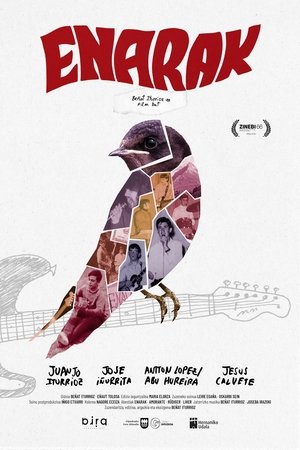
In 1967, in the midst of Franco's dictatorship, a group of seminarians thirsty for freedom founded the group Enarak. They played pop, rock and psychedelia, styles that were foreign to the society of the time, and all of it entirely in Basque. After hundreds of concerts, they mysteriously disappeared in 1971. Fifty years later, the singer's son, Beñat, sets out to find traces of the group, immersing himself in a film labyrinth that mixes ornithology, collage and eccentric research.
Basque Country, Spain. No one seems to know them. Some glances avoid theirs. Their social circle becomes smaller and smaller. They live under escort, watched by those who protect them and by those who threaten them: it is the experience of living in the shadow of ETA, a savage terrorist gang of unscrupulous criminals… of merely existing under the yoke of those who tomorrow could be their executioners.