Through his own photographs, the Basque artist Néstor Basterretxea (1924-2014) is portrayed by the art critic and exhibition curator Peio Aguirre, a great connoisseur of his work and personal archives.
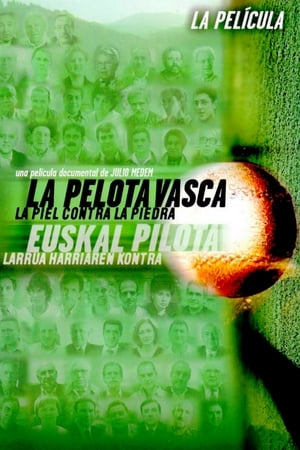
The story of how a humble Basque rural sport called zesta punta —or jai alai— was successfully exported from the Basque Country to nations as different as Egypt, China, the Philippines, Cuba, Mexico or the United States. In these places, the pelotaris were considered true artists at the fronton. But the splendour of the jai alai, the happy feast, could not last forever.
An attempt to create a bridge between the different political positions that coexist, sometimes violently, in the Basque Country, in northern Spain.
The film starts in Bermeo and ends in Gernika. A magical trip taking us from the scent of salt air and the fishing atmosphere of Bermeo port to the roots of the Tree of Gernika.
'Ama Lur' is a documentary, directed by Nestor Basterretxea and Fernando Larruquert, that premiered in San Sebastián in 1968, and it is considered the foundation of Basque cinema.
In the north of the Iberian Peninsula, we find two regions that will provide us with great moments. These are the Basque Country and Navarre, two territories that are home to a high percentage of Europe's biodiversity. At Natura Bizia, we will reveal the best-preserved corners, the most spectacular biodiversity, and animal fauna in its wildest state. Vertical cliffs, an endless sea, magical forests, and enormous limestone mountains will provide us with unforgettable experiences. We will swim among the largest cetaceans on the planet, enjoy the first steps of the brown bear after its winter hibernation, witness the daily struggle of wolves to conquer new territory, and fly alongside the most powerful of our eagles.
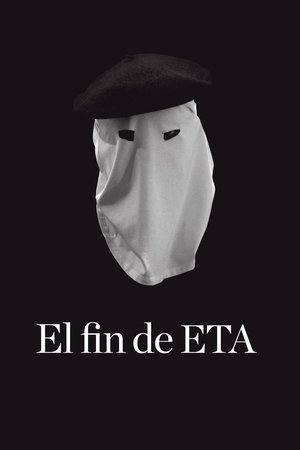
The chronicle of the process, ten long years, that led to the end of ETA (Euskadi Ta Askatasuna), a Basque terrorist gang that perpetrated robberies, kidnappings and murders in Spain and the French Basque Country for more than fifty years. Almost 1,000 people died, but others are still alive to tell the story of how the nightmare finally ended.
An in-depth interview with José Antonio Urrutikoetxea, known as Josu Ternera, one of the most relevant leaders of the terrorist gang ETA.
Ane, daughter of two members of the terrorist gang ETA, born in prison, and a film student, embarks on a search for her own identity, lost between collective memory and personal experience.
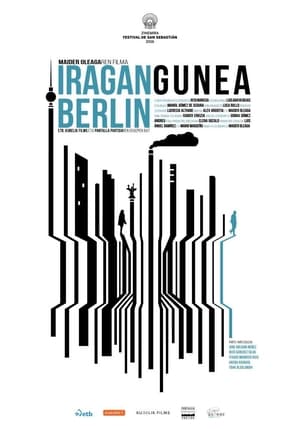
The film follows five people from different origins as they move anonymously around the streets of Berlin. Each of them with another life somewhere else, trying to ascertain where to go.
Gonzalo Boye, a lawyer, businessman, and editor of Mongolia magazine, was convicted in the 1990s for allegedly collaborating with ETA in a kidnapping, a crime he denies. His story, told in a documentary by Sebastián Arabia, begins in Chile and continues in Spain, where he served 14 years in prison. During this time, he studied law and later handled significant cases like the 11M trials, the Bárcenas case, defending Edward Snowden, and suing the George W. Bush administration over Guantanamo.
A reflection on the assassinations of social democrat politician Fernando Buesa Blanco and his bodyguard Jorge Díez Elorza, perpetrated by the terrorist gang ETA in Vitoria-Gasteiz, Basque Country, Spain, on February 22, 2000.
Pilot chapter of the film series 'Ikuska', a compilation of shorts on the Basque Country’s culture and politics. A documentary about the referendum on the Spanish constitution.
Five directors portray five Basque political prisoners. A young woman counts the days remaining before she is arrested. A man returns to society after 17 years in prison. A mother records every phone conversation she had with her imprisoned daughter on 125 cassette tapes. An intellect and professor of journalism tries to find himself from the solitude of his cell. And a former ETA leader reconnects with a close friend from his youth, now a filmmaker. 'Windows Looking Inward' gives a brief insight into the lives of the people behind the bars, behind the events, behind the headlines.
San Sebastian, Basque Country, Spain, June 27, 1960. A bomb explodes at the Amara train station. Begoña, a child of only twenty months, dies a few hours later as a result of the injuries sustained in the attack.
Through interviews with different people linked to the work and life of the Basque sculptor Jorge Oteiza (1908-2003), this documentary aims to unravel fundamental aspects of his work.
The Basque Country, one of the richest regions in Europe with only two million inhabitants, is considered a small paradise by those who visit it. But behind the mild climate, beautiful landscapes, and high standard of living lies a terrible reality: for thirty years, more than two hundred thousand of its citizens have had to go into exile to save their lives, escape extortion, social isolation, or nationalist impositions.
Donostia-San Sebastián, Basque Country, Spain, 2011. Maider, a filmmaker, moves to the very same flat where pedadogist Elbira Zipitria Irastorza (1906-1982) clandestinely established the first ikastola, a Basque school, under the harsh regime of dictator Francisco Franco. Despite of her pioneering work, developed throughout thirty years, her story is not well known, so Maider, intrigued, begins to research…
The turbulent story of the Lagun bookstore — located in San Sebastián, in the Basque Country, Spain — is a powerful tale of courage, resistance and struggle; first against the Franco dictatorship, then against the terrorist gang ETA and its numerous and sinister acolytes.
Province of Ciudad Real, Spain, December 29, 1990. During the annual march to the Herrera de la Mancha prison, held in support of the members of the terrorist gang ETA imprisoned there, the Basque rock band Negu Gorriak holds a concert, which is recorded, edited on video and turned into a tool of vindication. Decades later, a film crew tries to elaborate a personal essay around this event and its meaning.